dailynewsnblog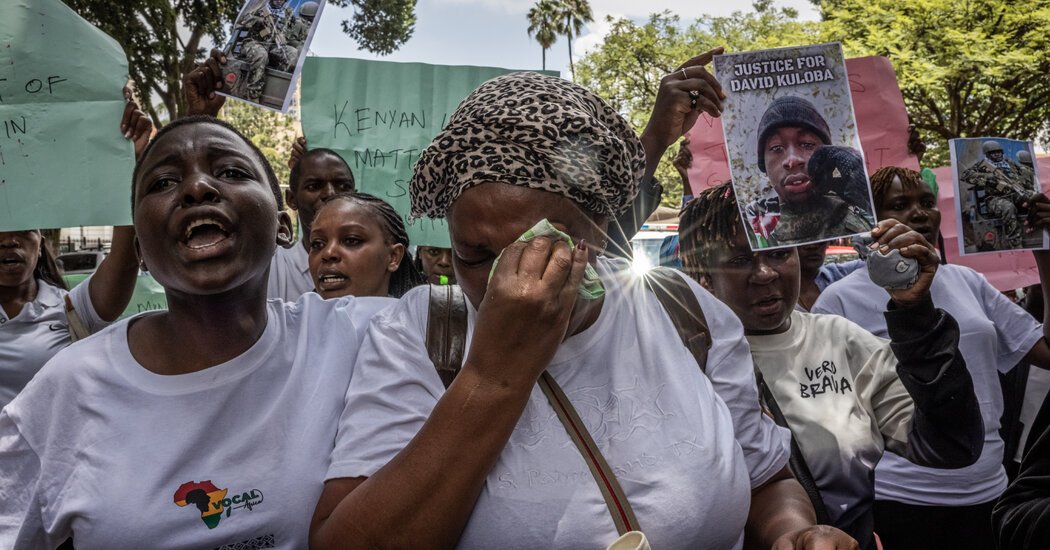
Thousands of young African men have signed up to fight in Moscow’s war against Ukraine. Some have posted cheerful videos with Russian soldiers. But many others say they were deceptively lured to Russia and then coerced into signing military contracts.
Many have been killed on the battlefield.
Though Africa is thousands of miles from the front line and most African nations have adopted a neutral stance in the war, some see a clear explanation for the phenomenon: Russia needs more troops, and young African men need jobs.
In interviews with The New York Times, several Africans said they traveled to Russia for work, only to be pressured into signing military contracts. Here is a look at what’s behind the Africans caught in Russia’s war.
Why does Russia need African soldiers?
The short answer is to offset its own casualty rate. Russia’s war with Ukraine has been staggeringly costly for Moscow in terms of troops killed and wounded. Since Russia launched its full-scale invasion, around 1.2 million of its soldiers have been killed, wounded or are missing, according to the Center for Strategic and International Studies in Washington.
That toll could pose a political problem, even though many of the soldiers are drawn from parts of Russia far from the capital, so potential dissent stemming from the losses has less impact.
But it makes sense for Moscow to seek soldiers abroad, and Africa is fertile ground. North Korea has sent thousands of troops to fight for Russia. And earlier in the war, scores of young Nepali men went to fight for Russia, some lured by the promise of work. But Nepal is tiny, and Africa has the world’s fastest growing youth population.
Moscow has never acknowledged a policy of recruiting troops from the continent and has said foreign fighters come voluntarily.
What draws African men to Russia?
Africa is experiencing a demographic boom, which means more and more young people are joining the labor force. But African economies are unable to generate enough jobs.
In the absence of formal employment, the vast majority of adults under 35 work in the informal sector, in insecure jobs with low pay and few benefits. Many young people, seeing that they are effectively caught in an economic trap, seek work abroad.
Faced with this bind, many young people seek work abroad. Most go to African countries with better economic prospects, but some take dangerous journeys overland or by sea. Many young women have also gone to the Persian Gulf to work, even though conditions have frequently been appalling.
And others have gone to Russia, even though the job offers presented are often vague.
Are Africans paid well to fight?
Africans who serve in Russia’s military can expect to earn wages many times what they are likely to earn in their home countries. But there are two catches. The first is survival. The attrition rate for people on the front lines is high.
The second is the contracts. Survivors who have returned from Russia have said they were forced to sign contracts in Russian, which they could not understand, and then shown banking apps where their salaries were supposed to be held.
But they said that it was difficult to access the accounts and that often they were conned out of the money, sometimes by the recruitment agencies that facilitated their travel to Russia. In practice, the financial rewards have evaporated. Several people said they had returned empty-handed.
Others never expected to be forced to sign up for the military once they arrived in Russia, and few were aware of the war’s brutality.
Can African governments stop this trend?
It is not illegal to emigrate in search of work, and African governments that have tried to stop people from leaving have done so mostly in response to political pressure. For years, governments in Europe have attempted to work with African states to curb migration.
Governments in South Africa, Kenya, Ghana and Nigeria have responded to calls demanding that officials do more to address the crisis of citizens missing or killed in Ukraine.
Kenya’s foreign minister, Musalia Mudavadi, traveled to Moscow in March for talks with his counterpart and said Russia had agreed not to enlist Kenyans in the military. Kenya has also said it has started stopping young men traveling for work to destinations that could lead to Russia.
In February, President Cyril Ramaphosa of South Africa pledged with President Vladimir V. Putin to support the return of South Africans fighting for Russia in Ukraine. And several countries, including Nigeria, have warned their citizens against recruitment scams that could lead to Russian military enlistment.