dailynewsnblog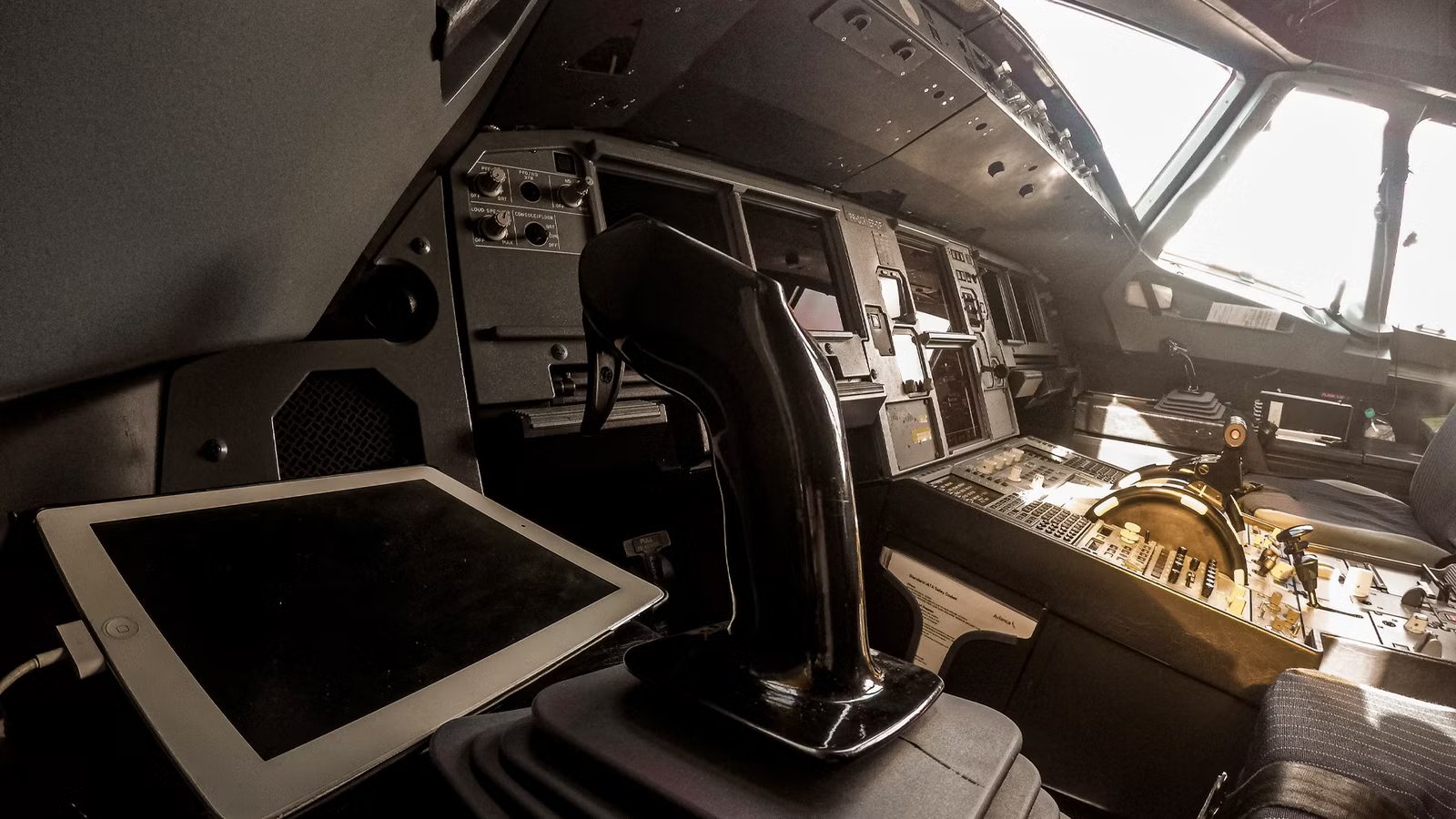
How a modern commercial flight deck is set up dictates how two pilots interact, monitor each other, and split critical duties during an emergency. Manufacturers like  Boeing rely on a massive central control column to visually and physically link both seats; Airbus, on the other hand, redefined this workspace with its fly-by-wire system. This guide explores the engineering logic behind passive, uncoupled side-sticks and why a first officer cannot physically feel a captain’s inputs.
Direct mechanical linkages were abandoned in favor of electronic control signaling, easily one of the most radical steps in aerospace evolution. In traditional cockpits, safety relies heavily on continuous physical feedback, meaning that if one pilot manipulates a control, the opposite control reacts in perfect synchronization. Removing this tangible connection poses unique challenges for crew resource management and situational awareness, making it crucial to understand the systems that replace it.
From Yokes To Sidesticks

The key difference between the two dominant styles of flight deck engineering centers on how physical control inputs are communicated across the cockpit. Conventional aircraft connect the two pilot stations using robust mechanical cross-shafts, cables, and pulleys underneath the floorboards. When a pilot pushes or pulls the yoke, the opposite column instantly mirrors the exact physical displacement. Airbus completely severed this mechanical link when designing its modern aircraft families, opting instead for individual, independent side-sticks mounted on the outboard consoles.
The difference is immediately apparent: the left and right controls operate in absolute isolation from one another in an Airbus cockpit. If a captain inputs a sharp roll to the left, the first officer’s side-stick does not move at all, remaining completely stationary in its neutral position. Without a direct line of sight to the opposite side of the flight deck, a pilot has zero immediate tactile indication of what their colleague is doing with the controls. This passive design shifts the entire burden of flight path monitoring from physical sensation to digital instrument interpretation and verbal callouts.
The choice to utilize uncoupled controls was not an accidental design shortcut, but an engineering decision to eliminate heavy mechanical linkages and maximize cabin space. Moving the primary flight controls away from the center line and placing them on the outer walls, designers cleared the space directly in front of each pilot. The structural adjustment here enabled a complete rearrangement of the instruments and the introduction of advanced ergonomic workspace features. However, it also removed decades of shared physical intuition, replacing synchronized physical motion with independent electronic commands.
The Removal Of Natural Feel

The complete abandonment of mechanical pulleys and steel control cables dismantled a century of traditional flight-training concepts. Instead, the cable systems were replaced with digital wiring, thereby removing the natural aerodynamic feedback that once connected a pilot directly to the flight control surfaces. Put simply, it means the flight deck no longer experiences mechanical vibrations or changes in resistance from external airflow.
Some aircraft use complex artificial feel units that intentionally stiffen the control yoke as airspeed increases, requiring significant muscle power to execute tight maneuvers at high speeds. It provides an essential sensory warning to the flight crew, letting them feel exactly how hard the wing structure is working under heavy aerodynamic loading. On an Airbus, this dialogue is entirely absent because the side-stick operates against simple mechanical springs that maintain identical tension across all flight regimes. Whether the aircraft is rolling along the taxiway or cruising at high Mach numbers, the effort required to deflect the stick remains perfectly uniform.
The controls provide no sensory cues about airspeed or structural limits, meaning the flight crew has to rebuild their basic pilot instincts around visual tracking rather than physical touch. Technicians no longer have to rig extensive cable networks throughout the fuselage, reducing the airframe’s empty weight and eliminating a frequent source of mechanical wear. Fortunately, the loss of tactile feedback is completely offset, on paper, by advanced flight computer protections that prevent the pilot from accidentally overstressing the airframe.
The Striking Differences Between The Airbus A320 & Boeing 737 Cockpits
Explore the striking Airbus A320 vs. Boeing 737 cockpit differences, from sidesticks to noise, and learn how pilots see these iconic flight decks.
The Design Behind The Inputs

To really get to grips with how Airbus’ cockpit logic actually differs is by looking into its different software framework known as the C* control law. Typically, moving the yoke a few inches results in a corresponding deflection of the ailerons or elevators at the tail. The Airbus fly-by-wire system intercepts this direct pathway, interpreting the side-stick displacement as a request for a specific flight-path vector rather than a literal surface position.
When a pilot initiates a maneuver by moving the side-stick, the electronic sensors calculate a requested roll rate or pitch-axis G-load factor. Once the aircraft reaches the exact bank angle or pitch attitude the pilot wants, then the hand control can be returned to the neutral position. Centering springs pull the stick back to the exact dead center, and the flight control computers automatically trim the stabilizer to maintain that precise trajectory indefinitely. A pilot does not need to maintain continuous pressure on the stick to maintain a steep turn or a steady climb, greatly reducing the physical workload during extended manual handling.
During turbulent atmospheric conditions, Airbus aircraft are surprisingly stable because the flight control computers continuously adjust the control surfaces to maintain the selected flight path without pilot intervention. However, it can also create a sensory disconnect during high-workload scenarios such as turbulent crosswind landings, where rapid hand inputs do not mirror traditional control responses. Pilots need to learn to guide the system with precise, metered commands rather than fighting the aircraft through heavy corrections on the stick.
When Inputs Clash

The uncoupled nature of these independent flight controls creates a critical system vulnerability whenever both pilots try to manipulate the side-sticks at the exact same moment. Since the left and right controls are physically isolated, there is no mechanical feedback loop to prevent a pilot from moving their stick while their colleague is actively flying. This scenario can easily occur during highly stressful situations if clear cockpit communication breaks down and both crew members attempt to handle a sudden deviation simultaneously.
When dual inputs occur without a priority lockout, the flight control computers process the conflicting commands using an algebraic sum algorithm on the total deflection data. For instance, if a captain applies full nose-up input while a panicked first officer pushes the opposite stick full nose-down, the two inputs perfectly negate each other, resulting in zero net command to the control surfaces. On the other hand, mathematical averaging can lead to highly dangerous scenarios in which the aircraft fails to respond to a critical terrain-avoidance maneuver because the inputs cancel each other out in the background.
To mitigate the risk of hidden control conflicts, the flight deck system triggers a loud electronic audio alert that states “DUAL INPUT” through the cockpit speakers and flashes visual warning triangles on the forward glare shield. These indicators tell the crew immediately that both sticks are active and competing for control of the flight path vector. Resolving this dangerous overlap can be achieved when one pilot decisively activates their electronic takeover button, shutting down the opposite control station to restore a single, clear line of manual command.
The Striking Differences Between The Airbus A320 & Boeing 737 Cockpits
Explore the striking Airbus A320 vs. Boeing 737 cockpit differences, from sidesticks to noise, and learn how pilots see these iconic flight decks.
Always Keep An Eye Out

Subsequently, attention is directed to what pilots should do in response to the lack of feedback from the control interface. It is a consideration that frequently arises during simulator evaluations and line-oriented flight training, where crews must maintain total situational awareness without classic mechanical cues. In a conventional cockpit, a sudden, erratic control movement by one pilot is immediately broadcast across the flight deck because the massive central yokes sway dramatically within the peripheral vision of both crew members. On an Airbus flight deck, the spatial geometry of the workspace completely removes this passive visual monitoring channel.
The source of this blind spot is the extreme outboard placement of the side-stick controllers, which are mounted on the far-left console for the captain and the far-right console for the first officer. As the controls sit on the outer edges of the flight deck, a pilot’s arm, shoulder, and torso completely block the other crew member’s line of sight to the hand controller. If a pilot makes rapid, high-amplitude inputs during a stressful hand-flying scenario, the colleague sitting just a few feet away cannot visually track those hand movements without turning their head away from the primary flight instruments. This layout forces the monitoring pilot to rely entirely on changes in digital displays rather than on direct observation of control manipulation.
To compensate for this lack of visibility, the fly-by-wire system translates side-stick deflection directly into explicit visual indicators on the primary flight display. When a pilot manipulates the controls, the electronic displays overlay a digital crosshair that shows the exact electronic command being sent to the flight computers. This design turns flight path cross-monitoring into a highly disciplined visual scanning routine, in which the non-flying pilot must constantly cross-check the digital instrumentation. While this method provides highly accurate data under normal conditions, it demands continuous mental effort to replace the effortless peripheral cues found in older cockpits.
Bringing Back The Feedback

Straying from decades of tradition will always bring scrutiny. In Airbus’ case, moving away from the traditional cockpit norm toward a heavily automated philosophy is radical but part and parcel of evolution in the aviation industry. Airbus’ design philosophy prioritizes a clean, highly efficient workspace that minimizes physical fatigue during long, multi-stop duty days.
Where pilots often commend the Airbus design is with the inclusion of a rigid, pullout sliding tray table directly in front of each pilot’s seat. This simple addition fundamentally improved the daily workflow of airline crews, providing a perfect flat surface for reviewing navigation charts, managing flight deck documentation, and eating meals safely away from sensitive electronic panels. It brought a dramatic improvement in baseline comfort and utility, which explains why short-haul operators highly praise the layout, as it significantly reduces the cumulative physical strain of managing multiple back-to-back flight segments.
Looking toward the future of commercial aerospace design, the industry is actively exploring ways to bridge this tactile gap without reverting to heavy mechanical architecture. Next-generation business jets and military transports are already introducing active side-sticks that use electronic actuators to digitally interlock the left and right controls. When one pilot moves an active stick, the opposite controller mirrors that motion via electronic signals, thereby restoring shared physical intuition to the modern flight deck. Traditional feedback is not being forgotten; instead, it is being brought back to the flight decks of the future.
Catch what other trackers miss
Emergency squawks, holds, NOTAMs — live signals, no signup.
Open tracker
Catch what other trackers miss
Emergency squawks, holds, NOTAMs — live signals, no signup.
Open tracker