dailynewsnblog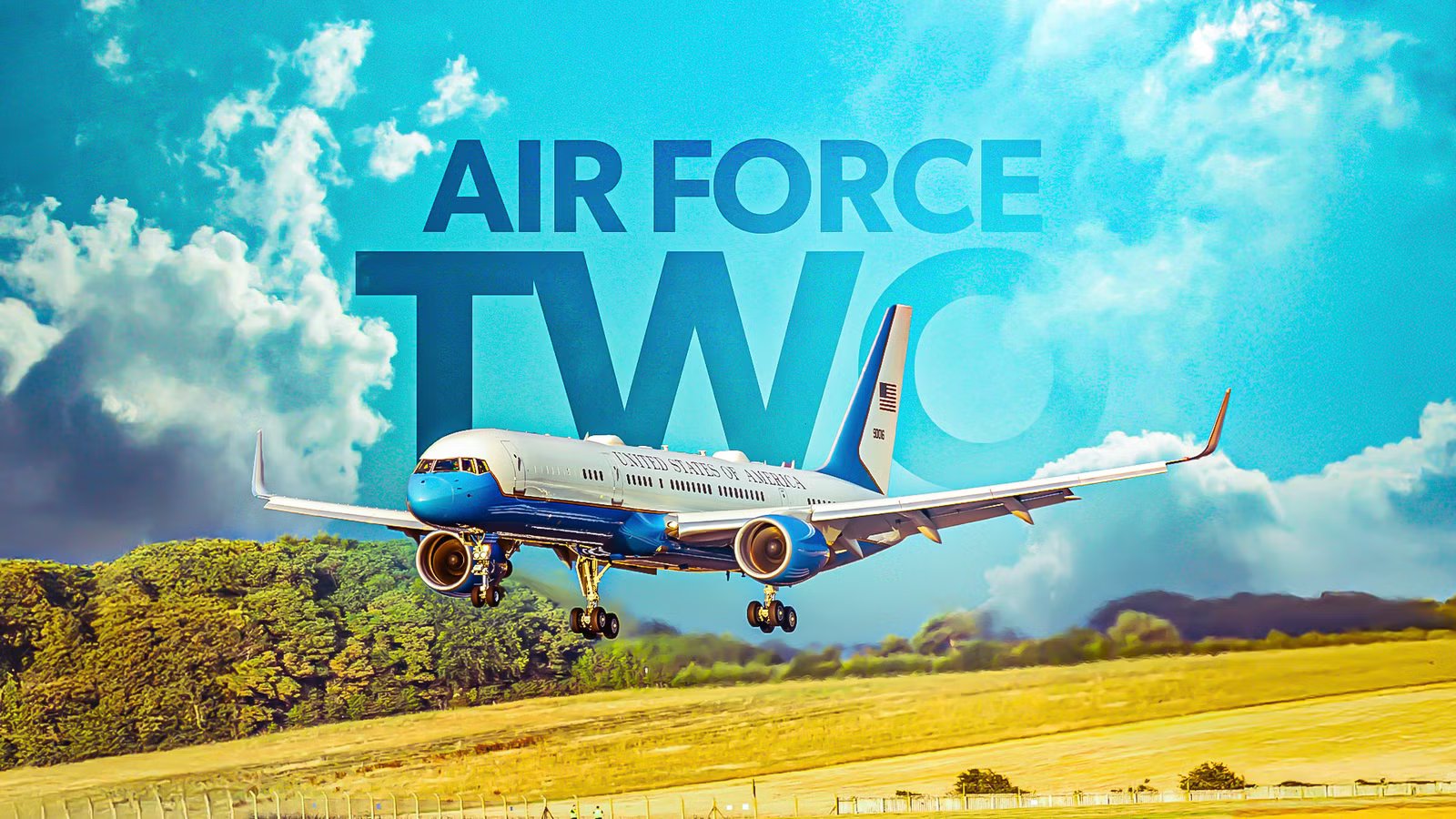
The aircraft most closely associated with transporting the Vice President of the United States is not a large four-engine widebody, but a modified narrowbody jet derived from a commercial airliner. Known as the C-32, this aircraft is based on the Boeing 757-200 and typically operates under the “Air Force Two” call sign when the Vice President is onboard. At first glance, this choice appears counterintuitive. The Vice President plays a central role in US governance and increasingly serves as a key diplomatic representative abroad. Foreign travel, high-level summits, and rapid response missions might suggest the need for a larger aircraft with greater range and capacity, such as a widebody platform. Yet in practice, the 757-based C-32 remains the primary aircraft for these missions.
The explanation lies in how the Vice President actually travels. Unlike the President, whose trips often involve extensive delegations and maximum security infrastructure, the Vice President operates within a more flexible and varied mission profile. This includes frequent domestic travel, multi-stop itineraries, and a growing number of international diplomatic visits that require access to a wider range of airports. The C-32 is optimized for this blend of responsibilities, offering a balance of range, efficiency, and operational adaptability that a widebody aircraft cannot consistently match.
A Purpose-Built Diplomatic Platform

The  Boeing C-32 is far more than a standard passenger jet. It is configured specifically for executive transport, with a layout that supports both governance and diplomacy in transit. The aircraft includes a private stateroom, conference areas, secure communications systems, and dedicated seating for staff and press. These features are essential given the Vice President’s evolving role in foreign policy.
Modern vice presidents frequently lead US delegations abroad, attend international summits, and engage in bilateral meetings with foreign leaders. This requires the ability to communicate securely with Washington, coordinate policy decisions, and prepare for engagements while en route. The C-32 supports this function without the scale of a widebody aircraft. Its configuration is designed around a working delegation rather than a large traveling entourage. This distinction is important. Diplomatic missions often involve smaller, targeted teams rather than the extensive support structures that accompany presidential travel. By aligning aircraft capacity with the size and function of these delegations, the C-32 provides a more efficient platform for sustained diplomatic activity.
Range Capability Versus Mission Reality

The Vice President’s travel patterns include a significant number of international trips, but they do not always require the extreme range offered by widebody aircraft. The C-32 has an approximate range of 5,500 nautical miles (10,186 km), which is sufficient for transatlantic travel and many transpacific routes with strategic planning. For example, flights between Washington and major European capitals fall comfortably within this range envelope. Even longer missions to parts of Asia or the Middle East can often be accomplished with a single refueling stop, which is operationally manageable within the framework of diplomatic travel.
This is where nuance becomes important. While a widebody aircraft could complete more routes nonstop, nonstop capability is not always necessary for vice presidential missions. Diplomatic itineraries often include scheduled stops, whether for logistics, crew changes, or additional engagements. In this context, the marginal benefit of ultra-long-range capability is reduced.
Overview of the C-32 | |
|---|---|
Parameter | Value |
Powerplant | Two Pratt and Whitney 2040 engines |
Wingspan | 124 feet 8 inches (37.8 meters) |
Max. takeoff weight | 255,000 pounds (115,666 kg) |
Ceiling | 42,000 feet (12,801 meters) |
Cruise speed | 537 miles per hour (864.2 km/h) |
Additionally, the ability to operate efficiently on medium to long-haul routes gives the C-32 a broader mission profile. It is equally suited to a domestic multi-stop tour as it is to an international summit trip, eliminating the need to switch aircraft types based on distance alone. From a performance perspective, the 757-200 is an extremely capable aircraft. The blend of range and performance capability makes the 757 the perfect aircraft to match the Vice President’s travel.
Airport Access And Diplomatic Flexibility

One of the most significant advantages of the 757 platform is its ability to access a wider range of airports. The C-32 can operate from shorter runways and airports with more limited infrastructure than widebody aircraft such as those derived from the Boeing 747. This capability is especially relevant for diplomatic missions. International travel is not limited to major global hubs. Vice presidential visits often include secondary cities, regional capitals, or strategically important locations that may not have the facilities required for large widebody operations. By using the C-32, the Vice President can fly closer to the final destination, reducing ground travel time and simplifying security logistics.
This is particularly valuable in regions where infrastructure varies widely or where rapid movement is necessary. Even in developed countries, airport access can influence scheduling and routing. Smaller aircraft allow for greater flexibility in slot allocation, parking, and ground handling. These factors contribute to more efficient and adaptable travel planning, which is critical for diplomatic missions that may involve tight timelines and changing conditions.
Fleet Structure And Complementary Roles

The decision to use a 757-based aircraft is best understood within the context of the broader US executive airlift fleet. The Vice President does not operate in isolation but as part of a layered system that includes multiple aircraft types, each designed for specific roles. Larger widebody aircraft, such as those used for presidential transport, are optimized for missions requiring extensive support, large delegations, and maximum onboard capability. These aircraft serve a distinct purpose and are deployed when those requirements are present.
The C-32 fleet occupies a different position within this structure. It is designed for flexibility, capable of handling a wide range of missions without the operational overhead of a widebody. This includes both domestic travel and international diplomacy, where the balance between capability and efficiency is critical. Within the C-32 fleet, there are further distinctions: C-32A and C-32B. The C-32A is what the Vice President and other VVIP personnel travel on, often operating under the “Special Air Missions” callsign when not carrying the Vice President. The C-32B “Gatekeeper” variant is more subtle in its all-white paint job and serves a more discreet mission set, ranging from classified trips to crisis support.
C-32 Operators | |||
|---|---|---|---|
Operating Wing | Operating Squadron | Home Base | |
C-32A | 89th Airlift Wing | 1st Airlift Squadron | Joint Base Andrews, MD |
C-32B | 96th Test Wing | 486th Flight Test Squadron | Eglin Air Force Base, FL |
108th Wing | 150th Special Operations Squadron | Joint Base McGuire-Dix-Lakehurst, NJ | |
Importantly, the system is not rigid. There are cases where the President may use the C-32 for trips to airports that cannot accommodate a larger aircraft. This reinforces the idea that the 757 platform is not a lesser option, but a complementary one within a diversified fleet. The “Air Force Two” designation itself reflects this flexibility. It is a call sign rather than a specific aircraft, meaning the Vice President can use different platforms depending on mission requirements. The C-32 is simply the most commonly used because it aligns best with typical travel patterns.
Operational Efficiency And Mission Tempo

The Vice President’s schedule often involves a higher frequency of travel than the President’s, with multiple trips occurring in rapid succession. This includes domestic tours, campaign-related travel, and international engagements that may be scheduled closely together. In this environment, operational efficiency becomes a key factor. The C-32 requires less ground support, has lower fuel consumption, and can be turned around more quickly than a widebody aircraft. These characteristics enable a higher tempo of operations without the logistical burden associated with larger aircraft.
Efficiency also extends to the broader travel footprint. Vice presidential trips typically involve fewer support aircraft and a smaller overall logistical presence. Using a 757-based platform helps maintain this streamlined approach, making it easier to coordinate movements and manage security. From a strategic perspective, this efficiency supports responsiveness. The Vice President can be deployed quickly to different locations, whether for diplomatic engagement, crisis response, or domestic events. The aircraft’s versatility ensures that it can adapt to changing requirements without significant reconfiguration. This balance between capability and efficiency is central to why the C-32 remains the preferred platform. It provides everything necessary for the mission while minimizing the constraints that come with larger aircraft.
Capable And Adaptable

The use of a 757-200 based platform for vice presidential travel reflects a nuanced understanding of how the role operates in practice. While the Vice President frequently undertakes international diplomatic missions, these trips do not consistently require the scale or range of a widebody aircraft. Instead, the C-32 offers a carefully calibrated balance.
It provides sufficient range for transcontinental and transoceanic travel, supports secure and continuous government operations, and enables access to a broader range of airports. At the same time, it maintains the efficiency and flexibility needed to sustain a high tempo of travel across diverse mission types.
Within the larger executive airlift fleet, the 757 platform fills a critical role. It bridges the gap between smaller business jet-style aircraft and large widebody transports, ensuring that the Vice President has an aircraft that is both capable and adaptable. Ultimately, the choice is not about limiting capability, but about optimizing it. The C-32 aligns with the realities of vice presidential travel, where diplomacy, accessibility, and efficiency intersect.