dailynewsnblog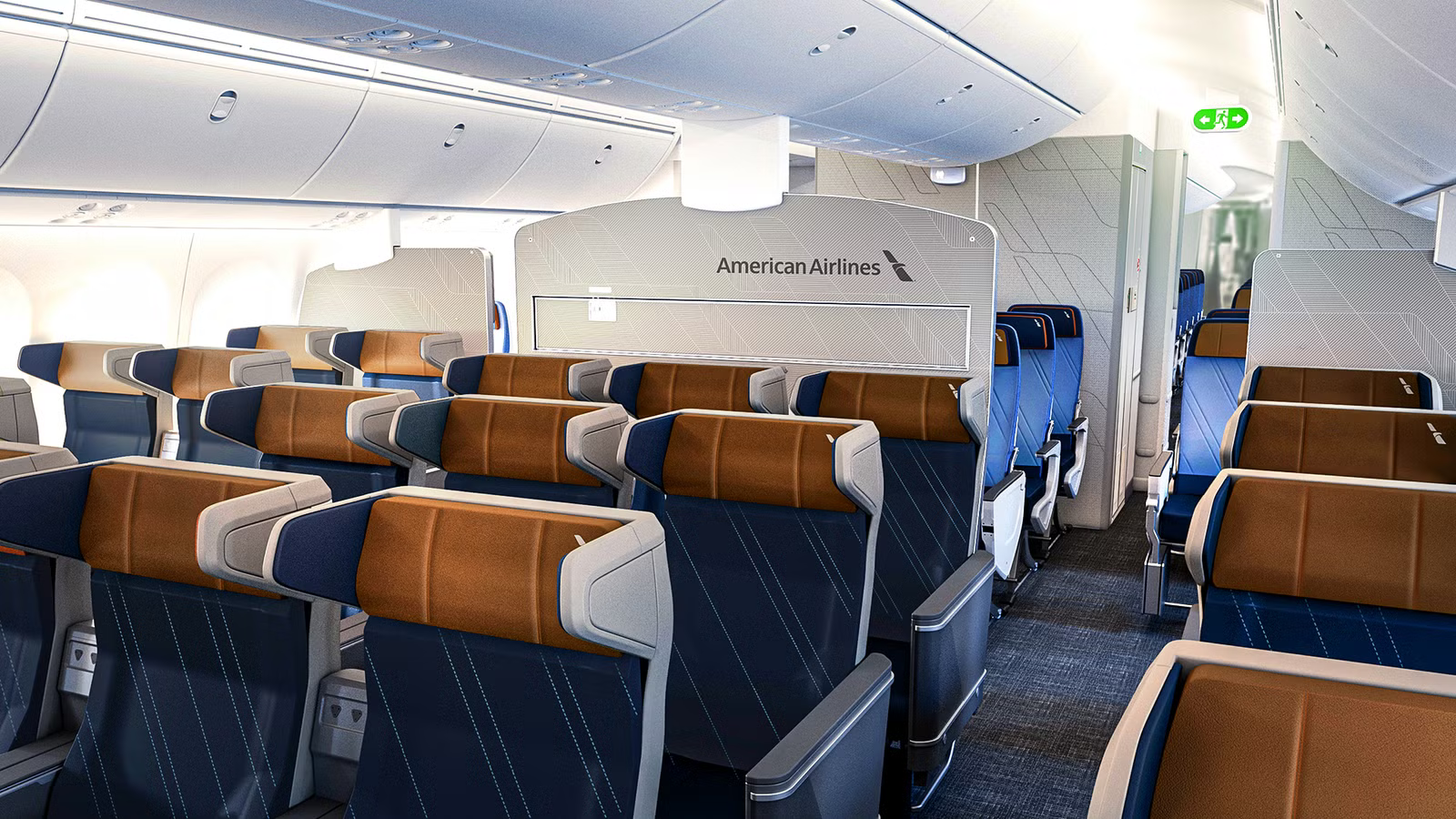
 American Airlines has introduced a redesigned long-haul cabin configuration that is creating an immediate financial dilemma. On flagship transatlantic routes, the carrier has elevated its mid-tier seating to a standard where paying thousands of dollars extra for a lie-flat bed starts to look like an unjustifiable corporate expense. The airline has notably narrowed the practical comfort gap between long-haul cabins, and as a result, created a counterintuitive commercial paradox aboard its primary long-haul fleet.
Corporate travel managers are scrutinizing quarterly budgets against rising transatlantic airfares, and so, American,  Boeing, and fleet planners globally are watching how corporate buyers react to the new layout. Can a carrier upgrade its mid-tier seating so effectively that it accidentally has a negative effect on the high-margin revenue of its own business class?
Satisfying The Modern Premium Passenger

It is no secret that there is a widening pricing gap between long-haul cabin classes, and American Airlines is where this gap is particularly visible. On core transatlantic corridors such as  London Heathrow(LHR) to
  New York(JFK), American Airlines typically prices premium economy at roughly 50% to 100% above main cabin fares, establishing a consistent 2x multiple on this segment. In contrast, retail Flagship business class regularly climbs to three or four times the base economy fare.
When corporate travel policies dictate that employees may only book premium cabins on flights exceeding eight or nine hours, a 3x or 4x multiple for a lie-flat suite leads to mandatory executive approvals or outright policy denials. A 2x fare multiple for premium economy, however, fits comfortably within standard travel guidelines. Across an enterprise sending hundreds of staff across the Atlantic annually, capping long-haul travel policy at mid-tier fares yields six-figure savings without forcing employees into cramped 3-3-3 coach seating.
It ultimately leaves airline revenue management teams facing a persistent problem on every long-haul departure. Filling 32 premium economy seats at double the standard economy rate yields solid returns, but every business traveler who downgrades from Flagship business means thousands of dollars in lost high-margin revenue. That commercial risk all rests entirely on whether the hardware in the middle cabin can satisfy a traveler who previously insisted on a fully flat bed.
All About The Layout

Diving into the Boeing 787-9P, the best place to start is by looking at what is new in terms of cabin layout. The 32-seat premium economy section is set up in a 2-3-2 configuration that removes an entire seat column compared to the nine-abreast 3-3-3 layout just behind in standard economy. Removing that extra seat across five dedicated rows expands personal spatial boundaries, providing a 38-inch (96.5 cm) seat pitch, a 19-inch (48.3 cm) seat width, and a 7-inch (17.8 cm) recline, a geometric change that allows passengers to lean back without intruding on the person behind them.
Engineers paired that deep recline with an articulating seat cradle, as per PaxEx.Aero, which shifts the seat bottom forward to maintain ergonomic support for the lower back. Every seat features four-way adjustable winged headrests along with integrated calf rests and footrests. On the tech front, passengers receive 14.6-inch (37.1 cm) 4K touchscreen monitors with Bluetooth audio pairing, dual high-power USB-A and USB-C ports, and universal AC outlets to keep laptops charged throughout an eight-hour flight.
Cabin Class | Seating Layout | Seat Pitch | Seat Width | Recline Depth | Screen Size & Tech |
Main Cabin | 3-3-3 (9-abreast) | 31–32 inches (78.7–81.3 cm) | 17.2 inches (43.7 cm) | 3 inches (7.6 cm) | 10–12 inches (25.4–30.5 cm) HD, USB-A |
Premium Economy | 2-3-2 (7-abreast) | 38 inches (96.5 cm) | 19.0 inches (48.3 cm) | 7 inches (17.8 cm) | 14.6 inches (37.1 cm) 4K, Bluetooth, USB-A/C, AC |
Flagship Business | 1-2-1 (4-abreast) | 78 inches (198.1 cm) lie-flat | 20.5 inches (52.1 cm) | 180° lie-flat bed | 17–18 inches (43.2–45.7 cm) 4K, Wireless Charging |
These physical improvements solve the challenge of inflight physical rest, though hardware alone does not define a premium long-haul journey. Corporate travelers paying double the coach fare expect an improved experience from check-in through departure. In actuality, it is the ground amenities and meal services that show whether American Airlines provides enough peripheral value to rival European competitors, or if soft-product compromises drag the cabin back down toward a basic economy product.
Not Quite On Par With The Competition?

In practice across long-haul overnight corridors, the soft product delivers a tangible upgrade over economy, though key operational gaps remain. Onboard service adds an extra premium layer to the flight with multi-course dining served on real china with metal cutlery, complimentary wine, beer, and spirits, and a magnetic Raven + Lily amenity kit packed with Joanna Vargas skincare items. Passengers also receive priority airport check-in, accelerated security lanes, and priority boarding privileges. However, ground perks stop short at the terminal corridor as American Airlines excludes premium economy tickets from Admirals Club or Flagship Lounge access, and instead, business travelers need to buy day passes or wait in general gate areas.
Comparing the carrier to transatlantic alliance partners and European legacy rivals shows exactly where the soft product falls behind global competitors. On premier business routes, carriers like Virgin Atlantic and  Air France offer a more refined cabin service, including pre-departure glass champagne service, dedicated mid-tier cabin attendants, and premium meal selections. While American Airlines equips the Boeing 787-9P with competitive hardware, its inflight service is still really a stepped-up version of the main cabin rather than a scaled-down Flagship business experience.
Withholding high-cost ground perks like lounge entry allows American Airlines to preserve low operational overhead on its 32-seat mid-tier cabin while maintaining a 2x fare premium over economy. At the same time, as corporate travel managers weigh whether six hours of quality rest inside an upgraded seat offsets the loss of a lie-flat bed, revenue planners have a far more general issue to be preoccupied with. The key question shifts from seat design to fleet yield, because it could be argued that this mid-tier offering acts as a financial drag, as opposed to a financial driver.
The New Roadmap For The Future

At a foundational level, airline revenue management algorithms treat premium economy as a high-margin upsell lever for main cabin travelers rather than a down-sell refuge for corporate executives. On a per-square-foot basis of aircraft floor space, the 32-seat premium economy cabin on the 787-9P generates exceptional revenue density. A single Flagship business suite consumes roughly two and a half times the cabin footprint of a Premium Economy seat, which means there is no need for mid-tier fares to match business class yields dollar for dollar to protect total aircraft profitability.
Transatlantic joint business ventures, including American Airlines’ revenue-sharing partnership with  British Airways, also help to boost premium economy bookings, which often originate from passengers upgrading from main cabin fares rather than corporate downgrades from business class. Furthermore, with American expanding its 787-9P premium footprint to 51 Flagship business suites alongside the 32 premium economy seats, the airline is actively targeting those corporate contracts that permit mixed-class travel policies.
With this, the way that American Airlines configures its widebody fleet for international growth is starting to change. By proving that a 32-seat middle cabin can capture high-margin upsells from coach without eroding high-yield business class demand, the carrier is locking in high premium-density seating layouts for all upcoming 787-9 deliveries. However, as international routes absorb these reconfigured aircraft, managing passenger expectations across routes where legacy aircraft and upgraded cabins operate side by side will be a real challenge.
Aligning To Its Partners

The rollout of the 787-9P is what solidifies this permanent relocation toward high premium-density aircraft across American Airlines’ long-haul network. Fleet planners are deploying these reconfigured widebodies primarily on ultra-long-haul and high-yield corporate corridors, including routes connecting London Heathrow(LHR) to  Dallas/Fort Worth(DFW) and
  Tokyo Haneda(HND) to
  Los Angeles(LAX). Through dedicating nearly 40% of total floor space to premium seating, American is optimizing aircraft allocation for routes where high corporate demand justifies a reduced overall passenger capacity.
Catch what other flight trackers miss
Emergency squawks, holds, NOTAMs — live signals, no signup.
Open tracker
Catch what other flight trackers miss
Emergency squawks, holds, NOTAMs — live signals, no signup.
Open tracker
This move becomes especially clear when comparing American’s long-haul fleet with its transatlantic joint business partner British Airways. While British Airways operates four-class aircraft equipped with First, Club Suite, World Traveller Plus, and World Traveller across core London corridors, American’s three-class 787-9P aligns seamlessly with joint venture capacity needs. Standardizing a 32-seat mid-tier cabin ensures that the corporate customers receive consistent inventory across alliance flights, simplifying multi-carrier corporate travel contracts on premier business routes.
It naturally raises a critical question for the broader airline industry: will American’s expanded mid-tier capacity make rival legacy carriers redesign their own long-haul cabin ratios, or will tightening corporate budgets eventually push travel managers to cap all long-haul executive travel at premium economy regardless of route duration?
An Experiment In Real Time

The rise of high-density, high-comfort premium economy cabins on long-haul airframes is something that has occurred really in a short space of time. What determines whether American Airlines succeeds in replicating this wider strategy is not merely passenger satisfaction, but whether global legacy carriers can maintain premium fare discipline during broader macroeconomic shifts.
The real test of this commercial model will unfold as Boeing completes deliveries of American Airlines’ remaining 787-9 order book and retrofits across legacy widebodies continue through the late 2020s. If corporate travel responds to tightening corporate budgets by capping transatlantic travel allowances on premium economy across these incoming airframes, rival transatlantic joint ventures will need to accelerate their own cabin reconfigurations.
For now, the 787-9P is a live experiment in passenger segmentation and fleet optimization. With corporate travel policies adapting to an era of hybrid work schedules and heightened cost scrutiny, the willingness of executives to trade a 180-degree lie-flat bed for a seven-inch (17.8 cm) recline and a 2x price tag will determine if American built the ultimate mid-tier sweet spot, or handed corporate accountants the perfect excuse to permanently shrink executive travel budgets.