dailynewsnblog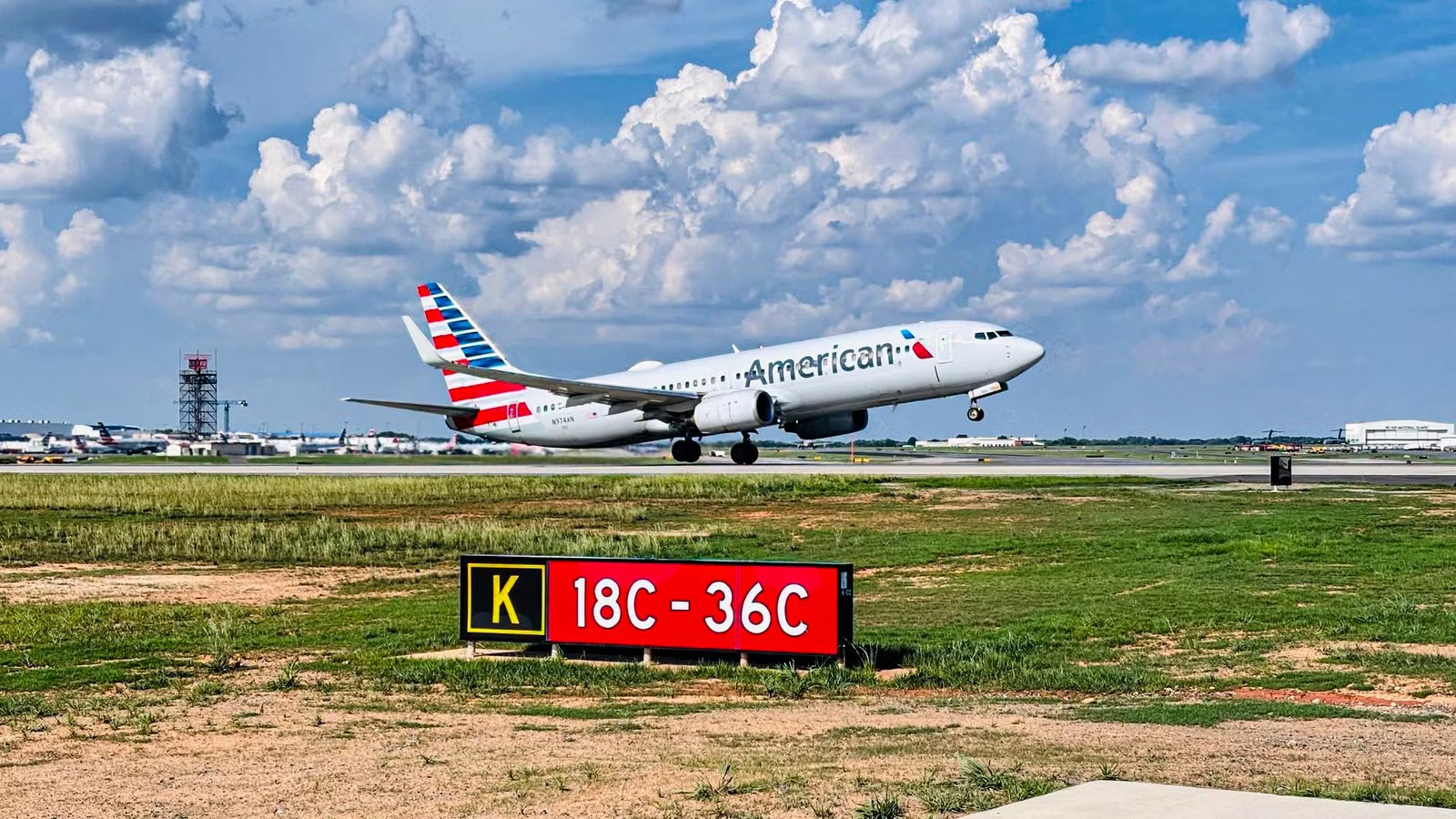
It’s difficult to overstate just how much of a titan American Airlines is within the domestic US market. DFW is, of course, a powerhouse that nearly rivals Delta’s legendary Atlanta hub, but the carrier has also grown  Charlotte Douglas International Airport (CLT), a hub inherited from the US Airways merger, to an unbelievable size.
It operates over 670 daily departures on average, which is more than what United Airlines averages out of its largest hub in Chicago, and this makes CLT a crucial part of American’s operations. The airline’s size in the market, the region’s economic growth, and the airport’s low operating costs make CLT a lucrative base. Meanwhile, American represents a sizable chunk of business for CLT.
The airport is therefore working on modernizing as well as expanding its facilities to better accommodate future growth. This includes a new runway to enable significant growth in flights, and this will be one of the most innovative in the world. Rather than simply consisting of a pavement strip, it will feature advanced sensors to send real-time data about itself.
The New Runway Coming To CLT

CLT currently has three parallel runways, numbered as 18L/36R, 19L/01R, and 19R/01L (the latter two were renamed earlier in 2026). They measure 8,677 feet (2,645 meters), 10,000 feet (3,000 meters), and 9,000 feet (2,700 meters), respectively; the latter two were constructed of concrete, while Runway 18L/36R was constructed of asphalt concrete.
The three strips are located sufficiently far apart to operate independently, enabling simultaneous parallel approaches to all runways. In 2023, the airport broke ground on a new runway that would be located between 19L/01R and 19R/01L, designated as Runway 19C/01C. Original plans called for the runway to be approximately 12,000 feet (3,656 meters) long, but this was later cut down to 10,000 feet (3,000 meters).
The entire project is projected to cost $1 billion and should be completed by fall 2027. In addition to the new runway, CLT is also constructing additional taxiways that will allow aircraft to taxi around the runways rather than having to cross them. This will significantly decrease taxi times while allowing for a more continuous flow of arrivals.
Once the new runway is completed, CLT will be one of very few airports in the US with four runways or more. It was never a huge airport until recently, but it’s grown significantly in recent years, and the fourth runway will allow it to accommodate significantly higher flight volumes than today. Notably, however, the airport is also innovating with the technology of the runway.
The Runway’s Digital Twin And Its Benefits

In August 2026, construction workers began laying down the first of roughly 2,000 sensors that will be embedded within the runway’s pavement. Once the runway is completed, the sensors will collect real-time data on the runway’s condition and stress loads, which will then be fed into a virtual mirror model dubbed the ‘Digital Twin’.
Catch what other flight trackers miss
Emergency squawks, holds, NOTAMs — live signals, no signup.
Open tracker
Catch what other flight trackers miss
Emergency squawks, holds, NOTAMs — live signals, no signup.
Open tracker
It will take in factors like weather conditions, aircraft weights, temperature, moisture, the age of the pavement, and more to aid in predictive maintenance as well as future runway design. This $6.5 million project comes as a collaboration between CLT Airport and the UNC Charlotte Aviation Innovation & Research Institute, partially funded by a $2 million grant from the FAA.
This is the first major application of ‘smart runway’ technology in the US, and the core promise is to predict maintenance needs more effectively, thereby lowering costs while also preventing major issues before they occur. This helps maintain operational reliability for the whole airport, which is especially important given its hub status. The project is not only being used to benefit CLT, but it will also advise the FAA and other airport authorities on how to design runways.
In addition, the project’s success could lead to similar technology being integrated into future runway projects across the US. Integrating sensor systems into Charlotte’s new runway offers several benefits, and the project will test not only the validity of the technology as currently implemented but also the cost-effectiveness of CLT’s specific approach across a long period of time.
The Duration & Impact Of The Implementation

Potentially the most notable aspect of the sensor project is that it’s not a short-lived experiment. The sensors, each of which is roughly the size of a modern smartphone, are designed for a ten-year lifespan, and this means that analysts will be able to interpret a huge amount of data throughout the first quarter of the runway’s life, as the pavement is designed to last between 30 and 40 years.
Given that this idea has not yet seen widespread use in commercial aviation, it’s bold for Charlotte to commit to the sensors for at least a decade. Sensors similar to those being used for the Digital Twin runway have been implemented on bridges and highways throughout the country, while similar technology has been tested by the United States military going back several years.
In addition, other airports have deployed sensor technology to monitor runway conditions on a much more limited scale. What’s innovative here is the use of these scanners to create a digital model of the runway using the collected data for such an extended period of time. The FAA intends to use the findings from this long-term trial to advise future airport designs.
As such, it appears that ‘smart runways’ will become a standard feature for new runways in one form or another. It’s already seen limited use in aviation, and pavement condition sensors are more commonly used in non-aviation applications as well. The implementation of runway sensors at CLT is mainly to refine the concept rather than determining if the technology works for large commercial airports.
Progress On The Runway

By September 2026, the runway was more than 50% complete, having used up well over a million hours of people power and over 30 miles (48 kilometers) of installed pipe. It’s now estimated that Runway 19C/01C will open for commercial service just under a year from the time of writing, and it should debut with the sensor system ready.
There are still several steps remaining with the runway itself, while the accompanying taxiways and new movement area additions are also a work in progress. CLT is constructing a new fire station at the southern edge of the airfield, which is being designed to meet FAA regulations for the new parallel runway and will be connected to the movement areas without requiring runway crossings.
The airport also needs to complete the runway’s asphalt shoulders, grooves, lighting, pavement markings, and equipment installations. Following this, the FAA will need to test the safety of the runway and its connected taxiways. Charlotte hopes to finish paving the runway in March 2027, while the markings should be completed by June 2027.
It’s after this point that the FAA will begin flight checking the runway, and CLT hopes to have 19C/01C certified by September 2027 as per its most recent plan. From there, it’ll join Denver, Detroit, Los Angeles, and Orlando as one of only a few airports in the US to operate four parallel runways, with Atlanta, Dallas/Fort Worth, and Chicago-O’Hare being the only ones to have even more.
CLT’s Important Role As A Hub

As a market, Charlotte is growing, and the Sun Belt region has also become increasingly important economically. This makes Charlotte and several other cities within the region more lucrative as spokes, but Charlotte is also a fortress hub for  American Airlines. The carrier holds a massive share of the local market and operates a robust connecting network.
Meanwhile, the hub is also known to offer attractive operating costs. However, the airport has become constrained in recent years, and the fourth runway will partially alleviate the airport’s increasing congestion. When Runway 19C/01C opens in September 2027, it’s believed that the airport will be able to accommodate between 20% and 25% more flights than today.
American Airlines Hubs | |
|---|---|
Charlotte Douglas International Airport (CLT) | New York John F. Kennedy International Airport (JFK) |
Chicago O’Hare International Airport (ORD) | New York LaGuardia Airport (LGA) |
Dallas/Fort Worth International Airport (DFW) | Philadelphia International Airport (PHL) |
Los Angeles International Airport (LAX) | Phoenix Sky Harbor International Airport (PHX) |
Miami International Airport (MIA) | Washington Ronald Reagan National Airport (DCA) |
Although it’s not the longest runway in the world, it’s more than sufficient for the routes that airlines are operating out of CLT. The new taxiway arrangement was designed specifically for time savings, not only for aircraft on the ground but for those on approach as well, since reducing the number of runway crossings allows for closer sequencing.
For American Airlines, the improvements being made to CLT will allow it to significantly grow its schedule even more than it does today. While American is focusing more heavily on other markets recently, Charlotte has the location, local market, and cost structure to support a massive domestic operation, and improvements to the hub’s efficiency help American maintain its competitive position. Meanwhile, CLT’s capacity is now growing to an extent that rivals some of the country’s largest hubs.