dailynewsnblog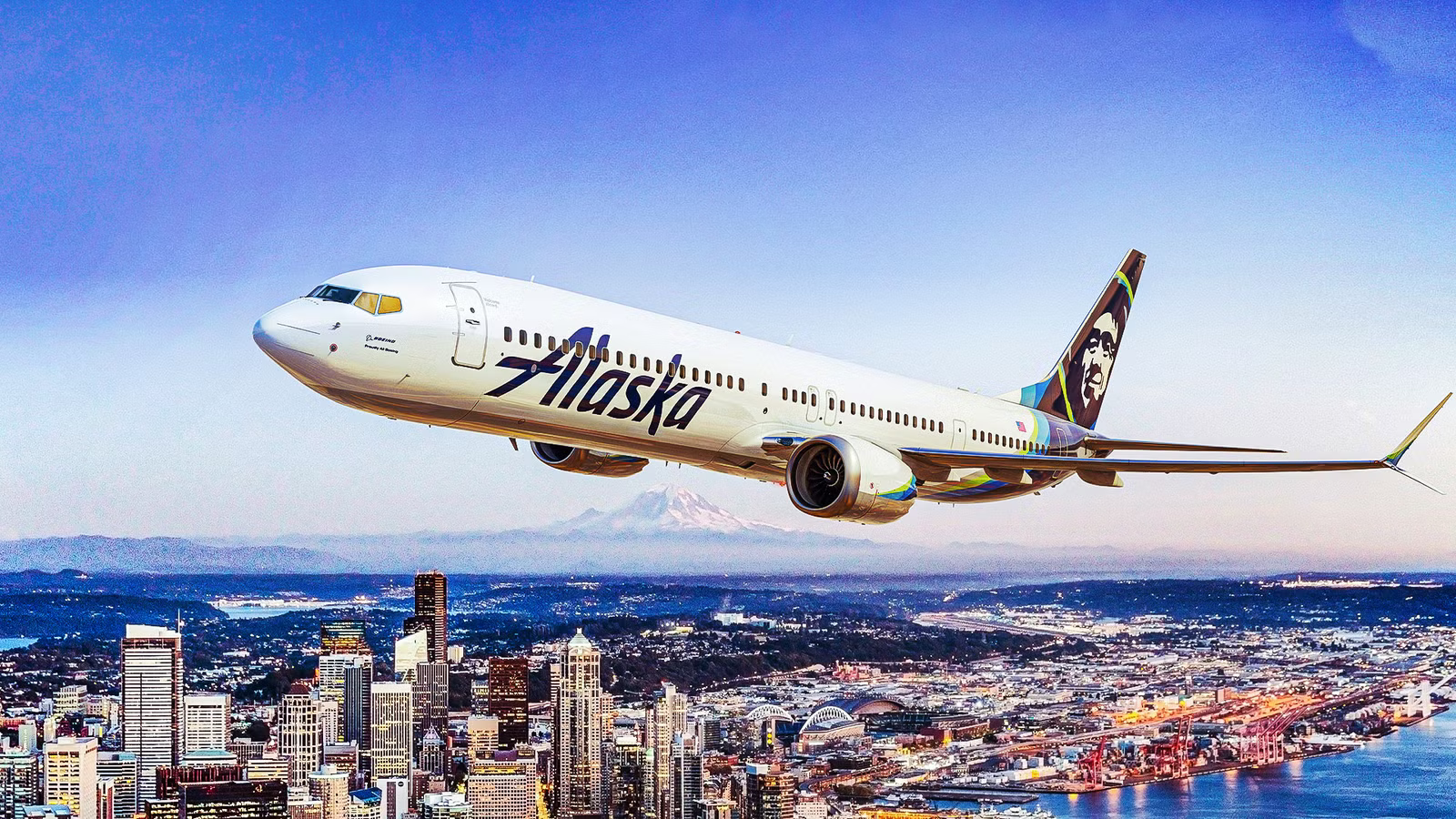
On January 7,  Alaska Airlines ordered 105 Boeing 737 MAX 10s in the largest aircraft purchase in the airline’s 93-year history. The aircraft has not been certified by the Federal Aviation Administration (FAA). Alaska committed over $13 billion at list prices to an aircraft that has been stuck in its certification campaign for more than five years, held up by an engine anti-icing redesign and a crew alerting system upgrade that Congress mandated after the 2018 and 2019 MAX crashes. The order came exactly two years after the Alaska Flight 1282 door plug blowout that grounded the airline’s MAX 9 fleet.
Alaska is not alone in betting on the MAX 10. Approximately 1,290 have been ordered worldwide by United Airlines, Ryanair, Delta Air Lines, WestJet, and others, all for an aircraft the FAA has not approved. The MAX 7, which shared the same technical hurdles, received its type certificate on August 3, 2026, clearing the path for the MAX 10 to follow.
What Alaska Ordered & When

On January 7, 2026, Alaska Airlines CEO Ben Minicucci stood at Boeing’s Delivery Center in Seattle and announced the largest aircraft order in the airline’s 93-year history. The deal covers 105 Boeing 737 MAX 10s, five Boeing 787-10 Dreamliners, and options for an additional 35 MAX 10s. At list prices, the firm order exceeds $13 billion. Deliveries are scheduled to begin in 2027 and extend through the mid-2030s, with the MAX 10s forming the backbone of Alaska’s narrowbody fleet renewal and the 787-10s supporting international expansion from Seattle.
The timing was notable. The announcement came exactly two years and two days after Alaska Airlines Flight 1282, a Boeing 737 MAX 9 with 177 people on board, suffered a door plug blowout at approximately 16,000 feet on January 5, 2024. The incident grounded Alaska’s MAX 9 fleet for weeks, triggered an FAA investigation into Boeing’s manufacturing quality, and led to Boeing’s CEO Dave Calhoun being replaced by Kelly Ortberg. Boeing paid Alaska Air Group approximately $160 million in compensation for lost revenue, irregular operations costs, and fleet restoration expenses during the grounding period. The passenger lawsuits were settled separately or remain ongoing.
The aircraft Alaska ordered does not exist yet in the regulatory sense. The Boeing 737 MAX 10 has not received FAA type certification. It cannot carry passengers. It cannot be delivered. As of the date Alaska signed the order, the MAX 10 had been in its certification campaign for more than five years, held up by an engine anti-icing system redesign and a new crew alerting system required by Congress after the 2018 and 2019 MAX crashes. Alaska placed the largest order in its history for an aircraft that the FAA has not approved, committing billions to a delivery schedule that depends entirely on a certification timeline the airline does not control.
Why The MAX 10 Is Not Certified Yet

The 737 MAX 10 first flew on June 18, 2021. More than five years later, it has not been certified. The delays stem from two technical issues that affected both the MAX 7 and MAX 10 variants simultaneously and that Boeing was unable to resolve within the timeline Congress imposed when it passed the Aircraft Certification Reform and Accountability Act in December 2020.
The first issue is the engine anti-icing system. The MAX 7 and MAX 10 use the same CFM LEAP-1B engine as the MAX 8 and MAX 9, but the shorter and longer fuselage lengths change the aerodynamic environment around the engine nacelle. Boeing discovered that the engine inlet anti-ice system, which uses hot bleed air to prevent ice formation on the nacelle lip during flight through icing conditions, produced excessive heating in certain configurations that could damage the nacelle structure. The system required a redesign that Boeing initially attempted through operational limitations before concluding that a hardware modification was necessary. The redesign affected both the MAX 7 and MAX 10, linking their certification timelines together.
The second issue is the flight deck crew alerting system. The Aircraft Certification Reform and Accountability Act required Boeing to meet updated regulatory standards for crew alerting on any new MAX variant certified after the law’s enactment. The MAX 8 and MAX 9 were certified before the law passed and are not subject to the new requirements. The MAX 7 and MAX 10 are. Boeing had to develop, test, and certify an upgraded alerting system that met the post-crash regulatory standard, a process that added years to the certification campaign. The FAA granted the MAX 10 Type Inspection Authorization for Phase 2 flight testing, the final stage before certification, in late December 2025. Phase 2 puts FAA test pilots and engineers directly on the aircraft to verify compliance data that Boeing collected during Phase 1. Boeing has stated that it expects both the MAX 7 and MAX 10 to be certified in 2026.
Why Alaska Ordered An Aircraft The FAA Has Not Approved

Alaska Airlines operates an all-Boeing fleet. Every aircraft in its mainline operation is a 737 variant. Its pilots hold a single type rating. Its maintenance infrastructure, spare parts inventory, training programs, and ground support equipment are built entirely around the 737. Adding the MAX 10 to the fleet requires no new type rating, no new maintenance certification, no new simulator purchase, and no new parts chain. A MAX 10 pilot is a 737 pilot. A MAX 10 mechanic is a 737 mechanic. The operational simplicity of a single-type fleet is central to Alaska’s cost structure, and the MAX 10 is the only aircraft that preserves it while adding the seat count Alaska needs to compete on its highest-demand routes.
Catch what other flight trackers miss
Emergency squawks, holds, NOTAMs — live signals, no signup.
Open tracker
Catch what other flight trackers miss
Emergency squawks, holds, NOTAMs — live signals, no signup.
Open tracker
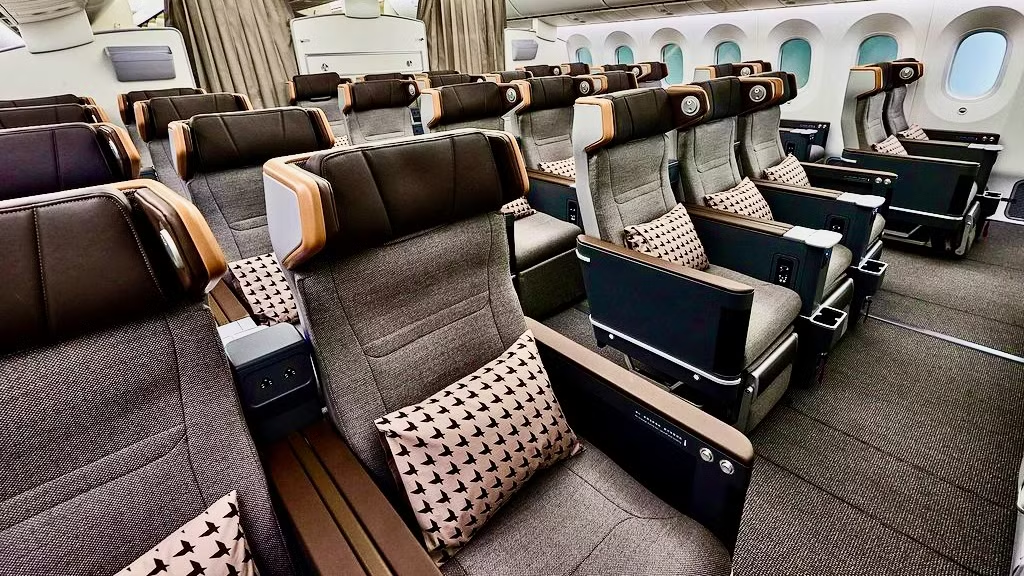
The MAX 10 seats up to 230 passengers in a high-density configuration and approximately 190-200 in a typical two-class layout. Alaska’s current MAX 9 carries 178 passengers. The additional 12-22 seats per departure on the MAX 10 produce more revenue on the same route with the same crew, the same gate, and the same turnaround time. On slot-constrained or frequency-limited routes where Alaska cannot simply add another flight, the MAX 10 generates more revenue per departure than the MAX 9 without requiring any additional infrastructure. That per-departure revenue gain is the economic case for the aircraft.
The competitive pressure is equally important. United Airlines operates the Airbus A321neo with 197-220 seats depending on configuration. American Airlines operates the A321neo and A321XLR. JetBlue operates the A321neo with up to 200 seats in a two-class layout. Delta has ordered the MAX 10 but also operates the A321neo. Alaska’s competitors have had access to a high-capacity narrowbody since the A321neo entered service in 2017. Alaska has been waiting for the MAX 10 to provide the same capability within its all-Boeing fleet. Every year the MAX 10 remains uncertified is a year Alaska competes against 200-seat narrowbodies with a 178-seat aircraft on the same routes.
Who Else Is Waiting For The MAX 10?

Alaska’s 105-aircraft order is large, but it represents a fraction of the total MAX 10 backlog. Approximately 1,290 MAX 10s have been ordered by airlines worldwide. United Airlines holds the largest position at 277 aircraft, making it the single biggest MAX 10 customer. Ryanair has committed to 150 firm orders with 150 options, a deal valued at over $40 billion at list prices. Delta Air Lines, WestJet, and Pegasus Airlines hold additional positions. The combined order book represents more than $40 billion in aircraft that Boeing cannot deliver until the FAA signs the type certificate.
WestJet has been designated as the MAX 10’s launch customer, meaning it will receive the first delivery once certification is complete. United plans to use the MAX 10 alongside its A321neo fleet on high-density domestic routes and transcontinental services where the additional seats over the MAX 9 improve per-departure economics. Ryanair, which currently operates the largest 737 MAX 8 fleet in Europe, views the MAX 10 as the aircraft that will drive its growth toward a target of 300 million annual passengers by the early 2030s. Ryanair CEO Michael O’Leary stated on March 20, 2026, that Boeing expects MAX 10 certification in Q3 2026, with first Ryanair deliveries in spring 2027. Each of these carriers has built fleet plans, network strategies, and growth projections around an aircraft that has not yet been approved for commercial service.
The MAX 10 backlog has continued to grow during the certification delay rather than shrinking. Airlines have not cancelled orders in significant numbers despite the years of slippage. Alaska’s January 2026 order added 105 aircraft to the backlog at a point when the certification timeline was still uncertain. The continued order momentum reflects two factors: there is no alternative Boeing narrowbody with equivalent seat count, and airlines committed to an all-Boeing fleet have no other option for competing against the A321neo. Switching to Airbus would require new type ratings, new maintenance programs, new simulators, and new supply chains. For carriers like Alaska that have built their entire operation around a single Boeing type, the MAX 10 is not one option among several. It is the only option.
The MAX 7 Just Got Certified After A Decade

The FAA issued an amended type certificate for the Boeing 737 MAX 7 on August 3, 2026, ending nearly a decade of development and certification delays. The MAX 7 is the smallest variant in the MAX family, seating approximately 138-172 passengers depending on configuration, with a range of 3,800 nautical miles (7,038 km), the longest of any MAX variant. Southwest Airlines holds the majority of MAX 7 orders, with approximately 260-280 aircraft on order depending on the source, representing roughly 90% of the total MAX 7 backlog. Southwest plans to begin revenue service with the MAX 7 in Q1 2027, replacing the aging 737-700s that form a significant portion of its fleet. Approximately 30 completed MAX 7 airframes have been sitting in storage at Boeing’s facilities awaiting the certification that would allow them to be retrofitted with final modifications and delivered.
The certification required three key safety enhancements that had held up both the MAX 7 and MAX 10 for years: revised flight-control software, an upgraded flight crew alerting system meeting the post-2020 congressional requirements, and the redesigned engine anti-ice system that resolved the overheating concern. The FAA accepted Boeing’s engineering solutions for all three issues on the MAX 7. Because the MAX 10 shares the same engine, the same crew alerting architecture, and the same flight-control software baseline, the solutions certified on the MAX 7 apply directly to the MAX 10’s certification package. The MAX 10 does not need to resolve those issues independently. It needs the FAA to verify that the same solutions work on the longer airframe, which is a narrower engineering task than developing the solutions from scratch.