dailynewsnblog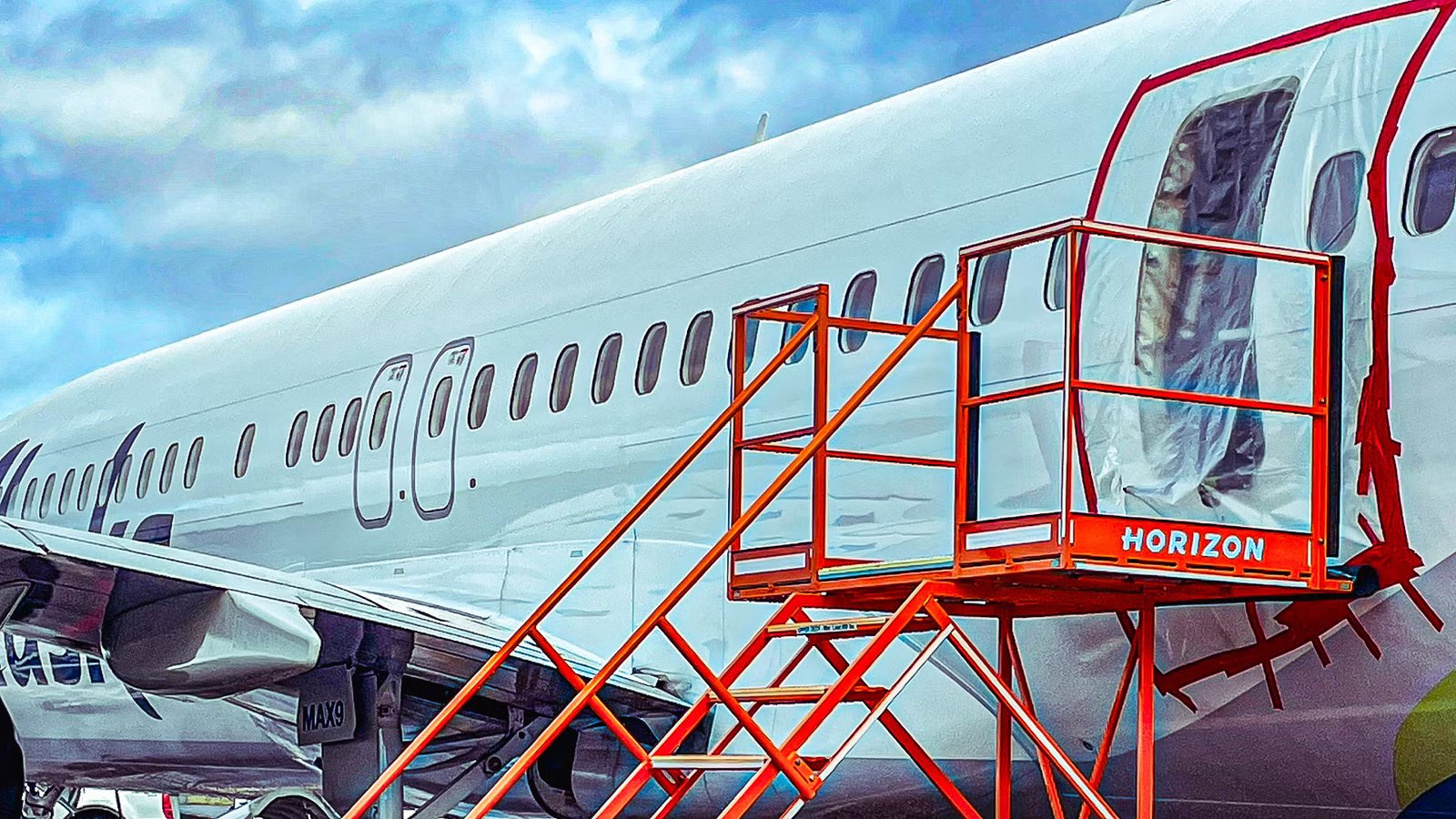
On January 5, 2024, Alaska Airlines flight 1282 experienced a door plug blowout in midair. The Boeing 737 MAX 9 was flying from Portland, Oregon, and climbing through 14,000 feet when the improperly installed door plug catastrophically failed and ejected itself due to the pressure difference and lack of proper fasteners. Since then, the plane has never taken to the air again.  Alaska Airlines reached a deal with
  Boeing in which the manufacturer would buy back the airplane, and it was formally returned near the end of April in 2024. Originally registered as N704AL, which has since changed, and Spirit AeroSystems repaired the incorrect door plug, but the jet has never been seen in the skies again. Alaska is now expected to get a 737 MAX 10 in exchange as a replacement, whenever the stretched variant finally reaches certification and deliveries begin.
Why did Alaska Airlines choose to ditch this aircraft rather than repair it and return it to service? It could easily be attributed to superstition, with the plane feeling unlucky or even cursed, but from a professional standpoint, it simply doesn’t make sense to keep an aircraft around that serves as a permanent reminder of a traumatic event in the history of US aviation. Alaska distanced itself from the mishap by removing the aircraft from its fleet, and the fate of the jet remains uncertain to this day.
A Catastrophic Case Of Negligence

Having a door plug eject itself at nearly 15,000 feet is a terrifying experience for the average flyer onboard a commercial jet. Despite the fact that there were no casualties as a result of the mishap, that doesn’t change the fact that the people who were flying that plane feared for their lives and endured an incredibly rare and terrible accident in the world of commercial aviation. Alaska Airlines was not at fault, and it is very important to the carrier that customers understand that and trust the airline.
The very first step in repairing that trust and reputation is removing the aircraft that was faulty from revenue service and ensuring that no airplanes that could be at risk for similar failures remain in service. Alaska Airlines has been growing and expanding in recent years, acquiring Hawaiian Airlines and establishing widebody international routes, so protecting its brand image from such a terrible event in the public eye is a paramount concern for the carrier.
The National Transportation Safety Board (NTSB) concluded that the airline was not at fault in any way. The direct and clear cause was the failure of Spirit AeroSystems and Boeing to not reinstall four critical bolts in the door plug while the plane was in the factory. It was reopened in order to fix rivets, and when it was closed, the bolts were never reinstalled. Since new CEO Kelly Ortberg has taken over, the primary driver of the renewed quality control programs is the elimination of this kind of ‘travel work’ as the company dubs it, where tasks are split up between sites and teams, creating opportunities for critical failures, as Flight 1282 experienced.
The Events Of Flight 1282

Inside the cabin, the unrestrained door plug ejecting from the fuselage created a massive drop in pressure in what could be referred to as a ‘roaring’ air vacuum. Not only was the sound deafeningly intense, but personal items, including the headsets of passengers seated nearby, were ripped off and sucked out of the gaping hole in the side of the jet. Even the pilots’ headsets were knocked out of position by the sudden change in cabin pressure.
Reports after the event stated that cell phones and even a child’s shirt were ejected from the plane by the enormous vacuum of air being sucked through the hole. By a stroke of luck, there was no one sitting in the two seats directly in front of the door plug that was ejected. Only eight passengers of the 177 people aboard suffered minor injuries. The 60-pound door plug was found cratered into the backyard of a home in the Portland area after falling from 15,000 feet.
The entire 737 MAX 9 fleet was grounded in the aftermath of this mishap. This followed the unprecedented 20-month grounding of the 737 MAX fleet after the 2018 and 2019 fatal crashes of Lion Air and Ethiopian Airlines flights that killed nearly 350 people. Just prior to the event, the Federal Aviation Administration (FAA) was beginning to consider loosening scrutiny on Boeing as it appeared that quality assurance had fallen below expected standards. With that proving to be false, the FAA has continued to personally inspect every airplane to roll off the 737 MAX line and only recently granted an increased monthly delivery quota.

Some Passengers Still Aren’t Convinced Of Boeing’s Safety 1 Year After Alaska Airlines’ Door Blowout
Boeing has put stringent measures in place since the incident, under the guidance of the FAA.
How Alaska Was Impacted

The ejection of the door plug on Alaska Airlines flight 1282 triggered a chain of financial, operational, and legal consequences that reshaped the airline’s relationship with Boeing and its approach to safety oversight. The immediate impact was a massive disruption to Alaska’s flight schedule and bottom line. Alaska grounded its entire fleet of 65 Boeing 737 MAX 9 aircraft for roughly three weeks, resulting in 110 to 150 flight cancellations per day.
The grounding cost the airline approximately $150 million to $160 million in lost profits during the first quarter of 2024 alone. Due to delivery delays and the production cap subsequently placed on Boeing by the FAA, Alaska had to lower its 2024 capacity growth expectations by around half its original projections. To mitigate the damages, Alaska negotiated significant compensation from Boeing, as Investopedia reported. Boeing paid Alaska an initial $160 million in cash in early 2024 to cover immediate losses from the grounding.
Alaska reported receiving further compensation beyond the initial cash payment, likely including future aircraft discounts and ‘make-whole’ credits. While the airline settled some disputes, it remains entangled in complex litigation. In July 2025, three passengers who sued for $1 billion settled out of court with both Alaska and Boeing. In response to separate class-action lawsuits filed by passengers, Boeing’s lawyers argued the aircraft had been improperly maintained or misused by third parties.

Alaska Airlines 737 MAX Captain Sues Boeing Over Door Plug Incident
An Alaska Airlines Boeing 737 MAX 9 Captain has filed a lawsuit against Boeing over the mid-air door plug incident that occurred in January 2024. Spirit AeroSystems is also named in the lawsuit. According to a report from AvBrief, Captain Brandon Fisher is seeking $10 million in damages, alleging that Boeing attempted to attribute passenger-reported harm from the incident to the flight crew.
Aircrew Under Fire

In early 2026, the flight’s captain, Brandon Fisher, filed a $10 million lawsuit against Boeing, alleging the company tried to ‘scapegoat’ the crew in legal filings to deflect blame for manufacturing errors. The focus of the litigation states that while Boeing publicly praised the crew as heroes, behind closed doors, it attempted to deflect responsibility in private court filings against them. Four flight attendants also filed suits for physical and emotional trauma late last year.
Captain Fisher’s legal team contests that he was personally sued by two passengers because of the language that Boeing used to try to paint him as a scapegoat in the aftermath of the mishap, as ABC covered. The findings of the official federal investigation found the root causes to be from mechanical failure that occurred on the factory floor and were impossible to have been detected by aircrew in any pre-flight or post-flight inspection.
The four flight attendants who were on board the day that Flight 1282 suffered its crippling midair structural failure filed cases against Boeing for severe permanent injuries, including tinnitus, back injuries, and PTSD caused by the explosive decompression that they experienced. They contest that Boeing was guilty of gross negligence for delivering an aircraft that was not airworthy.
One attendant, Michelle Hughes, stated the trauma profoundly impaired her personal life and created significant challenges in returning to her career. Fortunately, they were strapped into seats for the climb phase; should they have been working in the aisles at cruise level when the failure occurred, it’s entirely possible they could have been ejected from the aircraft and killed.

Why This Alaska Airlines Parody Took Off For The Wrong Reasons
Alaska Airlines isn’t the only carrier to have been the subject of a Saturday Night Live parody.
Safety In The Back Seat

The investigation into the Alaska Airlines Flight 1282 incident revealed deep-seated negligence and systemic manufacturing failures at both Boeing and Spirit AeroSystems. FAA inspectors found technicians using unapproved items, such as hotel key cards and Liquid Dawn dish soap, to check or lubricate seals and other components during assembly.
The four critical bolts that caused the blowout were removed by Boeing workers to fix damaged rivets but were never documented in the official tracking system. Because no paper trail existed, no quality inspector knew to verify that the bolts were replaced. In a six-week FAA audit, Boeing failed 33 out of 89 product tests, while Spirit AeroSystems failed 7 out of 13. Many of these failures were related to not following approved manufacturing instructions.
The NTSB highlighted a dangerous lack of experience and training on the production line, according to an FAA spokesperson who spoke with FLYING Magazine.
“The FAA takes NTSB recommendations seriously and will carefully evaluate those issued today,” the agency said. “The FAA has fundamentally changed how it oversees Boeing since the Alaska Airlines door-plug accident, and we will continue this aggressive oversight to ensure Boeing fixes its systemic production-quality issues. We are actively monitoring Boeing’s performance and meet weekly with the company to review its progress and any challenges it’s facing in implementing necessary changes.”
An expert review panel concluded that there was a major disconnect between Boeing’s senior management and factory workers. Some assembly workers told investigators they feared retaliation if they reported safety or quality concerns. The FAA administrator noted that Boeing’s safety culture needed a complete reset, as the company had prioritized production rates and financial targets over rigorous quality assurance.

![Historic: Air Canada Launches 1st Flights On These 2 New Transatlantic Routes [Map]](https://dailynewsnblog.com/wp-content/uploads/2026/06/air-canada-boeing-787-8-taxiing.jpg)