dailynewsnblog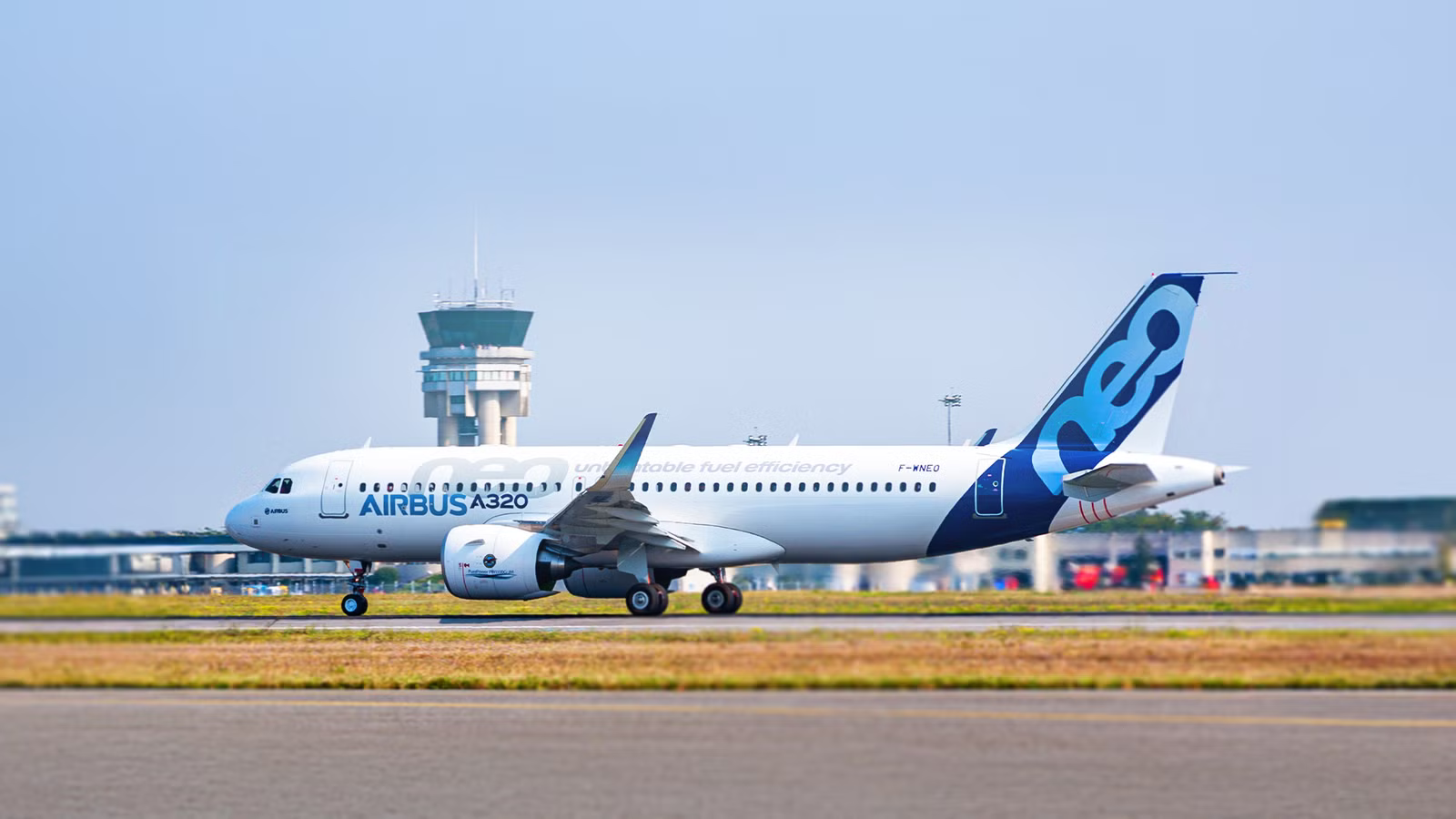
In August, Airbus delivered 57 commercial airliners and marked the slowest month of the summer. Normally, a dip like that would not be a significant indicator of production capacity. However, the struggle of the European planemaker to achieve its stated goals may be an important benchmark. The sudden drop lands at the worst possible moment for the European aerospace giant.
The company previously promised investors it would deliver 870 aircraft this year. With only 475 jets handed over through August, the assembly lines in Toulouse must somehow churn out 395 more aircraft in the final four months alone. That requires a blistering average of nearly 99 deliveries a month from September through December.
Airbus has not come close to that pace at any point so far this year. At the same time, the real challenge for the aerospace giant has nothing to do with assembly line efficiency or order books. Rather, its final quarter hinges entirely on whether the supply chain bottlenecks strangling its global logistics pipeline can be cleared fast enough to make that year-end sprint possible.
Widening The Lead Against A Hobbled Rival

In August, over 31 different customers received aircraft from Airbus as part of the 57-jet batch. The vast majority of those airframes were narrowbody models. Specifically, the breakdown includes 16 A320neos, 26 A321neos, one A319neo, and 10 A220-300s. Only four widebody aircraft rolled off the factory floor during the month.
While a focus on single-aisle jets is nothing new, what is raising eyebrows is the clear downward trend line. The company saw 89 deliveries in June, then dropped to 67 in July, and then again to just 57 in August. Meanwhile, Boeing handed over 51 commercial planes in August to hit a running total of 418.
That leaves Airbus with a comfortable 57-jet lead over its American rival through the first eight months of the year, keeping its market share lead firmly intact. Airbus reported that its deliveries for the year still sit a healthy 9% above where they were at this exact point in 2025. It is a positive data point the company is happy to highlight, even as its short-term production momentum slips backward ahead of winter.
Still, leading the competition does not alter the harsh internal math facing the European planemaker. Airbus set its own bar at roughly 870 deliveries for the year, and it has to clear that obstacle by fixing its own supplier network, not by beating Boeing’s numbers. The upcoming fall months will show whether the company can dramatically scale up its operations or if it will fall short of its own promises.
Summer Slump Puts Toulouse On The Defensive

To hit its annual target of almost 900 deliveries, Airbus must now nearly double that baseline and sustain it for four straight months. Through the first eight months of 2026, Airbus averaged just over 59 deliveries a month, according to data from Air Data News. Hitting 870 is an incredibly tall order considering the planemaker has never held a pace that blistering across a full quarter, let alone two.
Airbus chief executive Guillaume Faury has been incredibly candid about why the company’s calendar always tilts so heavily toward the finish line. On an earnings call transcribed by Leeham News, Faury admitted that aircraft deliveries are habitually backloaded into the fourth quarter.
This pattern is an extreme version of a trend Airbus has repeated for several years running. In 2024, the company slashed its original target of 800 jets down to 770 and still fell short, managing just 766 shipments. In 2025, it trimmed another initial goal down to 790, barely squeaking past with 793 deliveries.
Every year follows the same script. Airbus sets a high bar, cuts the target when physical supply chain bottlenecks bite, and then leans on a massive November and December sprint. The difference this time is that the target this year has not been lowered, leaving the entire weight of the year resting on one quarter that must outperform anything the company has achieved so far.
The Engine Shortage Strangling The A320neo

The single biggest roadblock for Airbus is the same planes that should be the easiest to build. The A320neo and A321neo narrowbody lines were meant to carry the bulk of the 2026 target, but they are heavily constrained by long-standing parts shortages. Specifically, Pratt & Whitney’s geared turbofans are still the primary chokepoint undercutting output.
The engine shortage has grown so severe that desperate airlines are actually dismantling nearly new aircraft just to salvage their powerplants. Several hundred A320neo family jets remain grounded worldwide awaiting engine repairs, knocking out close to a third of the global fleet. Maintenance turnaround times at specialized repair shops stretch past 250 days. That desperate state has left Airbus with new planes sitting in the backlot of its factories complete in every aspect minus a pair of engines.
Airbus has directly pressured the engine manufacturer for faster turnarounds to salvage its own year-end delivery numbers. While a redesigned GTF Advantage engine received European certification in April, offering double the time on the wing, the factory production transition won’t be fully complete until the first half of 2028. This means the supply crunch will not ease up before the final months of 2026.
An A350 Program That Is Stuck On A Fixed Plateau

The widebody lines can’t save the day either. Especially looking at the A350 factory. Airbus set out years ago to lift A350 output to 10 aircraft a month by 2026 and 12 a month by 2028. Instead, persistent supply chain chaos, much of it tied to parts from Spirit AeroSystems, has kept the program stubbornly stuck near a baseline of six a month since 2021.
The company delivered just 26 A350s across the first half of 2026, averaging fewer than five a month. August brought zero relief, as only three A350-1000s left the line. Those planes made up the bulk of Airbus’s meager four widebody handovers for the month. While monthly deliveries do not perfectly track daily factory output, the numbers show a clear and costly stagnation.
CEO Faury insists the company is still in a steep ramp-up driven by massive global demand, refusing to abandon the 2028 target. A program that cannot consistently clear its old six-a-month floor is in no position to absorb the overflow from a hobbled narrowbody line. This failure puts even more pressure on the one widebody family that briefly went completely dark this summer.
A Stray Tool Triggers An Unprecedented Line Stoppage

A major piece of the overall delivery bottleneck also belongs to the A330 line. Airbus suspended all A330 deliveries throughout June and July after inspectors discovered a stray tool left inside the horizontal tail plane of an aircraft during a routine pre-delivery check. According to reports from Air Data News, this unexpected quality disruption resulted in zero A330 deliveries for two consecutive months, a rare full stop for an active widebody program outside a global pandemic or an official grounding order.
The finding was severe enough to trigger immediate, widespread inspections across every single airframe currently in the production line. August brought the first minor sign of life since May, with a single A330-900 handed over to Starlux Airlines. However, that lone jet did very little to reverse the compounding financial and operational damage.
Company metrics show that Airbus has delivered just 11 A330s across the year so far, marking a steep 31% drop compared to the same point in 2025. While the tool discovery was a temporary quality escape rather than a major structural defect, halting a widebody line during the critical summer stretch completely erased the company’s delivery cushion. Entering the final months of the year, Airbus now faces an uphill battle with zero room for error across its entire manufacturing network.
Strong Demand Amid Persistent Production Constraints

Perhaps the most noteworthy part of Airbus’s story this year is that none of its production troubles have dented customer demand. If anything, the massive gap between what airlines want and what the factories can actually build has only widened.
At the Farnborough International Airshow in July, the company locked in firm orders for even more A320neo family jets. The deals helped drive Airbus’s gross bookings past 1,157 aircraft through August. Even after factoring in cancellations, the company will likely push up its total backlog to a record-breaking 9,368 aircraft.
Bloomberg reported these comments from CEO Faury in a company memo from June:
“Our business environment is not a reason to soften our ambitions or strategy: demand for our products and services remains strong. Instead, this is an opportunity to address inefficiencies and further improve the way we work together.”
The outlet went on to describe the CEO, calling out the “high level of absenteeism we observe at Airbus in certain sites and teams” as one of the most decisive factors in company performance. The mountain of commitments represents close to a decade of guaranteed production at current factory speeds.
Airlines keep signing up for jets faster than Toulouse can physically assemble them, which secures long-term revenue but leaves executives explaining why deliveries lag behind guidance quarter after quarter. Whether Airbus can pull off its 870-jet target depends on its historic habit of a massive December delivery spike.