dailynewsnblog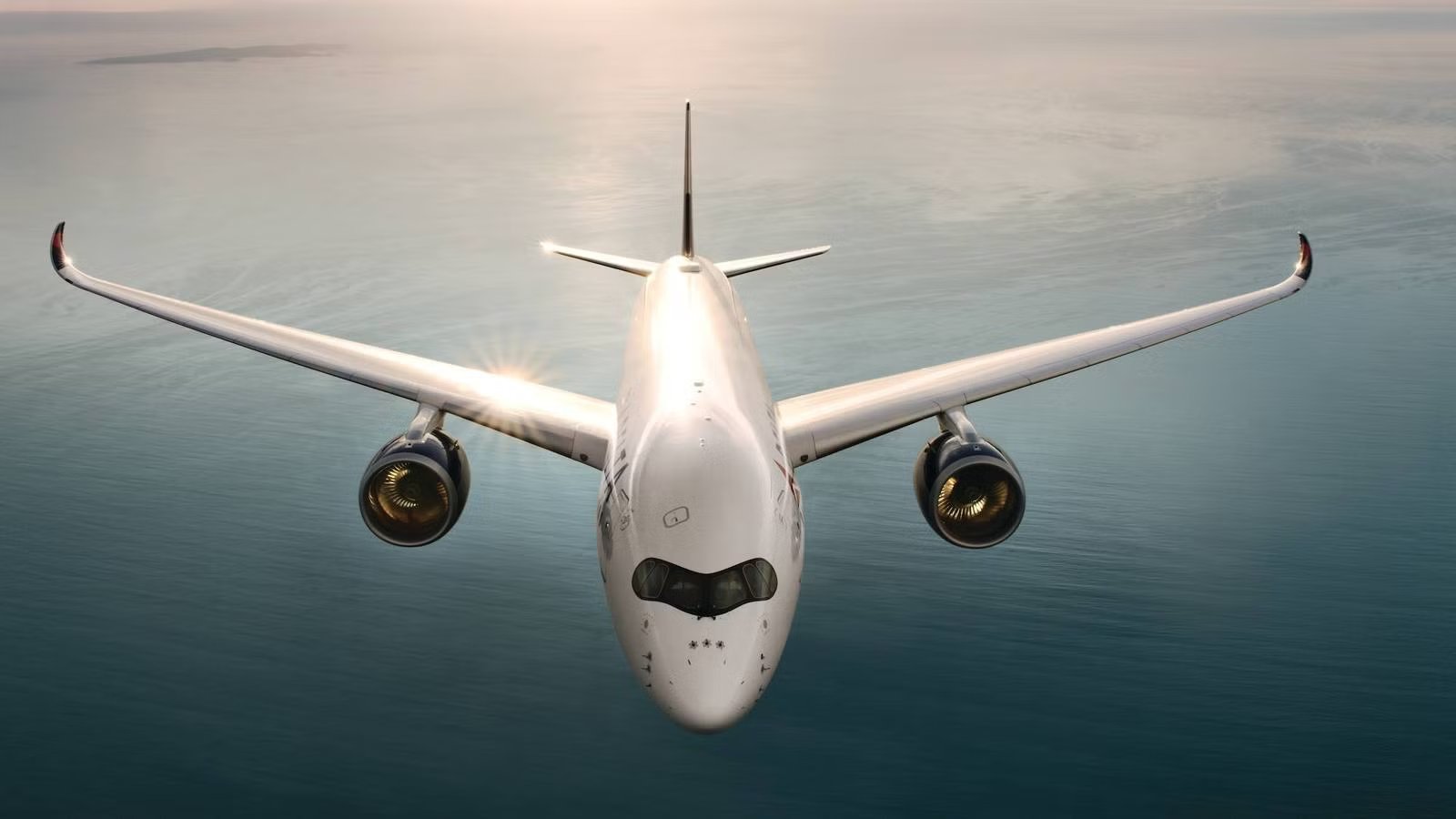
On paper, the global widebody market is in the midst of an unprecedented golden age of demand, with order books stretching deep into the next decade. Inside European assembly halls, a curious operational friction has emerged where widebody airframes are rolling off production lines faster than major international carriers can get them into active service. This mismatch between industrial output and operational slot readiness is a rare sight in modern aviation, where building the aircraft is no longer the hurdle; finding an open delivery slot and getting cabins completed is.
So how did Europe’s leading manufacturer, Airbus, arrive at a juncture where aggressive production ramp-ups clash with airline delivery postponements? At the heart of this tension are complex supply chain dependencies, structural integration challenges at recently acquired aerostructures facilities, and a balancing act between ambitious manufacturing milestones and cautious airline balance sheet planning.
Speeding Up Production Comes At A Cost

Airbus is driving its flagship A350 widebody assembly lines toward a target production rate of 12 aircraft per month by 2028, a deliberate industrial acceleration designed to clear a massive backlog of long-haul orders. At the same time, this factory-floor momentum has exposed a striking structural disconnect when measured against actual customer handover metrics. While primary manufacturing output surges, airplanes are rolling off the line faster than international operators can clear slot alignments, raising immediate questions about downstream supply chain synchronization.
The scale of this divergence is clear when evaluating recent performance data, where the manufacturer logged only 26 A350 deliveries during the first half of 2026, averaging roughly four to five airframes monthly. This cadence lags far behind the assembly velocity inside facilities in Toulouse, highlighting a fundamental scheduling gulf between structural assembly completion and cabin fit-out readiness. Chief Executive Officer Guillaume Faury has emphasized that production speed and delivery handovers cannot be treated as interchangeable metrics during an aggressive ramp-up cycle, underscoring the deep operational stakes for airlines tied to rigid capital expenditure plans.
Assembly lines are beginning to push toward higher output targets, and the flow of components is going to depend heavily on the integration of specialized aerostructures facilities and tier-one supply chains. When parts hit the final assembly floor ahead of downstream customer readiness, the entire manufacturing rhythm faces an acute blockage that ripples across the broader program.
Why Supply Can Become Stuck

The supply chain bottlenecks are deeply tied to the complex restructuring of primary aerostructures production, particularly following the integration of manufacturing sites previously tied to Spirit AeroSystems. When Airbus completed its coordinated transaction to bring critical A350 component facilities, such as the central fuselage section plant in Kinston, North Carolina, and wing spar lines in Prestwick, Scotland, directly under its corporate umbrella, it inherited a massive network of composite fabrication dependencies. Getting these localized workflows under control is a key prerequisite for feeding Toulouse at a rate of 12 airframes per month, but blending externalized assets into a unified production network inherently introduces short-term friction.
The technical friction comes primarily from the precise handling of large-scale carbon-fiber composite panels and structural frames, which require exacting tolerances before final joining. Facilities like the Kinston site in North Carolina, spanning over 500,000 square feet (46,451 square meters), and Saint-Nazaire in France must maintain absolute synchronization to avoid halting the final assembly line. With the A350 program backlog sitting well past 800 firm orders, any micro-disruption in composite curing cycles or automated fastening routines at these aerostructures feeder plants ripples directly downstream, ending up causing final assembly bays to pause while waiting for critical structural sections to arrive.
Even when structural fuselages and wings successfully clear these manufacturing gates and merge on the assembly line, the airframe represents only half of the production equation. Once the aircraft is structurally complete, it will then move into the highly specialized, labor-intensive world of cabin outfitting and customized airline interior installation, where elite completion slots become the ultimate blockade.
Seats Can Ruin The Flow

Once the structure is all put together, airframes enter the notoriously complex realm of cabin outfitting, where bespoke airline interior specifications can create massive headaches. Each international carrier needs its own proprietary configurations spanning custom premium suites, complex lighting layouts, and galley modules, so final completion slots need meticulous engineering and hands-on craftsmanship. When assembly lines step up structural output, these labor-intensive interior installation bays struggle to match the velocity of incoming airframes, creating a blockage right before final handover.
What makes things even worse is just how customizable the widebody cabin architecture is, which features advanced LED ambient lighting and sophisticated air filtration systems that require precise electrical integration. For global carriers introducing flagship aircraft, any supply chain discrepancy involving proprietary seat modules or customized lavatory partitions stalls the entire delivery sequence. Even when an airframe is structurally pristine, it cannot be handed over without a fully certified interior, which often leaves completed airframes to sit on ramp space while awaiting final fit-out components.
The mismatch between building speed and interior readiness means airline fleet planners must constantly readjust capital expenditure timing and route introduction schedules. Managing multi-million-dollar widebody investments requires precise certainty regarding when an aircraft will actually enter commercial service, which is something that gives airlines a lot to deal with.
Keeping Existing Aircraft Running The Show

When delivery schedules slip due to cabin outfitting delays or aerostructures friction, the impact hits airline balance sheets and long-term capital allocation strategies immediately. For major flag carriers investing billions in fleet modernization, an unexpected delay of six months or a year leaves little choice but to extend the operating lives of older, less fuel-efficient widebodies or scramble to lease interim capacity, already seen in the fleet strategies of airlines like  Lufthansa. Capital expenditure planning becomes something that is constantly in motion, resulting in the need to adjust liquidity reserves while budgeted capital sits waiting for asset delivery.
In the case of major operators like  Turkish Airlines,
  Emirates, and
  Air India, which hold some of the largest order portfolios for the A350 family, including variants like the A350-900 and A350-1000, these delays in asset arrivals can be hugely detrimental to airline finances. When ultra-long-haul routes spanning over 7,000 miles (11,265 kilometers), such as nonstop services from regional hubs to major international markets, rely on these specific widebody additions for capacity expansion, delivery postponements lead airlines to recalibrate network yields. Instead of deploying brand-new composite airframes to capture booming premium travel demand, carriers need to work with existing twin-aisle jets that incur higher maintenance reserves, with some burning roughly 15% to 25% more fuel per flight hour.
This forced retention of aging aircraft often becomes a completely separate and even more challenging situation to deal with, introducing serious friction across global maintenance schedules and crew training pipelines. It pushes airlines to adapt their long-term network plans substantially and, in many cases, can completely change the trajectory of an airline’s future plans.
Airbus Is Creating Its Own Problems?

With all of these stages considered, there is actually one more that can often do the most damage to A350 production velocity. It is not the availability of final assembly floor space, but the specialized chemical curing capacity required for large-scale carbon-fiber composite structures. Unlike traditional metal aircraft where aluminum skins can be rapidly riveted, the A350’s primary load-bearing fuselage barrels and wing spars are constructed from advanced composite materials. These massive components undergo precise, high-pressure baking cycles inside industrial-grade autoclaves, where temperature and pressure profiles dictate structural integrity. If manufacturing targets push toward 12 airframes per month, these multi-million-dollar autoclaves become the ultimate rate-limiting step, as each curing cycle requires hours of uninterrupted thermal management.
Catch what other flight trackers miss
Emergency squawks, holds, NOTAMs — live signals, no signup.
Open tracker
Catch what other flight trackers miss
Emergency squawks, holds, NOTAMs — live signals, no signup.
Open tracker
The friction is further compounded by the reliance on automated tape-laying (ATL) machines that deposit carbon-fiber tape onto giant mandrels with microscopic precision. Facilities in Saint-Nazaire and Broughton will need to operate these automated systems continuously without micro-defects, because any flaw during the automated lay-up phase forces engineers to scrap entire structural panels rather than patch them. Even with production currently going rather smoothly, the wear and maintenance cycles on these high-precision composite laying heads bring with it a hidden industrial ceiling that cannot easily be solved by adding assembly line workers.
The underlying industrial reality means that even if airlines were ready to accept delivery slots immediately, the chemical and physical laws governing composite material manufacturing create a rigid speed limit on how fast widebody airframes can physically materialize. It is not as easy as just picking up the pace and expecting results. For Airbus, increasing production rates is a double-edged sword; if all goes well, more A350 aircraft will reach intended customers and the backlog numbers will start to dwindle, but if issues start to build, Airbus could find itself with a self-inflicted wound that may take some time and substantial effort to heal.
What Will The Future Hold For Airbus?

The widening gap between factory-floor assembly velocity and airline delivery slot acceptance is something that is likely to change how the commercial aviation sector manages long-term capacity. For roughly two decades, production rates were dictated almost entirely by the pace at which airlines could absorb new airframes, treating manufacturing as the lagging variable. Today, as assembly lines accelerate toward historic output milestones, the entire supply chain has to reckon with the reality that building the aircraft is no longer the primary hurdle, but rather synchronizing the complex rhythm of global aviation with the rigid financial realities of international carriers.
The ultimate test of whether this industrial acceleration achieves long-term stability will be found in the delivery milestones leading up to 2028, particularly as Airbus pushes toward its stated goal of 12 A350 airframes per month. Monitoring whether airline order books remain firm or if structural delivery deferrals force a recalibration of assembly line pacing will provide the definitive answer. If composite component fabrication, autoclave throughput, and cabin outfitting bays cannot maintain absolute harmony with airline capital expenditure cycles, the current manufacturing surge may test the resilience of both manufacturer balance sheets and global fleet strategies, but if not, Airbus may be in for a real shock.