dailynewsnblog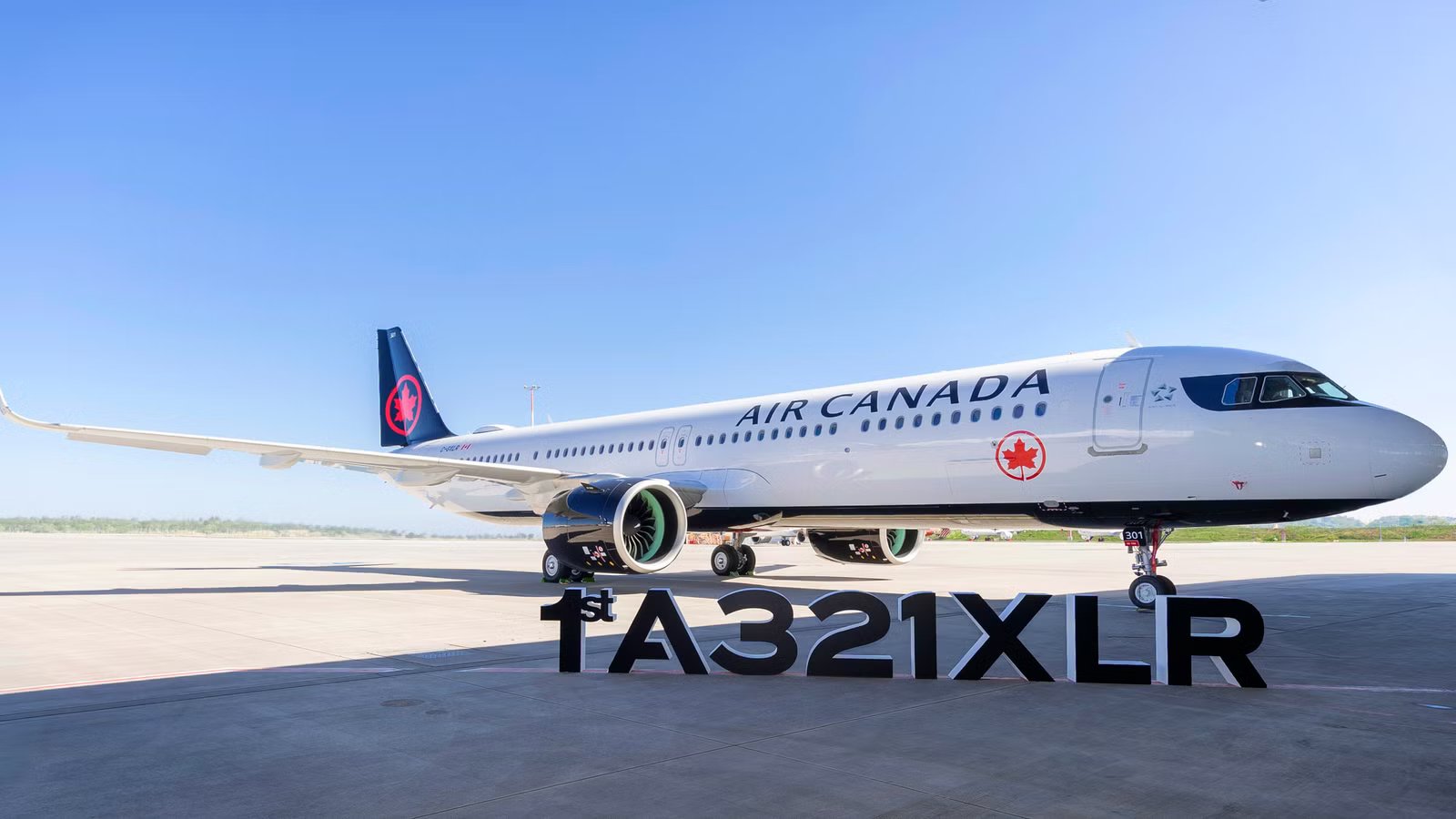
In April,  Air Canada welcomed its first Pratt & Whitney PW1100G GTF Advantage-powered Airbus A321XLR airliner into service. Since then, two more examples of its 30-strong order (with 14 options) have been delivered. One was delivered in May, and the latest XLR was delivered in August. Deliveries are expected to be completed in 2029. The A320neo family can be powered by the CFM International LEAP-1A (a GE Aerospace and Safran joint venture) or the Pratt & Whitney GTF.
For Pratt & Whitney, the delivery raises hopes that it is finally turning a corner on its GTF engine durability crisis that has damaged its reputation. Meanwhile, other airlines are watching and assessing if they should also order the GTF Advantage or if the LEAP-1A remains a safer investment. With Air Canada’s A321XLRs brand new, it’s too early to assess whether they will live up to Pratt’s promises, but here is why the development matters.
Airbus Delivered First A321XLR To Canada

In April 2026, Airbus announced it had delivered the first of 30 Airbus A321XLRs for Air Canada.
“The delivery marks a significant milestone in the airline’s fleet renewal strategy, enabling the carrier to bridge the gap between its narrowbody short-haul and widebody long-haul operations,” the planemaker explained.
Air Canada is now the first operator of the A321XLR (extra long range) in Canada, allowing the narrowbody airliner to fill mid-sized airplane roles and serve longer-haul routes. The aircraft offers a range of up to 4,700 nautical miles, with Airbus claiming the type has 30% lower fuel burn per seat than the “previous generation competitor aircraft.” That refers to either the Boeing 737 NG or the 757.
With its extended range, Air Canada is able to service longer, but thinner routes like Montreal and Toronto to Berlin, Toulouse, and Edinburgh. These are configured with 14 Air Canada Signature Class full-flat seats in a 1-1 configuration and 168 economy class seats. One notable improvement with this A321 is the new Airbus interior design, which provides 60% more storage space.
Air Canada’s A321XLRs Powered By GTF Advantage Turbofans

Four years ago, in 2022, Pratt & Whitney reported the milestone, sayingAir Canada had selected its GTF to power the 30 A321XLRs. At the time, the first deliveries were expected in the first quarter of 2024. It also noted that Air Canada had become the first airline in Canada to operate the Canadian-designed (as Bombardier CSeries) A220 in 2020. These are exclusively powered by Pratt & Whitney’s GTFs.
Pratt said that the GTF is the “only geared propulsion system delivering industry-leading sustainability benefits, mature dispatch reliability and world-class operating costs.” As history would have it, this aged poorly, with the last few years dominated by aircraft (including A320s and A220s) grounded by GTF durability issues. At one point, more than a quarter of the entire GTF-powered global fleet was grounded.
By the end of March 2026, Airbus had secured over 500 orders for its A321XLR airliners, which are filling much of the role that the 757 once did and some of the role that the seemingly canceled Boeing New Midsized Airplane (called 797) would have been intended to fill. As stated, the airframes are powered by Pratt & Whitney’s new GTF Advantage geared turbofans, giving hope that the GTF’s durability issues may soon be behind it.
PW1100G Evolution To GTF Advantage

Pratt & Whitney hopes these new jets delivered to Air Canada will signal the light at the end of the tunnel for the durability issues that have plagued its GTFs over the last few years. The issues were mostly caused by powdered metal contamination, and this led to groundings and accelerated inspections. Air Canada’s decision to stick with the GTF architecture for its narrowbody flagship routes is seen as a massive vote of confidence.
Catch what other flight trackers miss
Emergency squawks, holds, NOTAMs — live signals, no signup.
Open tracker
Catch what other flight trackers miss
Emergency squawks, holds, NOTAMs — live signals, no signup.
Open tracker
The new GTF Advantage operates at cooler temperatures, while also delivering more thrust. The GTF Advantage is the improved production-standard evolution of the PW1100G that powers the A320neo family aircraft. It was developed with the longer-range A321neo variants explicitly in mind. The manufacturer claims it offers 4% more takeoff thrust at sea level and up to 8% more at hot-and-high airports. It claims 1% better fuel efficiency, but most importantly, better durability and around double the time-on-wing.
Air Canada’s Mainline Fleet | Engines Used | Number Of Examples |
|---|---|---|
Airbus A220 | PW1500G | 48 |
Airbus A320 & A321 | CFM56 | 43 |
Airbus A321XLR | PW110G-JM (GTF Advantage) | 3 |
Boeing 737 MAX | CFM LEAP-1B | 52 |
Airbus A330ceo | Rolls-Royce Trent 700 | 20 |
Airbus A350 | Rolls-Royce Trent XWB | 8 |
Boeing 787 Dreamliner | GEnx-1B | 40 |
Boeing 777 | GE90 | 25 |
The GTF Advantage is better understood as an evolution of the PW1100G, with improvements to the hot section, durability, and take-off performance. The engine was certified by EASA in February 2025, clearing the way for customer deliveries. Some of the improvements can also be retrofitted into existing PW1100G engines.
How Air Canada’s Vote Of Confidence Matters

This is seen as something of a stress test for the GTF Advantage. On the A321XLRs, they will fly longer routes and often depart with substantially higher fuel loads. The XLR will test the durability, time-on-wing, and thermal management more aggressively than conventional A320neos, which fly shorter segments.
While Pratt is highlighting the engine’s improved thrust and fuel efficiency, it’s the durability issues that have been overriding and have damaged the GTF’s reputation. Air Canada is one of the airlines most significantly affected by these issues. Despite experiencing the GTF’s problems firsthand, Air Canada proceeded with the program and is now taking delivery of the aircraft. It chose not to take action against the GTF, placing its confidence in it and accepting its first Pratt & Whitney-powered A321XLRs.
For the industry, a large airline that has experienced the woes firsthand, choosing to accept the new engines is a stronger signal than a technical certification and Pratt & Whitney’s claims. Air Canada’s A321XLR fleet will provide an important early operational test of whether the GTF Advantage’s promised durability improvements translate into airline service. This will help mark the industry’s transition from managing the original PW1100G reliability crisis to evaluating whether the redesigned engine delivers the durability improvements Pratt & Whitney has promised.
Not The Rolls-Royce Trent 1000

It is important not to equate the last few years’ disruptive engines (the Pratt & Whitney GTF family and the Rolls-Royce Trent 1000). The GTF suffered a durability crisis tied to its powdered-metal inspections, whereas the Trent 1000’s issues involved durability problems with intermediate-pressure turbines. The Rolls-Royce Trent 1000 is one of two engines powering the Boeing 787 Dreamliner, and the industry switched to ordering the alternative GEnx.
Rolls-Royce essentially lost the entire new Dreamliner sales market for years. Its upgraded Trent 1000 XE has secured modest new orders in 2026. Starting from essentially being shut out of the new-order market, Rolls-Royce celebrated this, especially after some analysts thought the Trent 1000 would go out of production around 2030, believing it was too late to make a comeback.
But this level of sales collapse didn’t happen with the much more popular A320neo series. The rival CFM International LEAP remained the most popular engine choice, but throughout the crisis, Pratt & Whitney continued to win significant new GTF business, although it lost some market share. This meant that Pratt & Whitney didn’t lose market share in the same way and put the GTF Advantage in a much stronger position to recover. Overall, it has received over 11,000 orders for the A320neo’s GTF turbofan.
The Engines Of Air Canada’s Fleet

Air Canada is a major airline operating all three major Western engine types, plus CFM. Its A220 fleet is powered exclusively by the PW1500Gs (GTF). Its previous-generation A320ceo series is powered by the CFM International CFM-56-5B. The new A321XLR is powered by Pratt & Whitney GTF engines, with deliveries incorporating the GTF Advantage production standard. With widebody aircraft, the 787s are powered by GEnx-1Bs, and its 777s are GE90-powered.
The fleet’s A330s are powered by Rolls-Royce Trent 700s. Air Canada has eight A350-1000s on order; these will be powered exclusively by the Rolls-Royce Trent XWB. The CFM Leap-1A on the A320neo family is essentially a completely new engine, so there was little to gain in commonality by moving from the CFM56 to the LEAP.
This offered Air Canada an opportunity to assess both the PW1100G GTF and the LEAP-1A without much concern for existing commonality. In the airline industry, some airlines seek to reduce costs by operating a specific engine type (e.g., Ryanair and Southwest Airlines), but this increases their exposure to issues with that engine type. Others diversify the engine risk and accept higher maintenance costs.