dailynewsnblog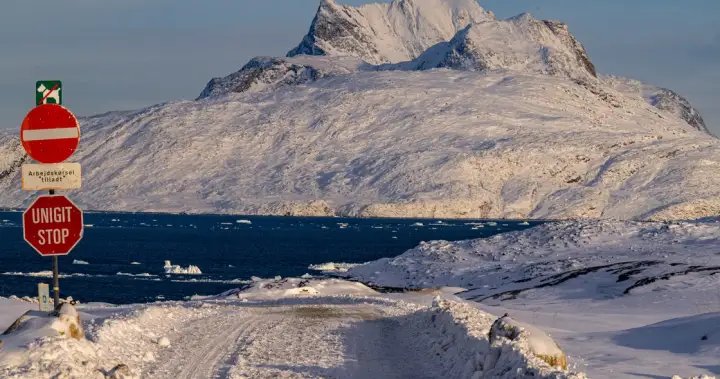
Months after U.S. President Donald Trump escalated his threats to annex Greenland, the semi-autonomous Arctic island is pushing back against another threat — the setting up of drilling infrastructure by a U.S. oil company on its territory without permission.

U.S.-based oil company Greenland Energy is preparing to drill for oil in Greenland, having moved drilling equipment to the island’s east coast.
While it can take years for any kind of drilling operations to start functioning in the Arctic, the move sends a “signal” to Greenland and Denmark, said Maj. Gen. (Retd.) Scott Clancy, a fellow at the Canadian Global Affairs Institute and the former director of operations of NORAD.
“By placing logistics elements in there, preparing for the drilling, it sends a signal that we’re going to go ahead and do this with or without your approval. Or we’ll ask for approval after we have it, which you’ll have no choice but to give,” he said.
“That sets a very difficult precedent as it pertains to the protection of sovereignty,” he added.
The oil exploration project is on a peninsula in eastern Greenland called Jameson Land Basin. The basin is “one of the largest underexplored conventional hydrocarbon basins in the Western world,” the company said in a statement last week.
While Greenland Energy does not have an oil licence to operate in Greenland, it is looking to operate in collaboration with a U.K. company called 80 Mile PLC, which has one.
In a letter to shareholders last week, Greenland Energy said 80 Mile will continue “to lead the permitting process” for their project.
However, the Greenland Ministry of Industry and Mineral Resources in a statement last month that it was aware that 80 Mile had “moved, stored and packed rental equipment” under an old licence, that permit was no longer valid.

This prompted the government of the semi-autonomous region to issue a “strong warning” to the energy companies on July 30.
“A strong warning will be sent to the rights holder with a reprimand stating that all future logistical matters must be notified and approved by the Mineral Resources Authority — before they are carried out,” the ministry said.

Get daily National news
Get daily Canada news delivered to your inbox so you’ll never miss the day’s top stories.
The firm Greenland Energy said that while the “permitting process continues to move forward through constructive engagement,” they cannot wait to start logistical preparations.
“Waiting until permits are issued before initiating logistical preparations would unnecessarily delay operations and risk losing valuable time within Greenland’s limited operating season,” the company said.
British newspaper the Guardian reported the firm has several ties to officials within the Trump White House.

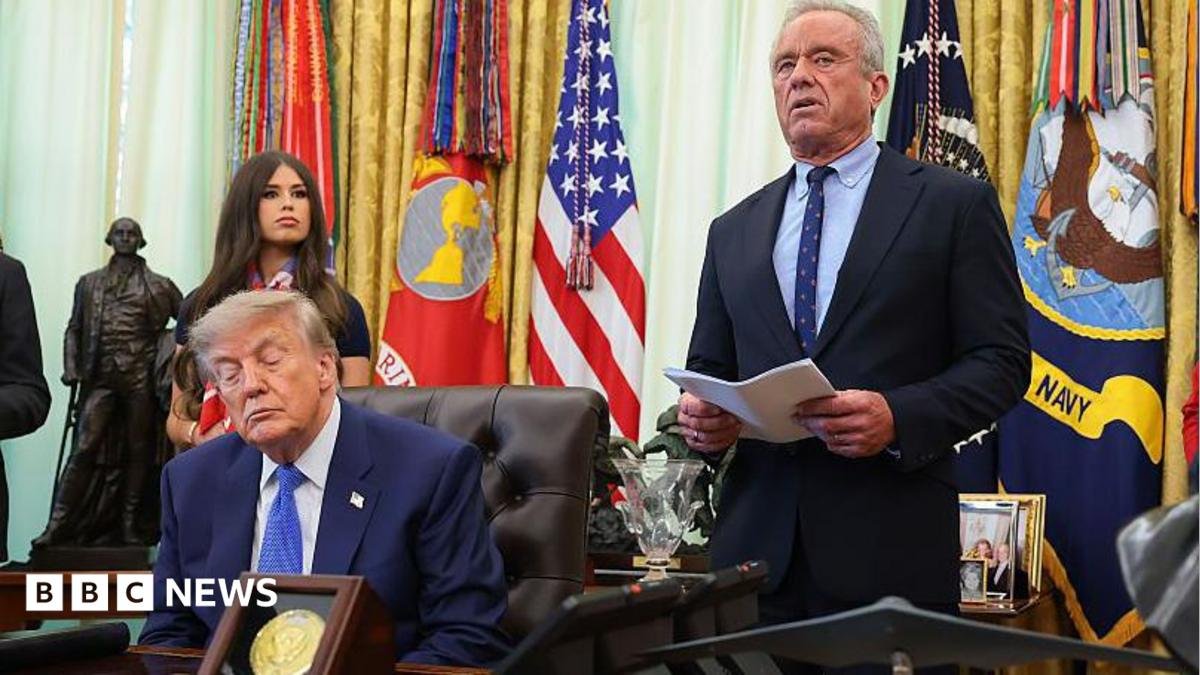
In January, Trump vowed to acquire Greenland, calling the semi-autonomous territory of Denmark “our territory” while addressing the World Economic Forum in Davos, Switzerland.
“We need it for strategic national security and international security. This enormous unsecured island is actually part of North America on the northern frontier of the Western Hemisphere,” Trump said.
“That’s our territory.”
Chances of this disagreement escalating into a conflict remain low, Clancy said. This is because the U.S. and its NATO allies still have “excellent military-to-military relations,” despite Trump’s many grievances with the military alliance, of which Denmark is a member, he said.
“That underpinning of stability is indicative that there are no plans for the Americans to invade Greenland anytime soon,” Clancy said.
Article 5 is one of the core principles of the 76-year-old NATO military alliance and states that “an armed attack against one NATO member shall be considered an attack against all members, and triggers an obligation for each member to come to its assistance.”
The only time the article has ever been invoked was after the terrorist attacks of Sept. 11, 2001.
The alliance has never had to deal with one member attacking another.
Clancy added, however, that it does not rule out that the U.S. could use other coercive measures to achieve its means.
“The United States is on a path here,” he said.
“You’ve seen a fundamental shift in United States foreign policy and domestic policy, which you’re not going to see return backwards on anytime soon,” he added.
U.S. foreign policy in the Trump era will include “the use of all the elements of global power to achieve their aims,” he said, including using economic coercion against allies.
“They no longer feel that they need the alliances,” Clancy said.

In January, Trump threatened that he would charge a 10 per cent import tax on goods from eight European nations because of their opposition to American control of Greenland.
Trump has claimed that Russian and Chinese presence in the Arctic makes it necessary for the U.S. to control Greenland.
Canada has also faced threats to its sovereignty from Trump, who has long insisted that Canada should be the “51st state” of the U.S., and has categorically supported Denmark and Greenland’s sovereignty.
“The future of Greenland is a decision for Greenland and Denmark exclusively — it’s their decision,” Prime Minister Mark Carney said back in January.
© 2026 Global News, a division of Corus Entertainment Inc.