dailynewsnblog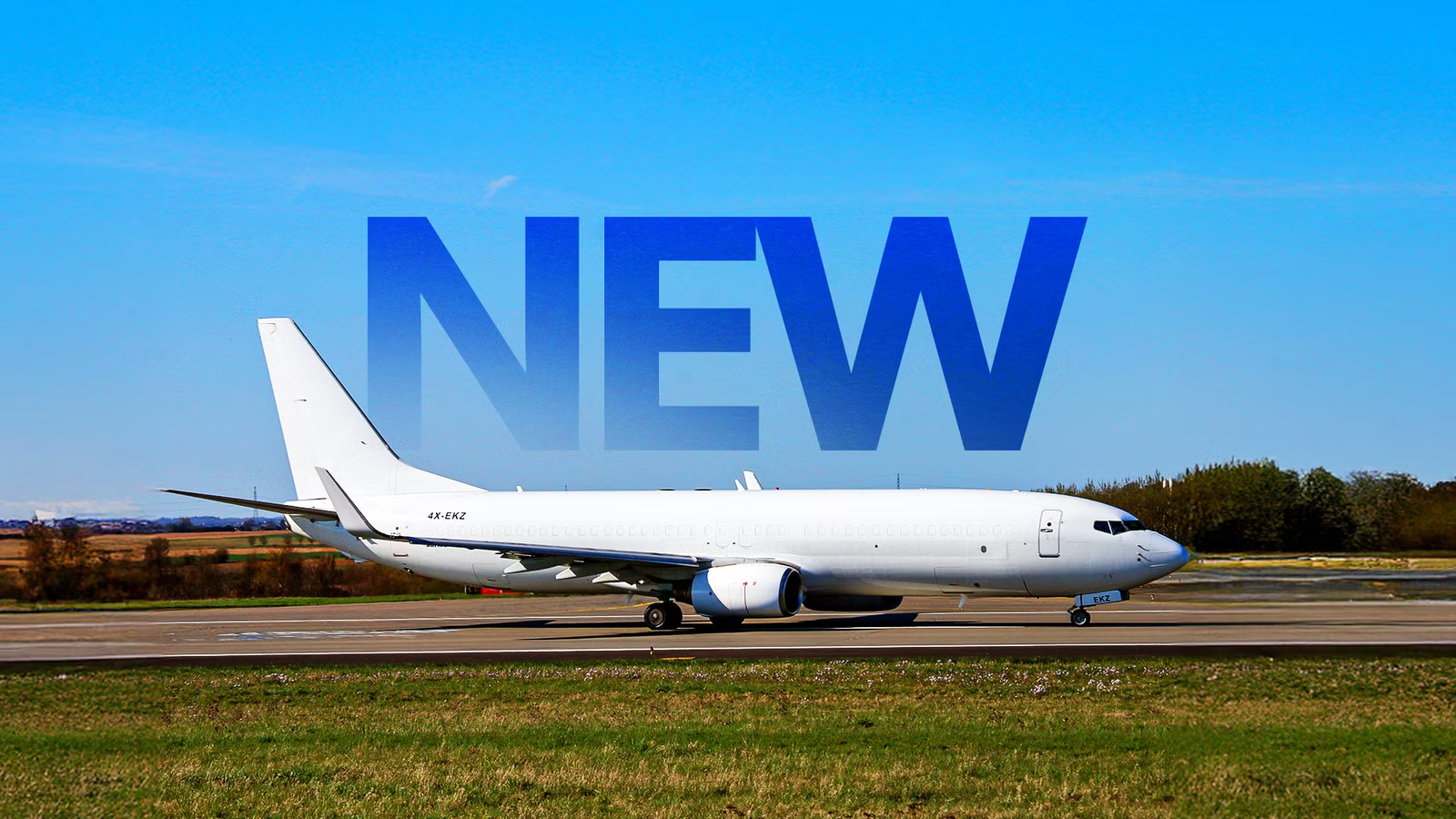
Few born after the oil crisis remember Northeast Airlines, a domestic trunk carrier operating out of Boston and New York that was acquired by Delta Air Lines in 1972. Soon, however, the name might be coming back, as a new revival company titled Northeast Airlines and Travel, Inc is aiming to begin scheduled airline flights in 2027.
The airline has reportedly entered the FAA certification process in August 2026, which means that there is a serious effort being put forth to make Northeast a reality again. The new company is based out of Chicago, not the Northeastern US, and it’s not planning to operate passenger flights like its eponym.
Instead, Northeast’s Title 14 CFR Part 121 Air Operator’s Certificate will be used for scheduled cargo routes. This will be one half of Northeast’s business model, while the other half of the company’s operations will be aftermarket services and travel management. The carrier is acquiring Boeing 737-800BCFs for its routes and is moving full steam ahead for certification.
What To Expect From The New Northeast

Northeast Airlines and Travel, Inc has already been operating for some time. Currently, the company acts as a broker for chartered passenger and cargo flights, without directly operating any aircraft on its own. There are thousands of such companies worldwide that operate similarly in the business of aircraft charters, and Northeast is just one example.
The company is owned by the Volare Air Group, and the Northeast name is being used by multiple subsidiaries that each specialize in one area. Northeast is seeking an FAA AOC for scheduled commercial flights, aiming to receive certification by the third quarter of 2027. It’s seeking Part 121 certification, which specifically governs companies operating scheduled flights with large commercial transport aircraft.
This includes airlines like American Airlines and United Airlines, cargo carriers like FedEx Express, as well as charter companies like Kalitta Air or Omni Air International. The new Northeast fits into the third category of Part 121 companies. Northeast, curiously, is not aiming to operate passenger flights, but will instead initially operate Boeing 737-800BCFs.
There are few details available as to how these planes are being sourced or what Northeast’s exact plans are. It’s not common to see new airline startups in the US, and it’s also uncommon in the country to see a new freight airline launch operations. In addition, Northeast is also planning to operate a material and asset management subsidiary, another expansion from its current business.
The Freight Business Model

Few details have been released about the new Northeast Airlines, but we do know that it aims to initially operate Boeing 737-800BCFs for scheduled cargo flights. The prior Northeast was a domestic passenger airline, which raises questions about the new company’s intentions in using the name of an old airline. However, the main reason why Volare Air Group is doing this is that the company owns the rights to the name.
Right now, the company’s current focus is essentially just trying to keep the name active while still earning a profit with it. The airline industry requires a lot of starting capital and historically runs on razor-thin margins, making it a difficult field to enter. The US market, meanwhile, has increasingly become unkind to smaller players as customers favor large, established airlines with a national presence.
Today, the Northeast name has essentially no brand equity with the public, so it would be operating as a start-up. It’s not impossible to make money as a new airline (just look at Breeze Airways), but it is quite difficult. Instead, Volare Air Group is looking to cargo as a surer way to make a profit. The Northeast brand is being used mainly to keep the name active, rather than to elicit nostalgia from potential passengers.
With cargo, it’s generally easier to enter the market because brand name, seating products, and larger network size play less of a role than in the passenger world. As such, you tend to see many more smaller cargo companies in the US than small passenger airlines, because it’s easier to break into this market and maintain a small niche.
Northeast’s Failed Launch In The 2010s

Volare Air Group previously attempted to launch a new Northeast Airlines in the 2010s, setting up a subsidiary with the Northeast name in 2014 that would be headquartered in Orlando. The company filed for Part 121 certification in 2015 and intended to start scheduled flights in 2016, operating as an ultra-low-cost passenger airline.
Of course, these plans fell through, and Northeast still isn’t operating passenger flights; instead, it’s now based in Chicago and brokers charter flights while planning to operate cargo flights. The main reason as to why the previous effort failed is that the project ran out of funding. Starting a Part 121 carrier requires an immense amount of capital, and Northeast was previously planning to fast-forward through some of the necessary steps by acquiring another airline.
In addition, the company was in discussions with New York Stewart International Airport (SWF) on setting up an operating base. However, these discussions and plans didn’t move quickly enough for the company’s investors, and funding dried up while the project fell apart. It’s unclear where the company’s current funding is coming from, and it’s certainly possible that this attempt will also fail.
There are strikingly few details available on how the airline will structure its network and where the 737s will be sourced from. However, Volare Air Group is clearly diversifying its potential sources of revenue by entering different fields with multiple subsidiaries branded as Northeast, and the airline won’t face as challenging a market as before by entering the air freight industry.
Keeping Old Names Active

Using the name of a defunct airline would seem to be odd when the new carrier essentially has nothing to do with the old company. However, creating a new airline name and brand costs money, while older names themselves are valuable regardless of how they’re used. It’s therefore common for companies to own older names and use them in ways that you might not expect.
The American Eagle CRJ900 depicted above, for example, is operated by PSA Airlines, a regional airline that bears strikingly little similarity to the Pacific Southwest Airlines of old. The old PSA was acquired by USAir (which later rebranded as US Airways) in the late 1980s, and USAir had to keep the name active to protect its rights to the trademark.
American Eagle Regional Airline Partners |
|---|
Envoy Air (wholly-owned subsidiary) |
Piedmont Airlines (wholly-owned subsidiary) |
PSA Airlines (wholly-owned subsidiary) |
Republic Airways (independent partner) |
SkyWest Airlines (independent partner) |
It therefore decided to rebrand one of its regional subsidiaries as PSA Airlines. The same was done with Piedmont Airlines, which was originally an independent company that was later acquired by USAir, and whose name was later applied to a regional subsidiary. USAir later became US Airways and merged with American Airlines. Companies are required to use their trademarks in the market, or else they forfeit the right to their trademark.
As such, companies often reuse inherited trademarks in a wide variety of industries. In the case of Northeast Airlines, we’re not looking at the revival of a company that was acquired over 50 years ago. Instead, you have a company that is looking to start a small cargo airline in the US and is simply using an existing trademark within its portfolio to keep the name active.
The Most Prominent Airline Revival In The US Today

Arguably the most legendary airline of the 20th century was Pan American World Airways. It was the US flag carrier and a behemoth in international air travel. But then, the oil crisis hit, followed by deregulation, a difficult merger with National Airlines, the tragic Lockerbie bombing, and the airline ceased operations in 1991.
Several attempts have been made to revive the name since then, and now, a new initiative has begun to achieve FAA Part 121 certification for an airline operating scheduled flights with the Pan Am name. However, this project will face significant challenges. Using the Pan Am name gets the project in the news and evokes feelings of nostalgia among older enthusiasts.
Airline | Mainline Fleet Size |
|---|---|
United Airlines | 1,139 |
American Airlines | 1,034 |
Delta Air Lines | 1,002 |
Southwest Airlines | 799 |
However, to the general public, Pan Am doesn’t have the same level of brand equity as Delta Air Lines and United Airlines. Why would someone choose Pan Am over Delta or United when those carriers are proven, premium airlines with strong operational reliability, a proven product, a desirable loyalty program, and a global network?
When you look at the airline behind the name, Pan Am is a start-up, and this is the exact issue that faces any revival of an old airline. With the new Northeast Airlines, the goal is to create a small, profitable cargo airline that uses the old Northeast name to keep the trademark active, because entering the passenger market right now would be far more difficult given current market conditions.