dailynewsnblog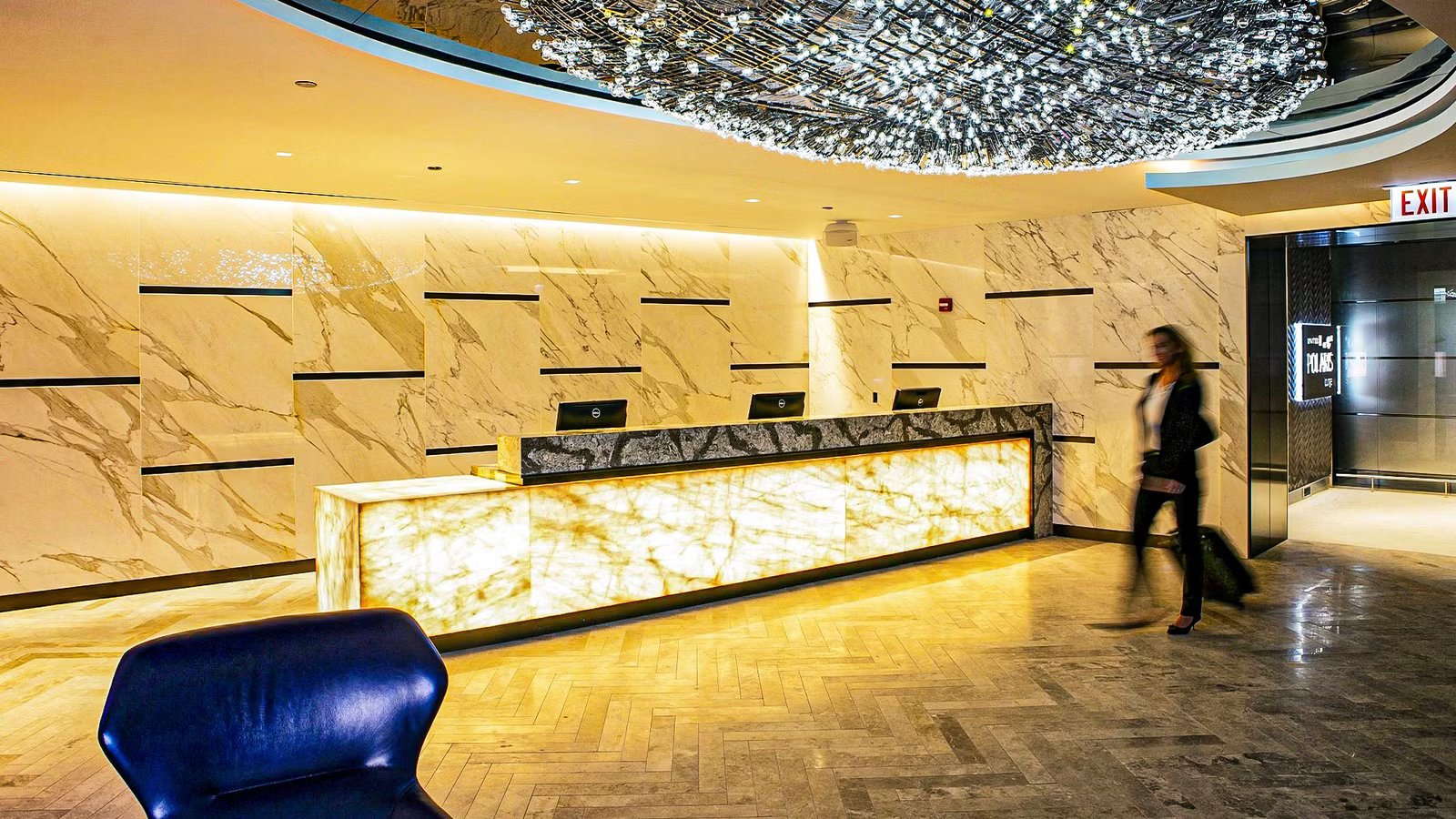
Traditionally, when you buy a business class ticket, you get all of the perks that an airline has to offer. This includes the seat itself, as well as upgraded service, access to a premium lounge, and full flexibility regarding ticket changes. But in economy, airlines have increasingly been selling a variety of ticket options with varying levels of flexibility at different price points as part of a general price segmentation strategy pioneered by US airlines, and today,  United Airlines doesn’t even permit lounge access for some Polaris customers.
It’s a new era for premium travel, as airlines seek to boost margins from ticket sales and compete more effectively with low-cost carriers. United isn’t the first airline to begin segmenting its premium passengers, nor will it be the last, as the carrier’s peers are widely expected to follow in its footsteps. Undoubtedly, though, while this decision will be beneficial for United, it’s not good news for passengers as they will now find themselves paying more to receive the same perks that used to be available with a standard fare.
United’s New Basic Fares For Premium Passengers

In April 2026, United announced new fare options for its Polaris and Premium Plus cabins. The carrier now offers customers ‘Base‘, ‘Standard‘, and ‘Flexible‘ tickets, and the Polaris Base fare does not include access to the Polaris Lounge. Instead, passengers booking Base tickets can only access the United Club, with Polaris Lounge access only granted to customers booking Standard and Flexible fares. This isn’t the only restriction associated with the Polaris Base fare, either.
Polaris Base tickets are non-refundable and cannot be changed. In addition, customers who book a Polaris Base fare cannot upgrade to the Polaris Studio, and they have to pay to select a seat. Furthermore, travelers who hold a Polaris Base ticket are only permitted one checked bag. On the other hand, the Standard and Flexible tickets permit two checked bags, and are largely identical except that the Flexible tickets are fully refundable, whereas a Standard ticket is only eligible for a travel credit.
While the Polaris Base fare is the lowest-priced ticket, United has largely priced it the same as standard tickets before, meaning that passengers across its network are essentially paying the same price but getting less. Meanwhile, the Standard and Flexible tickets are more expensive while offering no new benefits. Then, of course, there’s the other restriction associated with booking a Base ticket, in that these fares do not permit any mileage earnings, nor do they qualify for Premier Qualifying Flights (PQFs) or Points (PQPs), excluding United credit card holders.
Why Airlines Introduced Basic Fares

Traditionally, airlines make their money from premium cabins, while economy tickets sell for low margins but also come with fees and surcharges. This is how budget airlines make money, as they sell base fares for incredibly low prices but then offer a variety of pricey options. In 2012, Delta Air Lines began offering ‘Spirit-match fares’, and the carrier claimed that these new basic economy fares were intended to help better compete with budget carriers like Spirit Airlines, but the carrier was also mimicking Spirit’s pricing strategy to earn more revenue.
Basic economy tickets have proven to be effective at combating low-cost carriers, and it has since become standard practice in the US airline industry. When implemented effectively, basic economy tickets encourage passengers to upgrade to more expensive fare classes, earning the airline more money. Carriers consciously included warnings about the restrictions associated with basic economy tickets, while providing the option to book a more expensive, more flexible ticket instead.
Basic economy tickets also work because most customers booking economy are either traveling for leisure or to visit friends and relatives (VFR). These types of passengers don’t always require the perks associated with a fully-flexible ticket, and are price sensitive compared to business travelers. Offering multiple fare options allows airlines to appeal to a wider customer base, even if fares are still higher than those of budget carriers.
United Airlines’ New Premium Plus Vs. The World’s Most Superior Premium Economy Cabins In 2026
The airline has ramped up its premium economy offering, but is it better than the rest?
Introducing Unbundled Business Class Tickets

US legacy carriers are more dominant today than in the 2010s, when budget airlines were major threats, and low-cost carriers largely do not compete for premium travelers. However, the customer base that traditionally buys business class cabins has changed since the COVID-19 pandemic. In the 2020s, airlines have seen a significant increase in ‘premium leisure‘ travelers, who essentially act like traditional vacationers but are willing to pay more for a premium cabin.
Business travelers require significantly more flexibility than leisure or VFR customers, and they’re also less price-sensitive. Furthermore, business travelers generally expect to receive all the benefits associated with premium tickets, including lounge access. While some airlines have introduced fees to assign seats in business class, business travelers typically prefer full fares as a whole, and there’s been little need to price segment this demographic. But with premium leisure travelers, on the other hand, this dynamic changes.
Although premium leisure customers are willing to pay more for a nicer experience, they’re still price sensitive and are more flexible with extra benefits, such as lounge access. In addition, premium leisure travelers do not always require flexible or refundable tickets. As such, offering a slightly cheaper fare with more restrictions increases appeal with this demographic, who can still choose flexible tickets for a surcharge if they so choose. Meanwhile, airlines can earn substantially more revenue by pricing these tickets higher.
Airlines Introducing Basic Business Class Tickets

Some long-haul budget airlines offer a premium cabin, such as Norse Atlantic and ZIPAIR, but the first large full-service carrier to introduce an unbundled business class fare was  Emirates in 2019. Officially branded as ‘Business Special’, these fares are available across Emirates’ network, and the basic idea is that this fare only includes the onboard experience. Lounge access is not granted, and chauffeur service is not included, while mileage earnings are significantly reduced. In addition, there are significant restrictions on changing or canceling these tickets.
 Qatar Airways launched its own basic business class fares in 2020, while unbundled fares are already sold by
  Air France and KLM.
  Delta Air Lines, which operates a transatlantic joint venture with the latter two carriers, has long discussed unbundling its DeltaOne international business class cabin, citing the need to align value with price, and it’s reportedly looking to unbundle all of its cabins by the end of 2026. This includes DeltaOne, along with Delta PremiumSelect and Delta First, while its Comfort and Main cabins already have three ticket tiers.
|
Delta Air Lines Travel Classes |
Fare Classes |
|---|---|
|
DeltaOne |
Classic, Extra |
|
Delta First |
First Classic, First Extra |
|
Delta PremiumSelect |
PremiumSelect Classic, PremiumSelect Extra |
|
Delta Comfort |
Comfort Basic, Comfort Classic, Comfort Extra |
|
Delta Main |
Main Basic, Main Classic, Main Extra |
This trend has become increasingly prevalent in the industry, as price segmenting in this manner can expand a carrier’s customer base while also boosting revenue. Price segmentation is essentially standard in the US, in particular, and segmenting customers not only has revenue implications, but also has a material impact on load factors. Airlines release various numbers of different ticket types and fare buckets, and offering basic economy tickets has made it easier to fill larger aircraft, allowing carriers like United Airlines to standardize on larger aircraft. Basic business class tickets will likely have the same effect, resulting in increasingly full cabins.

What United Airlines’ Relax Row Economy Beds Actually Cost Vs Premium Economy On Long-Haul Flights
The sky bed offers economy passengers a cheaper sleep-focused alternative to Premium Plus on long-haul international flights.
United Airlines’ Push Towards Credit Cards

Earlier the same month, United Airlines also overhauled its mileage earnings and redemption system. Essentially, the changes were beneficial for those holding a MileagePlus co-branded credit card, and negative for non-cardholders. The intention was to encourage additional credit card signups, as agreements with credit card providers and banks like Chase are highly lucrative for airlines and their loyalty programs.
Mileage earnings are based on the price of a ticket and on a customer’s elite status within MileagePlus, but now, credit card holders earn an extra three dollars per mile compared to those without a co-branded credit card. The new rates are higher for credit card holders compared to the carrier’s previous rates, and lower than before for those without credit cards. In addition, customers booking basic economy no longer earn any miles unless they hold a MileagePlus credit card (which matches the carrier’s policy with Base Polaris fares). In addition, credit card holders receive discounts on award tickets and also receive access to more saver awards.
|
United Airlines Co-Branded Chase Cards |
Annual Fee |
||
|---|---|---|---|
|
MileagePlus Debit Rewards |
$0 |
MileagePlus Business |
$150 |
|
MileagePlus Gateway |
$0 |
MileagePlus Club Business |
$695 |
|
MileagePlus Explorer |
$150 |
||
|
MileagePlus Quest |
$350 |
||
|
MileagePlus Club |
$695 |
Airlines like United Airlines sell millions of miles to their credit card partners, and they sell these miles for much higher values than what customers typically redeem them for. As such, the business of miles and points has become incredibly profitable for airlines, and loyalty programs now contribute the vast majority of earnings at United, as well as Delta Air Lines and other large US carriers. As such, these airlines want to incentivize frequent flyers to sign up for credit cards, and United is leading the way in this shift.