dailynewsnblog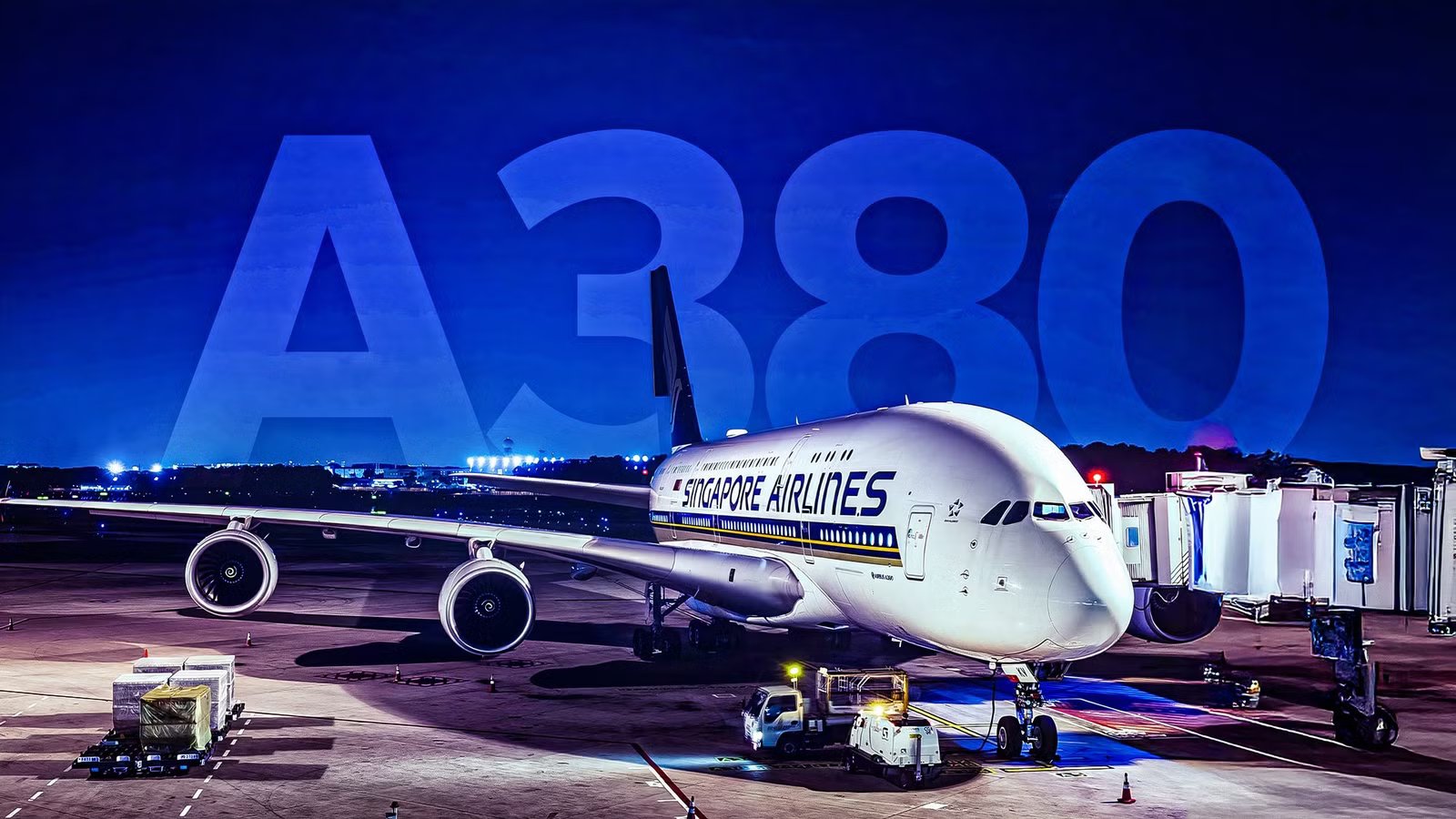
Engine Alliance GP7200

The Engine Alliance GP7200 is manufactured by Engine Alliance, which is a joint venture between Pratt & Whitney and General Electric. In July 2024, the company appointed a new President, Gaston Persano, bringing with him a wealth of experience from previous roles at Ford Motor Company and Pratt & Whitney Commercial Engines. At the time, Persano said that:
“It’s an honor to join the experienced and talented EA team. The GP7200 will continue its track record of delivering reliable value for years to come, and I look forward to working with Airbus and our airline customers to support their A380 fleets.”
The Engine Alliance GP7000 series of engines was originally designed in collaboration with Boeing for future models of the 747 that never materialized. Engine Alliance later repurposed the GP7000 engine for use on the Airbus A380. With a diameter of 10.4 ft 124 in (3.16 m), the GP7200 can generate up to 74,735 lbf (332.44 kN) of thrust.
Production and ground testing of the Engine Alliance GP7000 series began in 2004, and the engine was certified by the Federal Aviation Administration two years later. By 2006, the engine was carrying out test flights on board the Airbus A380 to and from the European manufacturer’s facility in Toulouse, and entered commercial service in 2007. Engine Alliance released an updated version of the GP7200 engine in 2011, which featured newer, lightweight components, making each engine some 51 lb (23 kg) lighter.
Examined: The Role Of Joint Ventures In Aircraft Engine Alliances
Engine alliances have delivered some of the best products in the market.
More On Engine Alliance

Despite Rolls-Royce’s Trent 900 engines proving far more popular among airline customers in the early days of the Airbus A380, Engine Alliance caught up ground when Emirates placed an order for a staggering 55 GP-powered A380s. As of today, the Engine Alliance GP7200 actually represents the majority of engines found onboard A380s still flying, including 90 of Emirates’ A380s, as well as those belonging to Korean Air, Etihad Airways, and Qatar Airways.
In order to better support its airline customers around the world, Engine Alliance opened two new MRO facilities in 2016 – one in Dubai and one in Singapore. The Singapore facility was the first of its kind in Asia, while the Dubai facility cemented the company’s commitment to Emirates, with the President at the time, Dean Athans, saying that:
“Our commitment to Emirates has never been stronger. We are proud to power 90 Emirates A380s, and to partner with Emirates in the expansion of this important facility.”
The only incident to be suffered by Engine Alliance’s GP7200 engines on the Airbus A380 was in September 2017, onboard Air France flight 66 from Paris Charles de Gaulle Airport (CDG) to Los Angeles International Airport (LAX). The A380, registered as F-HPJE, suffered an uncontained engine failure and was diverted to the Canadian Forces Base in Goose Bay, Canada.
Rolls-Royce Trent 900

Just like the Engine Alliance GP7000 series, Rolls-Royce originally intended its Trent 900 engines to be destined for the Boeing 747-500X and 747-600X. However, when Boeing decided not to proceed with that project in 1996, Rolls-Royce turned its head instead to the Airbus A380, or the A3XX as it was known at the time. As part of its extensive testing procedures, the Rolls-Royce Trent 900 made its first test flight in 2004 and was certified by the European Union Aviation Safety Agency later that year.
The Trent 900 can produce up to 84,000 lbf (374 kN) of thrust, making it slightly more powerful than the Engine Alliance GP7200. It was this that initially made the Trent 900 the engine of choice for airlines making their orders for the Airbus A380. Rolls-Royce developed an upgrade for its Trent 900 engines, known as the EP2 package, in 2013, which enabled a 0.8% reduction in fuel burn. However, this came almost two years after Engine Alliance had released its updated and lighter GP7200.
The Rolls-Royce Trent 900 has also suffered one incident in its time powering the Airbus A380. In November 2010, Qantas flight 32 had just taken off from Singapore Changi Airport (SIN) following a scheduled stopover en route from London Heathrow Airport (LHR) to Sydney Airport (SYD), when one of the aircraft’s four engines suffered an uncontained failure.
The aircraft circled for almost two hours while the situation was assessed, before successfully landing back at Singapore Changi Airport with no injuries or fatalities. This was the first incident of its kind on the Airbus A380, and the subsequent negative publicity also led to the Engine Alliance GP7200 becoming more popular.
GE, Rolls Royce, Pratt & Whitney: Who Rules The Engine Market?
Let’s take a look at the triumvirate of aircraft engine makers and how they compare to each other.
Operators Of The Airbus A380

The pandemic brought an end to Airbus A380 operations for a number of carriers, such as Malaysia Airlines, Thai Airways, and Air France. However, almost 200 A380s remain in service, according to the latest data from ch-aviation. As outlined in the table below, by far the largest operator of the Airbus A380 is currently Emirates, with a staggering 116 in its fleet, followed by  British Airways and Singapore Airlines, each of which has 12 A380s, and Qantas, with ten.
|
A380 Operators |
|---|
|
Emirates |
|
British Airways |
|
Singapore Airlines |
|
Qantas |
|
Lufthansa |
|
Qatar Airways |
|
Etihad Airways |
|
Korean Air |
|
Asiana Airlines |
|
All Nippon Airways |
Global Airlines hoped to become the newest operator of the A380 if it became successful in launching low-cost transatlantic services with its fleet of ex-China Southern Airlines jets. However, apart from a couple of charters last year, nothing has come of this goal.
With market dynamics changing within the global aviation industry, and airlines leaning more towards smaller, more fuel-efficient long-haul aircraft such as the Boeing 787 and Airbus A321XLR, it remains to be seen for how much longer the Airbus A380 will be in the skies.