dailynewsnblog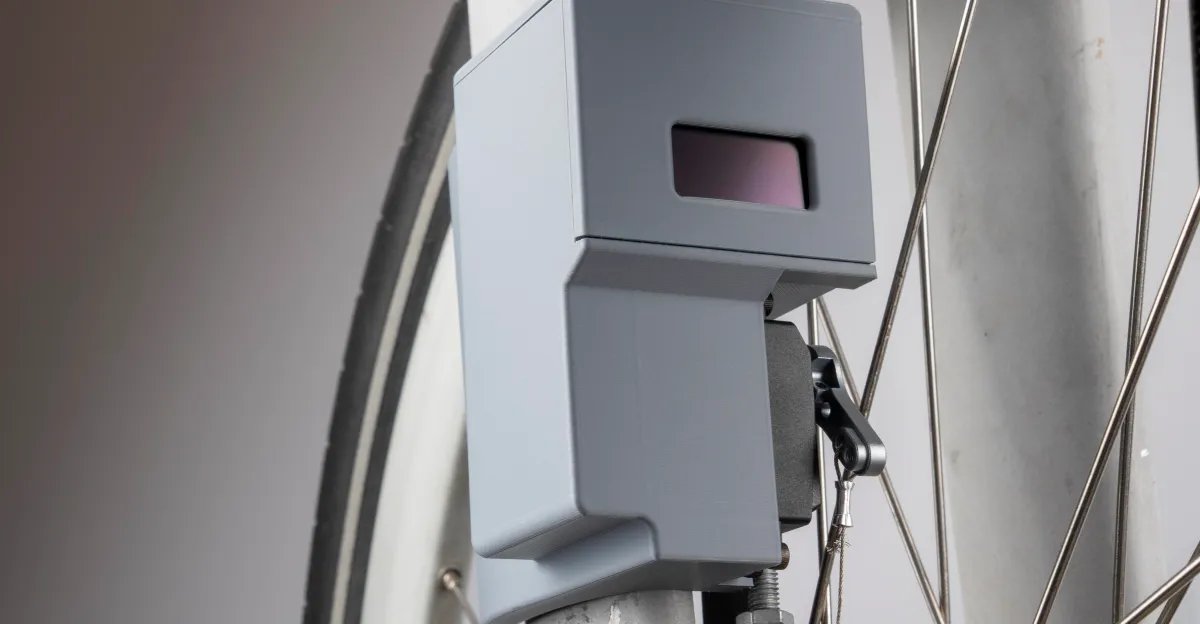
Justin Blinder had just been laid off when he first came up with the idea for Ground Truth. It was 2020, two weeks before covid lockdown went into effect, and the Brooklyn-based artist and technologist had no idea what the future would hold. He started working for the food delivery apps, and as he was riding his bike across the city, he began noticing the stark differences between neighborhoods.
“I really started to kind of become a bit more aware of how different neighborhoods, often right next to each other, could feel very economically and psychologically very far apart, even though it’s just really within close proximity,” he said. “And also just how those inequalities can sometimes feel quite unusually physical. A lot of times higher elevation can contribute to the desirability and cost of a neighborhood through better views and lower flood exposure.”
These observations led him to think about the relationship between the food he was delivering, the neighborhoods it was going to, the buildings he encountered, and even the expectations he developed about potential tips.
“All that kind of culminated into this sort of line of thinking that led to Ground Truth that had been percolating after that for a few years,” Blinder said.
Ground Truth, Blinder’s new art project, is a small gray box that attaches to the front fork of a bike and changes the physical difficulty of riding according to the housing affordability of the surrounding neighborhood. When housing is more affordable, pedaling becomes easier. But when a rider enters an area where housing costs consume a larger proportion of residents’ incomes, the bike’s resistance increases, making the rider work harder.
“And so it’s really thinking about how to take economic abstractions in this case, really the affordability of cost-of-living prices, and turn them from something that really reduces people to numbers and brings it back into more of a direct physical experience that’s rooted in reality and in the streets,” he said.
After abandoning some early ideas for fear of unexpected legal consequences, Blinder settled on building an external mechanism that would allow him to affect the bike without penetrating its closed electronic systems. Using a Citi Bike as his “canvas,” he noticed that the front drum-brake mechanism was physically exposed. When the rider pulls the front brake handle, a lever on the front fork moves to apply pressure. He realized he could build a wireless mechanism that attaches to this lever and effectively acts as an additional brake actuator, allowing the device to increase or decrease the bike’s resistance.
The hardware itself is relatively simple, consisting of an ESP32-S3 microcontroller, a GPS module, a high-torque servo motor capable of precisely controlling its rotation, and an SD card reader for storing the data set locally. To be sure, the device doesn’t log a rider’s location or transmit data; everything operates offline.
“I’d say the harder part is actually just building an enclosure that fit perfectly onto the frame that you could just slip on without any additional hardware,” Blinder said.
The issue of finding the right housing data to use turned out to be the real challenge. He eventually settled on using the US government’s American Community Survey’s Rent Burden dataset, so as to accurately capture the proportion of a household’s income that was being put toward rent and utilities. Blinder said he uses two measures: the median share of income spent on rent and the percentage of renting households that spend at least half of their income on housing. He then assigns each census block group a value corresponding to the amount of brake tension the device should apply there.
Then he took it for a test ride. He found that riding through neighborhoods with a lot of public housing, such as apartment buildings managed by the city’s NYCHA housing agency, the bike would go faster. Meanwhile, some luxury towers are legally required to have affordable apartments, which can complicate the picture presented by those opposed to their construction. His Ground Truth project was already producing surprising results.
“So it is sometimes really hard to tell what is affordable, what isn’t,” he said.
Blinder said he originally wanted to organize group rides using Citi Bikes, but was unsure whether that would expose him to legal issues. He’s also thinking about how to make Ground Truth more socially interactive as an art project. One possibility is to allow riders to contribute something to the project while they ride. Another would be incorporating additional datasets that could bring different urban or socioeconomic issues into sharper focus. The project could end up evolving significantly in the future.
“So it’s really just thinking about what our preconceptions about affordability are,” he said, “and how we can kind of throw a wrench in that at times.”