dailynewsnblog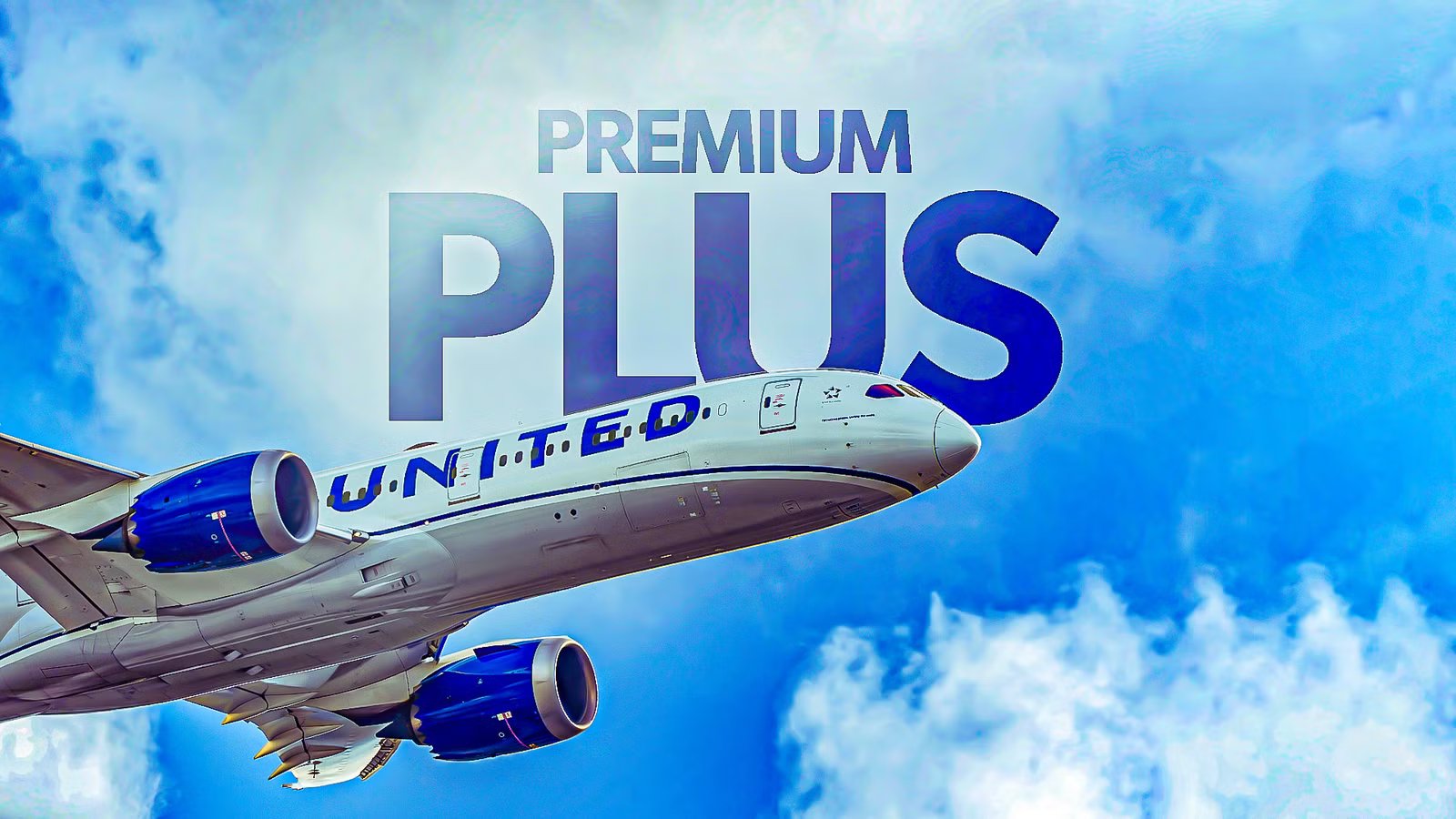
When  United Airlines introduced Premium Plus, it marked a pivotal moment in the carrier’s history, as it fundamentally changed how travelers weigh comfort against cost. For years, the gap between the standard Economy Plus and the lie-flat luxury of Polaris business class was a chasm that many travelers found difficult to cross. Premium Plus was introduced to bridge this gap, offering a dedicated cabin with a specialized seat and enhanced service, making the timeline of its arrival essential for frequent flyers tracking fleet upgrades and mileage redemptions.
This article will explore the specific dates and phases of the United Premium Plus rollout, clarifying the difference between the 2018 sale announcement and the 2019 operational launch. Through each section, you will gain an understanding of why United made this strategic move, which aircraft first featured the purple seats, and how the product has evolved into a staple of its long-haul international network.
An Aggressive Rollout

United Airlines officially launched the sale of its Premium Plus cabin on December 3, 2018, with the first passengers taking flight on March 30, 2019. While the airline had been retrofitting select Boeing 777 aircraft with the new seats throughout late 2018, those initial months saw the cabin marketed as Economy Plus to elite members at no charge. It wasn’t until March 2019 that the cabin was formally sold and recognized as a distinct class of service with its own unique amenities and meal protocols.
The rollout was aggressive, with United initially targeting 21 high-traffic international routes to be operational by the end of May 2019. These routes primarily connected United’s major hubs in  Newark,
  San Francisco, and Washington Dulles to global destinations like Tokyo, Frankfurt, and Hong Kong. This launch was significant because it marked United’s first true premium economy product, moving beyond simple extra legroom to a wide-body seat reminiscent of a domestic first-class experience.
From a historical perspective, United’s timing was a response to a rapidly segmenting industry.  Delta Air Lines had already introduced Premium Select in 2017, and
  American Airlines had begun its own premium economy rollout in 2016. By the time United’s Premium Plus took to the skies in 2019, the big three US legacy carriers had all committed to the mid-tier cabin, signaling a permanent end to the era where long-haul international travel was divided strictly into economy and business.
Unique Approach To Launching A Product

The specific introduction date for Premium Plus is shaped by a common hurdle in the airline industry. While United began taking delivery of aircraft equipped with the new purple seats in late 2018, the airline could not officially sell them as a separate class until it reached a substantial number of retrofitted planes. This ensured that if a plane needed to be swapped at the last minute for maintenance, passengers who paid for a premium seat wouldn’t be downgraded to a standard economy seat simply because the backup aircraft lacked the new cabin.
Two major fleet milestones dictated the pace of this rollout. First, the Boeing 787-10 Dreamliner served as the launchpad for the product, as it was the first aircraft delivered directly from the factory with Premium Plus already installed. Second, United had to juggle the simultaneous retrofit of its 777-200ER and 777-300ER fleets, which were also being upgraded with the new Polaris business class pods. The clear priority for Polaris meant that Premium Plus often arrived as a secondary benefit of a larger, million-dollar cabin overhaul.
During the soft launch period from January to March 2019, United utilized the 787-10 on domestic transcontinental routes for crew training and familiarization. On these flights, the Premium Plus seats were actually marketed as Economy Plus, allowing lucky MileagePlus elite members to sit in the upgraded recliners for the price of a standard extra-legroom seat. This phased approach allowed United to iron out service logistics, such as the distinct meal plating and Saks Fifth Avenue bedding, before the official revenue-generating launch in the spring.

Sky-High Luxury: Inside United Airlines’ Premium-Fitted Boeing 767s
The airline currently operates 37 Boeing 767-300ERs, of which 24 have a premium heavy configuration.
Better Than Expected?

United’s leadership has been transparent about the fact that Premium Plus was a calculated response to a shifting travel market. Andrew Nocella, United’s Chief Commercial Officer, has described the cabin as catering to travelers who want more than a standard seat but aren’t willing to pay the $5,000+ price tag for Polaris. In recent 2026 briefings, Nocella admitted that United actually “undersized” the Premium Plus cabin during its initial 2019 rollout, failing to predict how quickly leisure travelers would gravitate toward the purple seats as a treat for long-haul vacations.
From an airline profitability standpoint, experts agree that Premium Plus is the most efficient use of space on a widebody aircraft. While a Polaris pod accommodates roughly three to four economy seats, a Premium Plus seat occupies significantly less real estate while often selling for double or triple the price of a standard economy ticket. Analysts at The Points Guy and Live and Let’s Fly have noted that this “mid-tier” section generates some of the highest margins in the industry, which explains why United has been aggressively reconfiguring its Boeing 767 and Boeing 777fleets to add more of these seats at the expense of standard economy rows.
The consensus is generally that the introduction of Premium Plus fundamentally broke the traditional upgrade ladder. Previously, a MileagePlus member could use a single upgrade to jump from a cramped middle seat to a lie-flat bed. Experts point out that today, the existence of this middle cabin creates a two-step upgrade process; passengers often find themselves waitlisted for Premium Plus first, making the jump to Polaris rarer and more expensive. This strategic layering ensures that United rarely flies with an empty premium seat while maximizing the revenue per passenger.
What About The Other Major Airlines?

When evaluating when and why United introduced Premium Plus, it is essential to compare it against the two cabins that it accompanies. While the names are confusingly similar, the products are worlds apart. Economy Plus, which United has offered for decades, is simply a standard coach seat with four to five extra inches of legroom. In contrast, Premium Plus is a distinct physical class with a wider seat, deeper recline, and a dedicated cabin. Many travelers still mistakenly believe they are the same, but this product offers a 6-inch recline and 19-inch width, making it more comparable to a domestic First Class seat than anything found on the back of the plane.
The competitive landscape also provides a different answer to the question of value. By the time United entered the fray, Delta’s Premium Select and American’s Premium Economy were already established. Compared to its peers, United’s product is often praised for its soft product, specifically the Saks Fifth Avenue bedding and Therabody amenity kits, which many feel outclass American’s more basic offerings. However, some frequent flyers argue that Delta offers a slightly more ergonomic seat design. United’s late entry allowed them to observe these competitors and position Premium Plus as a Polaris-lite experience rather than just Economy-plus-extra.
Feature | United Premium Plus | Delta Premium Select | American Premium Economy |
Launch Year | 2019 | 2017 | 2016 |
Seat Pitch | 38 inches | 38 inches | 38 inches |
Amenity Partner | Therabody / Saks | Someone Somewhere | Various / Rotary |
Dining Service | Multi-course | Multi-course | Multi-course |
Free Checked Bags | 2 | 2 | 2 |
Ultimately, the alternative for many United loyalists isn’t another airline, but the use of PlusPoints or miles. Before 2019, the only way to get a better seat on a long-haul flight was a massive jump to business class. The introduction of Premium Plus created a middle-ground answer for those with limited points. While a Polaris upgrade might cost 40–80 PlusPoints, a jump from Economy to Premium Plus often requires only 20. This makes it the most mathematically logical choice for travelers who want to maximize their upgrade currency without depleting their entire balance on a single flight.

The Most Spacious Premium Economy Seats In The US Today
All three major airlines in the US offer competitive premium economy products.
Not Fully Retrofitted Yet

Even currently, not every United widebody aircraft features a Premium Plus cabin. For example, some older configurations of the Boeing 757-200s used on transatlantic routes do not have the purple seats, and some Boeing 767-300ERcaircraft feel more dated than many newer aircraft in the fleet. If you book a flight expecting the Premium Plus experience on one of these non-retrofitted planes, you will likely be seated in standard Economy Plus, which lacks the upgraded dining, footrests, and dedicated cabin.
Another risk is the drawback of equipment swaps. Aviation maintenance is unpredictable, and if United has to swap a 4-cabin aircraft for a 3-cabin aircraft at the last minute, the Premium Plus passengers are the first to be displaced. Currently, there is no equivalent middle cabin on older planes, so a downgrade to Economy Plus is a real possibility. While United will refund the price difference, the loss of the wider seat and upgraded meal service on a 12-hour flight to Tokyo, for example, can be a major disappointment for those who specifically timed their trip around the Premium Plus schedule.
If you are a high-tier Premier member hoping to use miles to get into Polaris, the existence of Premium Plus can actually make your goal harder. On many routes, United now requires you to be cleared into the Premium Plus cabin first before you are even considered for the Polaris waitlist. This creates a bottleneck in which passengers who have paid for Premium Plus cash fares are prioritized over those trying to jump all the way from the back of the bus, effectively moving the goalposts for a lie-flat seat.
A Major Change To An American Classic

The introduction of Premium Plus in 2019 became the fundamental redesign of the United Airlines value proposition. By the end of 2023, United had successfully retrofitted over 90% of its international widebody fleet, making the experience a standard expectation for global travelers rather than a rare luxury. If flying a long-haul route on a 777 or 787, you are no longer forced to choose between a cramped economy seat and a multi-thousand-dollar business class pod.
The product is now entering its second generation. United is currently rolling out its United Elevated interior, which debuted on new Boeing 787-9 deliveries. This updated version of Premium Plus features enhanced 13-inch 4K OLED screens, wireless charging, and improved seat ergonomics.
While the core answer to when this started remains March 2019, the product continues to evolve to meet the high demand of premium leisure travelers who have made this the most profitable real estate on the aircraft. In reality, the present day may just be the beginning of what Premium Plus can truly become.

![15-Hour Flights: Turkish Airlines Eyes Brand-New Ultra-Long Route [Map]](https://dailynewsnblog.com/wp-content/uploads/2026/06/320-turkish-airlines-airbus-a350-mc-mediastudio-_-shutterstock.jpg)