dailynewsnblog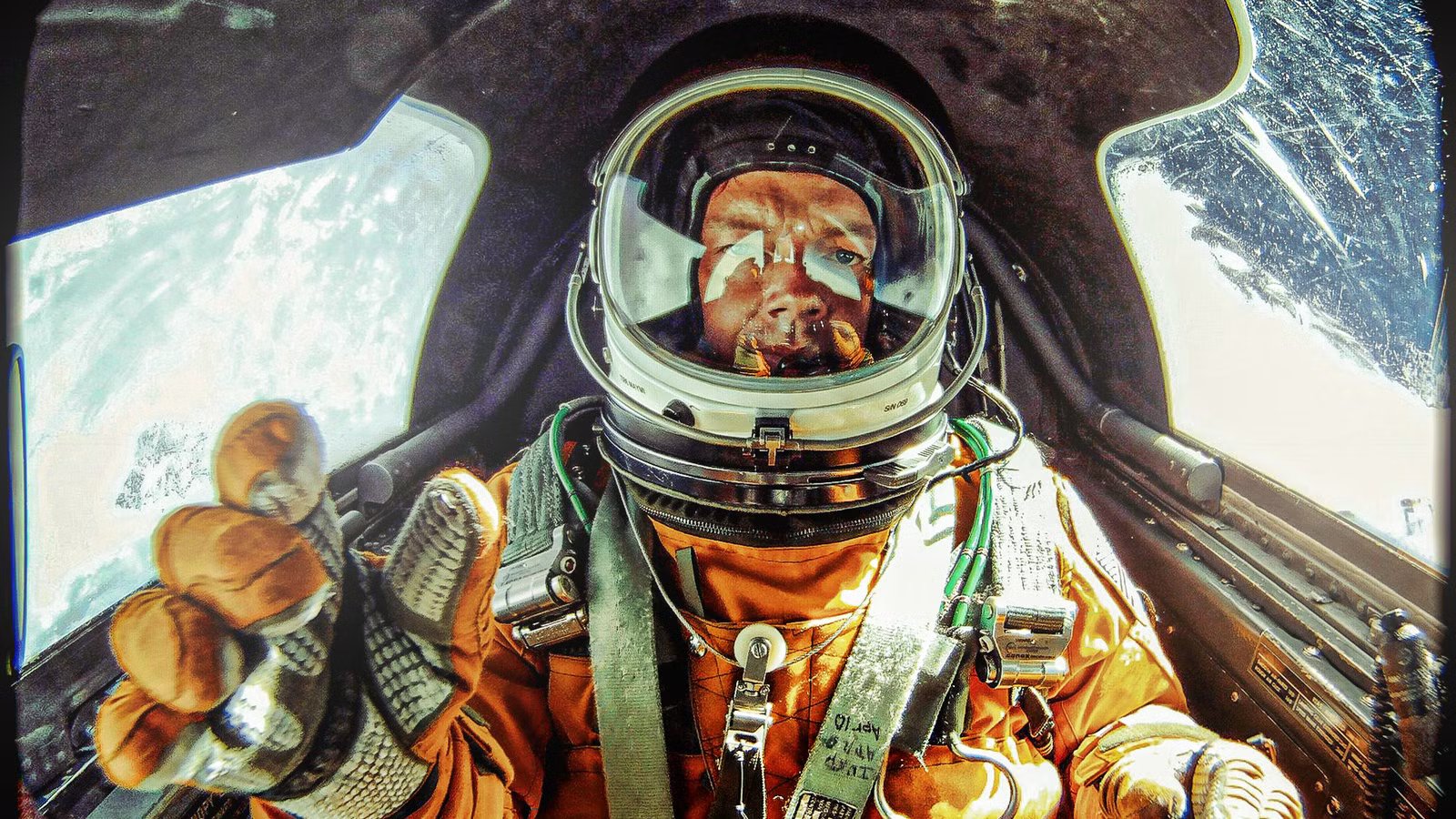
Simple Flying has already written about how the next-generation successor to the Lockheed U-2 Dragon Lady spy plane, the SR-71 Blackbird, was extreme. To operate the SR-71, pilots had to perform a number of preparations typically reserved for astronauts, like having special diets, breathing oxygen, donning space suits, and more. But the pilots operating the Dragon Lady trailblazed some of those procedures in the 1950s before the Blackbird came to be.
The Dragon Lady remains in service in 2026, and with preliminary Fiscal 2027 House budget proposals, it appears it will not be retiring in 2027 after all. Other platforms now fill most of their original roles. At the same time, upgrades give it the ability to have rapid sensor changes, carry multiple sensors simultaneously, and act as an airborne communications gateway; its current operational niche is very different from that of 1960. Here is what to know about what the Dragon Lady’s pilots had to do to prepare for a Dragon Lady spy mission.
The Lockheed U-2’s Mission

To understand the Lockheed U-2 Dragon Lady, it is important to first understand what it was built for. In the 1950s, the US and USSR slid deeper into the Cold War, but the US was largely in the dark about what was going on in the interior of the country. Sometimes, the best images they had of parts of the western portions of the country were WWII images taken by the German Luftwaffe.
This was an age before satellites and before interceptor missiles had come into their own. 1950s flak fire was limited in altitude, while interceptor fighters also had limited altitude. The idea was for the Lockheed U-2 to fly above the interceptors at an altitude of 70,000+ feet (21,300+ meters) and operate over Soviet airspace with impunity. Initially, this worked, but soon US planners became unnerved by the growing reach of interceptor missiles.
Development work on the successor program that would give rise to the SR-71 had already begun by the time the Air Force’s concerns were validated by Gary Powers being knocked down by a Soviet interceptor missile in 1960. In 1962, both the usefulness of the Dragon Lady and its vulnerability were demonstrated. It was a U-2 that identified the Soviet missiles being moved to Cuba, while a U-2 was the only US aircraft lost to enemy fire in the crisis.
The Dragon Lady’s Altitude

Even today, 70 years after the aircraft first flew, the full capabilities of the Dragon Lady remain classified. In 2025, the Air Force celebrated 70 years of flying the aircraft by flying a return two-seat TU-2S with the callsign “DRAGON 70” on a record-breaking mission. Exactly what records that flight accomplished have not been fully explained.
Writing of the event, Sandboxx News stated, “We do know that the U-2 has an unclassified service ceiling of 70,000 feet and CIA records show the aircraft would routinely fly as high as 74,500 feet. Unconfirmed but credible claims suggest the U-2 could even exceed 80,000 feet. Notably, the aircraft’s transponder is reportedly configured to show an altitude of 60,000 feet on flight trackers regardless of how much higher it may actually be flying.“
That said, it is also useful to keep in mind that the Dragon Ladies remaining in service are different airframes from the original ones. These are enlarged and modified aircraft manufactured in the 1980s (last built in 1989) and upgraded with General Electric F118 engines, improved sensors, and other improvements. It is unclear if they come with a higher de facto service ceiling than their predecessors.
U-2 Pilots Had To Pre-Breathe

U-2 pilots could not just hop into the aircraft and fly it on a regular mission; there was considerable preparation. One of the most notable things they did was breathe pure oxygen for an extended period of time before takeoff. This is called pre-breathing, although the process is also called denitrogenation or preoxygenation. This is the medical and physiological process of washing out nitrogen from the lungs and body tissues by breathing 100% oxygen.
Breathing pure oxygen could take between one and two hours or even more. This is a process that most fighter jet pilots and bomber pilots have never had to do before on their sorties and other missions. The reason for this is that at extreme altitudes, residual nitrogen dissolved in the bloodstream and tissues can form bubbles when pressure suddenly drops.
This is similar to scuba divers getting the “bends.” Decompression sickness (DCS) can be debilitating or even fatal; having nitrogen removed from the body reduces the risks. According to one research paper, aviators and astronauts are at risk of DCS, although this is as a result of rapidly ascending to altitude, or departing a pressurized space habitat, rather than ascending from depth. It adds that divers at risk are “scientific and naval divers, as well as civilian divers.”
U-2 Pilots Wore Space Suits

At the U-2’s operating altitude of 70,000 feet (21,300 meters) or more, the atmospheric pressure is so low that a catastrophic loss of cabin pressure can be fatal within seconds. To minimize the risk, pilots would wear a full partial-pressure spacesuit, one that was similar to those worn by astronauts. These suits are not simple to wear; they require technicians to help seal and check every connection.
They would also need to undergo extensive suit integrity and communications checks to ensure that the suit’s life support system was working normally. The cockpit was only partially pressurized to around the equivalent of ~28,000–30,000 feet (8,500 to 9,150 meters). The suit worn by U-2 pilots today is the Model S1034 Pilots Protective Assembly (PPA) made by the David Clark Company.
According to the David Clark Company, it was designed to be a common suit that “reduced crew member stress and fatigue while minimizing ground support and maintenance requirements.” It was designed as a clean-sheet design to incorporate multiple improvements like a breathable gas container and improved (low-torque) glove bearing/disconnects. It started replacing its predecessor, S1031, in the U-2R in 1996. The suit is also used by NASA’s ER-2 and WB-57F pilots.
Congress To Extend U-2s Again

In the Air Force’s 2027 budget proposal, the force requested permission to retire all of its 23 remaining operational U-2 spy planes, as had been discussed in previous years. The Air Force has previously asked to retire the aircraft in its earlier proposals, but Congress had extended the service life to 2027. It proposed to zero out all U-2 operations and maintenance funding.
While Congress again extending their service lives is not surprising, it appears to be going a step further. The FY27 Defense Appropriations Bill (updated in June 2026) reads, “$81 million for U-2 programmed depot maintenance to fully restore four aircraft and prevent the divestment of more than two U-2 aircraft.” The current fleet of 23 aircraft includes 20 single-seat U-2S and three two-seat TU-2S trainers.
Lockheed U-2 Dragon Lady fleet (per USAF, budget documents) | |
|---|---|
Number in service | 23 (including 3 trainers) |
Retirement | Likely delayed from 2027 |
Operating unit | 9th Reconnaissance Wing (9th RW) |
Primary base | Beale Air Force Base, California |
Other operators | NASA (ER-2) |
Former operators | CIA, Republic of China Air Force (Taiwan) on behalf of CIA |
In the Fiscal 2026 budget, Washington permitted the Air Force to retire up to eight aircraft, and provided $55 million for depot maintenance. According to MiGFLUG, the first U-2 to be sent to the boneyard was tail number 80-1085. If this House bill passes with this clause, it means the Air Force will be permitted to retire more Dragon Ladies, but it will also be required to restore another four. This is a common pattern; the Air Force has a history of requesting to retire training variant Block 20 F-22s, older F-15Es, all its A-10s, and its U-2s, while Congress has repeatedly stepped in to stop, delay, or stagger the retirements.
The U-2 Dragon Lady’s Niche

The U-2 Dragon Lady is not as useful as it once was, even with upgrades. The aircraft is vulnerable, expensive, and available in low numbers. But that is not the same as useless; it still has a niche. Most of its roles have long been taken over by various advanced reconnaissance drones (e.g., MQ-9s, RQ-180s, RQ-4 Global Hawk), signals intelligence (e.g., RC-135 Rivet Joint), satellites, AEW&C aircraft, and a range of other systems used for gathering intelligence.
Meanwhile, the aircraft have become problematic. The loss of a manned aircraft is much more problematic for the United States than unmanned aircraft, potentially triggering a massive rescue operation or diplomatic crisis if the pilot comes down behind enemy lines. Unlike satellites, manned reconnaissance aircraft conducting overflights risk creating immediate diplomatic crises, making them politically far more difficult to employ against heavily defended states. Flying satellites over the same area of interest just doesn’t pose these issues.
Where the U-2 Dragon Lady maintains a niche is in its persistence over areas of interest in low-threat environments. Satellites are not able to loiter over an area of interest and so can’t provide continuous coverage (yet). Areas where the Dragon Lady remains useful include monitoring the United States’ southern border. It is also useful for Indo-Pacific surveillance, maritime ISR, disaster response communications, relaying electronic intelligence support for military exercises, and other use cases.