dailynewsnblog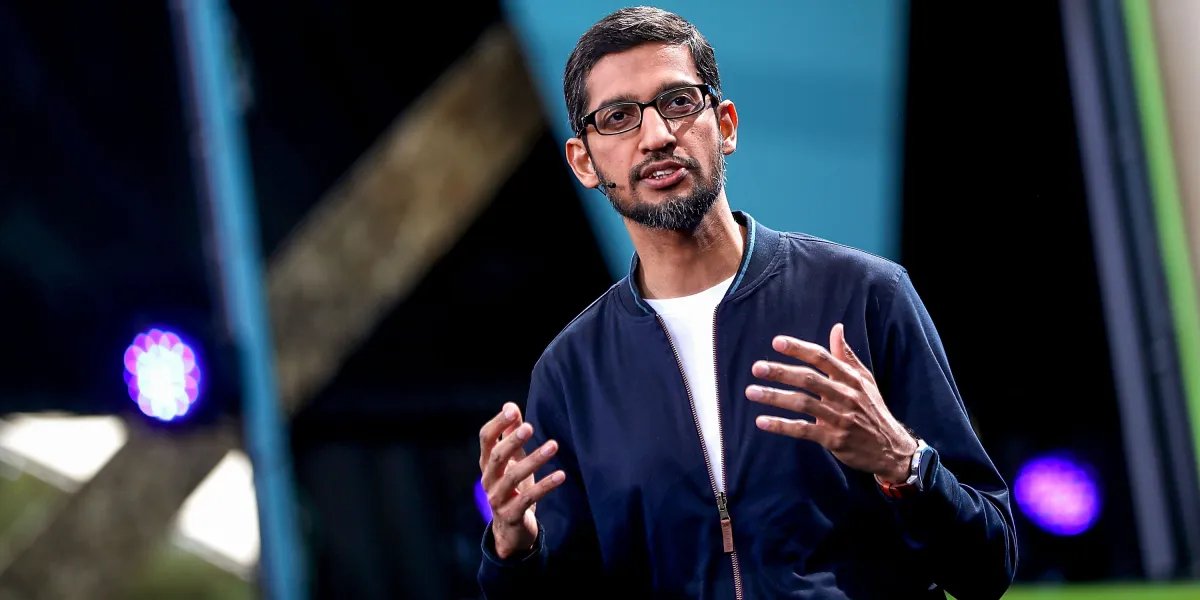
But a foundation model’s reputation these days rests largely on its coding capabilities, and for months Google’s coding tools have been outgunned by Anthropic’s Claude Code and OpenAI’s Codex. Those systems are so dramatically superior to Google’s own offerings that the company has reportedly had to allow some engineers at DeepMind, its AI division, to use Claude for their work—lest they fall farther behind.
So when I arrive at the conference in Mountain View, California tomorrow, I’ll certainly be on the lookout for any efforts Google is making to claw its way back into frontrunner position. But I’m also eager to see new developments in areas where Google shapes the cutting edge, such as AI for science. The company’s moves there might receive less attention, but they will be no less consequential.
Here are three things I’ll be paying particular attention to over the next two days.
An attempted coding comeback
Google is taking its AI coding crisis seriously. According to reporting from The Information, there’s a new AI coding team at DeepMind. And the Los Angeles Times has reported that John Jumper, who shared a 2024 Nobel Prize in chemistry with DeepMind CEO Demis Hassabis for their work on the protein structure prediction software AlphaFold, is lending his talents to the efforts. I would be surprised if we don’t see a major new coding release at I/O, perhaps in the form of an update to the company’s Antigravity agentic coding platform.
That said, we shouldn’t expect anything transformative here. Googlers have access to models and products that are substantially ahead of those released to the public, yet they were still reportedly fighting over who got access to Claude Code last month. Unless the company has made astonishing progress since then, Google probably won’t make it back to the coding frontier in the next two days.
Science and health
Coding might be Google DeepMind’s weakness, but science is its conspicuous strength. It is the only frontier AI company to have earned a Nobel Prize. And as LLMs have come to dominate the AI-for-science landscape, Google has only solidified its lead. Last year, the company released multiple scientific AI tools, including the AI co-scientist, which formulates hypotheses and research plans in response to user questions and has been described as an “oracle” by one Stanford scientist, and AlphaEvolve, a system that iteratively discovers new solutions for mathematical and computational problems. If any new scientific tools are announced at I/O, they’ll be worth noting.
I’ll also be paying close attention to any moves Google makes in health and medicine. Google is doing some of the best research out there on LLM-based health tools, but OpenAI has defined the health AI conversation since the release of ChatGPT Health in January. Google has announced that it will be making its AI-powered Health Coach publicly available tomorrow, but promotional material suggests that the tool is geared more toward providing advice on topics such as fitness and diet than to addressing users’ medical concerns. Is this another area where Google has fallen behind, or is the company exercising appropriate caution in a high-stakes domain?
The drama
While Google fans congregate down in Mountain View, roughly 30 miles north in Oakland the Elon Musk v. Sam Altman trial will be wrapping up. The past few months have seen more than their fair share of AI CEO drama—before the trial, the animosity between Altman and Anthropic CEO Dario Amodei took center stage as Anthropic and OpenAI worked to negotiate deals with the US Department of Defense. But DeepMind’s Hassabis has, for the most part, steered clear of such drama. He effectively presents himself as a Nobel Prize-winning nerd, and if he has written screeds about any of his peers, they haven’t been leaked to the press or appeared in legal discovery.
That’s not to say that Google is controversy free. Last month, a group of 600 employees, many of whom work for DeepMind, sent a letter to CEO Sundar Pichai protesting an impending DoD deal. Google signed that deal the next day. Hassabis, Pichai, and all the other big names will surely do their best to skirt these and other touchy subjects while on stage, but controversies will worm their way in regardless. It will be interesting to see whether Google can maintain its veneer of neutrality.