dailynewsnblog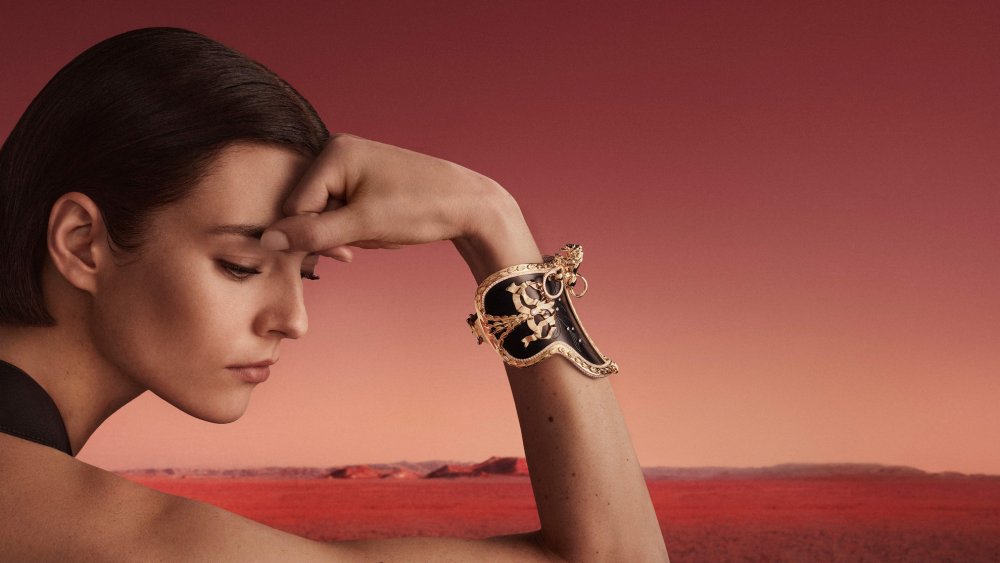
With the spring months peppered with destination showcases and reveals by Place Vendôme’s marquee names, July’s jewelry landscape could have turned sparse.
But jewelers both established and emerging, much like nature, preferred to fill the space with fresh crops of unique designs, elusive gems and innovative approaches.
Boucheron set the tone with a philosophical musing on archetypes and artificial intelligence, with a collection four years in the making called “Human Being” and part of its annual Carte Blanche series.
Creative director Claire Choisne recalled how she “more often spoke of nature through the vegetal world but not so much of human nature” during a presentation of the five sets in the collection, each comprising a necklace and ring, which led her to consider what a high jewelry necklace looked like in the collective unconscious.
The tool she chose to help her suss out what shape that might take was AI. “An archetype is the median, the average, the general view, which a single brain struggles to do,” she explained. What also amused Choisne was the answer she got: a diamond cluster necklace — a style the designer personally dislikes and admits she’d spent most of her career skirting around.

Boucheron Rain necklace
Courtesy of Boucheron
Sets of a necklace and ring included Rain, playing on the idea of drops of water on the skin, executed as a macaroon-like composition of two rock crystal shells filled with layers of biosourced resin holding 4,838 diamonds, and Tattoo, inspired by Victorian-era nobility’s appetite for body art, where glyptic techniques were used to carve flowers, butterflies and serpents into the heart of smoky quartz elements.
For Choisne, that tension between innovation and familiarity is the bedrock of the true value of high jewelry: the emotional jolt at first sight that can lead to a purchase. It reminds observers of the human hands and imaginations that guide tools, AI or age-old, and slots into her goal of “always making a proposal that feels pertinent and timely,” she said.
A freeform ride across time, myth and pop culture underpinned “Into the Horsescape,” the 90-piece high jewelry collection imagined by Pierre Hardy for Hermès.
“The horse is a pretext…a vehicle to travel through time and space,” he said, describing how the animal moves fluidly across art forms and eons, from the cave paintings found in France’s prehistoric Lascaux site and the steeds pulling Apollo’s sun chariot to Hollywood Westerns.
His designs, meanwhile, ran the gamut from the figurative, with the Sellette cuff that was a wrist-sized replica of an existing ornate saddle, to the abstract, exemplified in the Clou de Selle Lumière plastron recasting the humble farrier’s nail into radiant diamond-set elements.
Other standouts included the Cavale necklace that featured a harness looping around the neck, with a gradient effect on the gem-set surfaces to accentuate the impression of fluidity, and miniature Stetsons hanging from bolo tie-style necklaces.
Hardy described his approach as “relational aesthetic,” seeking harmony through the interplay of light against opacity, matte against shine, and a palette inspired by the equestrian world of warm golds, smoky quartz, pink opals, moonstones, brown tourmalines, tiger’s eyes, plus diamonds aplenty.
Today’s high jewelry clients are “able to understand both the value and techniques” and are seeking “a difference, an exclusivity, something they know will be unique and found nowhere else,” he said.
Buccellati likewise leaned on its distinctive handwork as a differentiator. Creative director and honorary president Andrea Buccellati described clients as connoisseurs who are “a little tired” of look-alike items and seeking “something a little different, a little unique, a [sense of] timelessness.”
In Asia especially, he saw demand is “growing a lot,” driven by collectors who “understand the product…the workmanship…the price” once they see the know-how and time at play, given some pieces take up to a year and a half of handwork for Buccellati’s precious gold lace.
Color remained a constant across the board, ever since it became prominent after the pandemic-driven doldrums of 2020.

Damiani Impetuosa necklace.
Fabrizio Scarpa/ Courtesy of Damiani
“I don’t think we will leave color anymore,” said Sylvia Damiani, vice president of Damiani Group and president of Venini. “It gives you much more joy and from a creative point of view, the palette is so broad,” including with stones once overlooked, like cobalt spinels.
Such gems were employed to great effect in Damiani’s collection inspired by works of art’s great masters, including Katsushika Hokusai, whose “The Great Wave Off Kanagawa” became a white gold necklace, the cresting water curling at the throat in a flurry of blue sapphires, Paraiba tourmalines and diamonds.
Meanwhile, Gustav Klimt’s geometries interspersed with swirling circular shapes that compose his famous “Kiss” came to life as a necklace featuring gold, pavé and onyx elements, with a fiery 7.13-carat Tanzanian spinel centerstone.
Even those who doubled down on their established vocabulary explored a wide array of gems, such as Graff whose “Artistry in Motion” dressed its transformable butterflies brooches in rosy opals, pearls as well as pink sapphires, emeralds and yellow diamonds, or Tiffany & Co. whose Legendary Bird brooch had two feathered friends fluttering around a thumb-sized blue sapphire on a background of black opals.
Having names such as Bulgari, Chanel, Van Cleef & Arpels and Chaumet move their big reveals earlier in the year came across as an invitation to many brands for the July showcases.

Lily Gabriella’s Naia set in tsavorite.
Franco Guidi Photography/ Courtesy of Lily Gabriella
London-based Lily Gabriella felt it was an opportunity “to bring the experience abroad” of the one-to-one appointments in her Hatton Gardens salon, where clients seek “more artisanal purchases” that feel timeless and personal, such as her leather-covered wood bead used for opulent necklaces, or ceramic and gold chunky chain bracelets.
She is among those who find today’s client to be more daring but also more strategic, including when it comes to redesign and repurposing.
In her offer is a gold buyback service, with the precious metal turned into credit toward new pieces, allowing clients to “come up with something completely new with old [pieces],” at a moment when the metal’s value is front of mind.
“It leaves room for independents and a new clientele of collectors who are looking for [pieces with] a truly distinctive identity, not just status,” said Valérie Messika, founder and creative director of Messika.
It didn’t get more unique than the Okavango Blue masterpiece necklace, the not-for-sale star of the opening chapter for Messika’s “Terres de Contrastes” collection. The necklace was presented as part of a collaboration with the government of Botswana around its center stone, a 41-carat blue diamond that is the largest and rarest of its kind ever found in the country.
“What triggers a desire to buy is the feeling of being yourself, a little like a pair of shoes or clothing,” she said. “You can find it beautiful on the rack but when you wear it, it has to go with your personality, your skin tone.”
And the Messika client continues to look for pieces to wear rather than lock in a bank vault, she noted.
Options included the supple Féroce necklace, whose yellow gold geometries with a nearly 17-carat black Australian opal centerstone were inspired by the triangular scales of crocodiles, and Delta Sacré, whose 600 diamonds led the eye to a pear-cut emerald of 12.81 carats.
Mikimoto meanwhile used its famous pearls to create an opulent headdress or a wide collar festooned with diamonds, sapphires, emeralds and tourmalines, including a 104.52-carat one in blue-green hues.
Stepping up to the plate was Greek jeweler Nikos Koulis, who recently opened his Paris gallery. He said collectors now cross-shop art, furniture and jewelry with the same eye. “[They] are aesthetically driven and they are looking for exclusive things,” he said.
Materials’ intrinsic value matters less than uniqueness and a sense of the jeweler’s style, he continued. After seeing his jewels mixing tortoiseshell acetate with gold and diamonds, “[Clients] keep telling me, ‘Oh, it’s very you’ which is for me very important.”
She said clients tended to gravitate toward “more brazen, more maximalist” jewels over dainty designs.
On top of strong cultural identities, Anna Hu’s general manager Gina Wu pointed out how million-dollar, one-of-a-kind investment pieces coexisted with a “sweet spot” of around $300,000 to $500,000.

Cora Sheibani Moonstone necklace.
Courtesy of Cora Sheibani
London-based jeweler Cora Sheibani, who held her first exhibition at Christie’s, agreed that demand had shifted.
“What I’ve noticed recently is that it’s easier to sell slightly more expensive pieces than the less expensive,” she told WWD. “It used to be very easy to sell something for 6,000 or 8,000 [British pounds], but I’m actually selling a lot more between 25,000 and 70,000 [pounds].”
In that price range, unique designs find themselves in competition with repeatable high jewelry and even the upper reaches of branded fine jewelry. As such it is “a very interesting segment of jewelry and not that many people do it,” added Sheibani.
For French jewelry brand Viltier, which recently stepped into high jewelry, the July date was its first formal outing. “We chose July because it is well positioned in the middle of the year, preparing what we are going to show commercially [in the second semester],” said cofounder Thomas Montier Leboucher. “It also shows people we too are here with higher-end pieces.”

Viltier Clique Cascade ring, rivière necklace and bracelet.
Courtesy Viltier
But all this is trumped by another factor in purchasing decisions.
“Clients want for sure precious beautiful gemstones that have and keep value, but also they want unique design with the concept or ideas that touch them,” said Christine Chen, who founded the Serendipity jewelry label. “And then in terms of wear, they want more versatility, more possibilities.”
Her lineup, shown in the Eiffel Tower, included a new diamond cut taking its cues from the monument’s structure seen from below as well as a host of necklaces that could be turned into tiaras. One striking example featured rainbow moonstones from a now-exhausted mine in Madagascar.
“Despite everything going on with the world right now, jewelry still seems to be everybody’s passion,” said Akunna Nwala-Akano, founder of Lagos-based jewelry label Akano. “The minute they see something that moves their emotions — many are emotional buyers now — you see them still go ahead to buy.”

Akano high jewelry necklace.
Courtesy of Akano