dailynewsnblog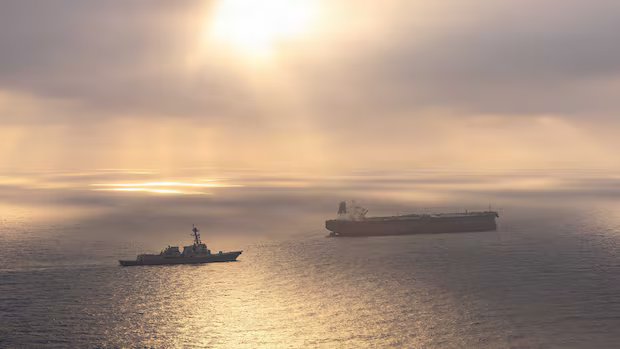

Listen to this article
Estimated 5 minutes
The audio version of this article is generated by AI-based technology. Mispronunciations can occur. We are working with our partners to continually review and improve the results.
This story is part of Mind Your Business, a weekly analysis of the biggest business stories emailed to subscribers on Monday mornings. If you haven’t subscribed yet, you can do that by clicking here.
In a lot of ways, the deal to end the war between the U.S., Israel and Iran is the easy part. Getting that deal to stick and finding a way to restore global energy flows is the tough part.
When U.S. President Donald Trump announced a deal had been reached, he posted a message to his social media site Truth Social.
“(I) authorize the immediate removal of the United States Naval blockade. Ships of the World, start your engines. Let the oil flow!” he wrote on Sunday.
The text of the agreement has not been released but the date for getting that oil flowing moved very quickly. Instead of immediately, Trump now says the Strait of Hormuz will open later this week.
“With the opening of the Strait upon the signing of the Deal on Friday, for purposes of mine removal, oil will flow on both ends again for the Region, and the World!” he posted.
But getting oil flowing again will take much more than a memorandum of understanding.
WATCH | U.S., Iran reach new peace deal:
Experts say it will be a long time before battered energy markets return to anything approximating normal.
A ruptured supply chain
Under normal circumstances, about 20 million barrels of oil pass through the strait every day. Over more than 100 days of war, that has led to a giant hole in the global supply of oil.
Yes, some shipments made it out. Saudi Arabia rerouted many tankers to ports in the Red Sea to avoid the blockade. Iraq was able to export millions of barrels.
But as many as a billion barrels of oil are simply missing.
Restoring a ruptured supply chain is an immense logistical challenge. It’s not as simple as flipping a switch. Production facilities throughout the Persian Gulf were damaged in airstrikes and drone attacks. Some were destroyed.

Rebuilding, in some cases, will take years.
The ships pose another serious hurdle.
As many as 1,500 vessels have been trapped in the gulf for 3½ months. Many will require repairs and maintenance before they can set out to sea, if only to deal with the barnacles that have built up as the ships were idle for so long.
Getting ships out addresses only half the problem. What’s needed are empty ships coming into the gulf to start hauling oil away to destinations around the world.
It’s not like there’s an armada waiting to get in. Those ships have gone off in search of available oil. They’ll have to reroute and get back to the region once the shipping companies decide the transportation lanes are truly open and actually safe.
Tankers travel slowly
And it’s not like oil tankers move quickly.
Most tankers traverse the world’s oceans at about the same speed as a bicycle.
When the Strait of Hormuz closed, investment bank JP Morgan released a map showing how long it would take for the last tankers that made it out of the gulf to reach their farthest destinations.
The last shipments took weeks to arrive in South Korea and Japan.
The same math applies even if the strait is opened. And even when production starts to ramp up again. And even once shipping companies deem the risk safe enough to traverse the strait, it will be weeks before the very first shipments reach some of their destinations.
Shell CEO Wael Sawan told an energy conference in Malaysia last week that some 10 per cent of global crude oil production is offline. He thinks it will take “close to a year, if not longer” for the market to find its equilibrium again.
Energy markets on Monday celebrated the news that an initial deal to end the war has been reached. Oil prices fell sharply and stocks rose.
Gasoline prices have been rising and falling largely in line with oil prices. But most analysts warn neither commodity will return to pre-war levels until the longer-term issues with energy flow and supply are sorted out.
And plenty of risks remain on the road ahead. Actually achieving some kind of balance in energy markets is going to take time, diplomacy and a lot of money. And even then, nothing is guaranteed.