dailynewsnblog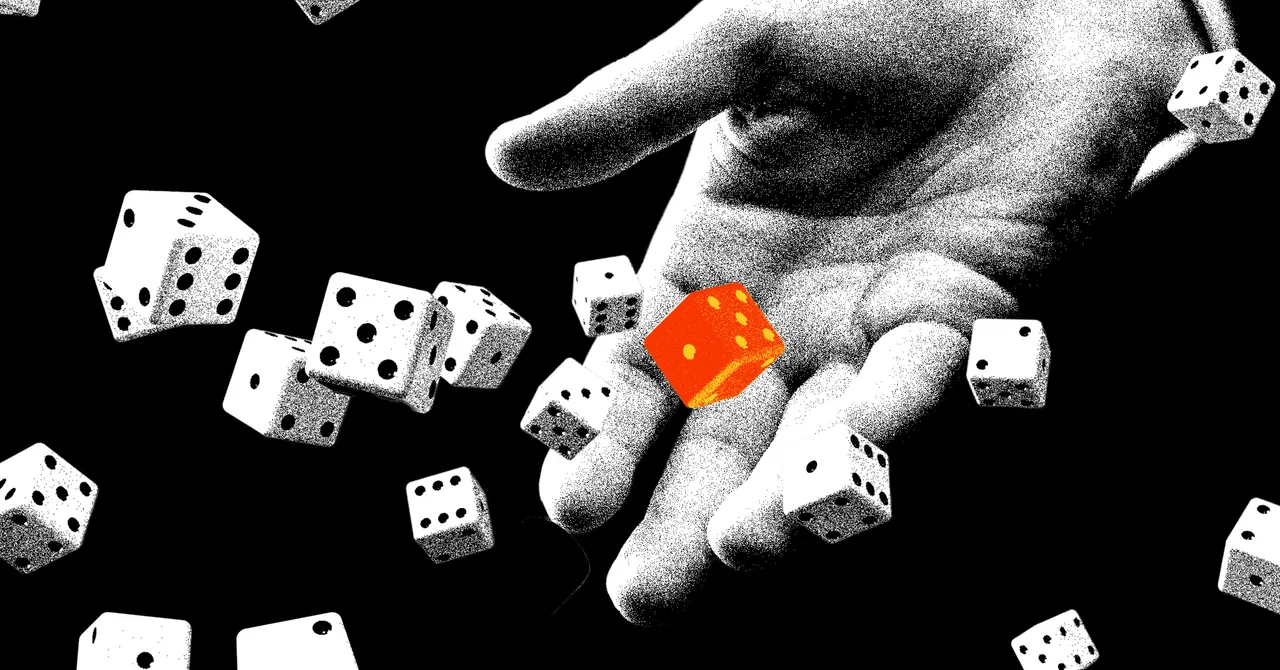
Entropy is one of the most maligned and misunderstood concepts in science. Maybe you’ve heard it defined as the “amount of disorder” in a system. And the second law of thermodynamics says the entropy of a closed system always increases over time. So you might think, why should you clean up your office if it will only get messier?
That might be true, but you can’t blame it on entropy. The messy-room metaphor is often used to introduce the idea (it’s usually a teenager’s bedroom—can you relate?), but it’s misleading. See, disorder doesn’t mean messiness or chaos; it refers to the number of ways the parts of a system can be arranged without changing the overall state of the system.
For example, say your “system” is just a box full of air. Inside, at the microscopic level, the gas molecules are bouncing around like bumper cars. Now, imagine you could map the location and velocity of each particle at a given instant. That would be one possible arrangement, or microstate, but there are an infinitude of others, and they’re changing trillions of times a second.
Of course, you can’t really see this stuff. Instead, what you observe are overall, macro-level properties like air pressure; if you sealed the box at sea level, that would be 14.7 pounds per square inch. And unless you add energy to the system, say by heating it, that doesn’t change. So all those microstates correspond to the macrostate of 14.7 psi. Get it?
In other words, entropy is all about the link between the invisible atomic realm and the visible, measurable realm of objects, the world we inhabit. You could say it’s a conceptual and mathematical bridge between two levels of reality. I mean, c’mon, that’s pretty cool.
Now, out of all possible outcomes, which ones actually occur? That’s basically random, so it’s a matter of probability. In fact, probability is fundamental to the idea of entropy, and this is what the messy-room image fails to capture. So I’m going to use a different analogy: rolling dice. Einstein once said “God doesn’t play dice with the universe.” Let’s just see about that, shall we?
Rolling the Bones
Imagine you roll a six-sided game die. You get a number from 1 to 6, right? There are six possible outcomes, or states. If you roll the 20-sided die in Dungeons & Dragons, there are 20 possible states. If you want to wow your D&D pals, you could casually remark that this die has a higher entropy—because it has more possible outcomes.
Now say you’re determining a character’s abilities in D&D, and you roll three six-sided dice. The three values can add up to anything between 3 and 18, but the various sums are not equally likely. For maximum dexterity, say, you need an 18. Well, there’s only one way to achieve that: Each die must come up a 6.

Photograph: Rhett Allain