dailynewsnblog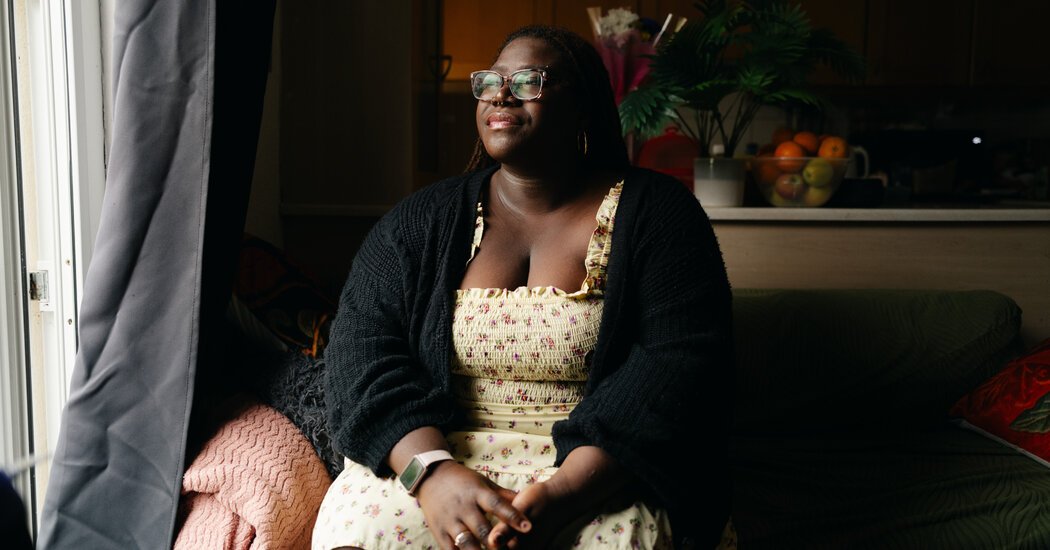
Mariam Sobayo came achingly close to feeling like she belonged in Ireland.
She was born in Dublin on Feb. 10, 2005, just a few weeks after the country halted its longstanding practice of granting citizenship to all children born on Irish soil. Her parents immigrated to Ireland from Nigeria in 2001, and she is the youngest of five children. Two of her older sisters were born in Ireland in 2002 and 2004.
Because of the timing, they were automatically Irish citizens. For Ms. Sobayo, it would take years of filing paperwork and waiting for answers to finally obtain her citizenship at 18.
“I was born in Dublin, I never left Dublin,” she said of growing up in the Irish capital, and described getting exceptional grades in Irish language studies in school. “It’s like, ‘Oh, here’s this new citizenship.’ Where I’m like, I’ve been here since Day 1.”
Without a passport, she could not travel outside the country, even as classmates went on school trips. When her Irish naturalization was approved, she felt a mix of relief and anger. “I feel like it was carrying a heavy weight that wasn’t supposed to be mine,” Ms. Sobayo said. She is now a social worker, caring for children seeking international protection.
In the coming weeks, the U.S. Supreme Court will issue its decision in a landmark case through which the White House has sought to end the 157-year-old legal standard of birthright citizenship.
When President Trump talks about this issue, he calls America “STUPID” for automatically granting citizenship to U.S.-born children of immigrants. The policy does stand out for its permissiveness: Although many countries in Central and South America have similar laws, most nations require that at least one parent be a citizen for a child to qualify.
But research has shown that more restrictive policies can diminish the potential of children who are born and raised in a country as noncitizens — and that loosening the policy can improve the prospects of the generations born with the benefit.
For example, a study by an international team of researchers last year found that the children of immigrants to the United States excelled further past similarly aged children of citizens than did second-generation immigrants in other developed countries. Across the 12 nations studied, birthright citizenship was correlated with higher economic mobility for the children of immigrants.
“Of all the developed economies in the world, the U.S. is the most successful at integrating immigrants, and you might wonder why,” said Catalina Amuedo-Dorantes, an economics professor at the University of California, Merced. “Maybe that access to citizenship from very early on is important.”
The ‘Sins of the Parents’
It is difficult to tease out the effect of different immigration policies across countries because there are so many variables and few natural experiments that allow researchers to compare one set of people with another. Ireland’s shift away from birthright citizenship provides such an experiment.
For much of Ireland’s history, anyone born there had a right to citizenship. The 1998 Good Friday Agreement, which forged peace in Northern Ireland, enshrined it in Ireland’s Constitution. That changed in 2005, after 79 percent of voters supported a referendum to remove the constitutional amendment on birthright citizenship.
The vote came during a period when Ireland’s economy was booming and the quality of life was improving, making the country an immigration destination rather than an exporter of people, as it had been for centuries. Ireland also faced some pressure from the still-young European Union, since it was the only member country to offer birthright citizenship, and citizens of all E.U. countries were now entitled to live and work anywhere within the bloc.
But the public debate largely centered on claims that “birth tourism” was leaving maternity hospitals overcrowded. In reality, most non-Irish mothers giving birth were European nationals already entitled to residency, and hospital strains stemmed from underfunding. One study found that immigrants who arrived in Ireland from 1999 to 2004 had more education and fewer children than those who came before or after.
After the referendum, citizenship for anyone born in Ireland on or after Jan. 1, 2005, would depend on their parents’ nationality and residence history.
Even though the Constitution no longer protected automatic birthright citizenship, other generous provisions were introduced, explained Samantha Arnold, a senior manager with the immigration consultancy Fragomen.
Children born in Ireland with at least one parent legally residing on the island for three out of the four years before their birth can still qualify for citizenship. Children born in Ireland and not entitled to citizenship of another country are also eligible, preventing them from becoming stateless.
“There are a lot of things to try to catch people, but of course people are going to fall through the cracks,” Ms. Arnold said, adding that those most at risk of not having access to citizenship are the children of parents who did not have permission to live in the state.
Ebun Joseph, the special rapporteur for Ireland’s National Action Plan Against Racism, recently produced a documentary about the young people born in Ireland to non-Irish parents shortly after the referendum who have been left in limbo.
“It created a huge policy gap that is impacting young people particularly in their education and mental health,” Ms. Joseph said. “The sins of the parents are visited on the children. If a parent is criminal, or for whatever reason doesn’t get citizenship, then the children are locked out of citizenship.”
Oluchi Okoli was born in Ireland on Jan. 30, 2005. She is still waiting for her Irish citizenship after completing naturalization papers in 2022. Her mother immigrated from South Africa and was living legally in the country when her daughter was born, but she had a chronic illness and stopped updating her residency papers.
When her mother died in 2019, Ms. Okoli realized that her mother’s residency permit was out of date and that she had never applied for citizenship for her children.
That kicked off a long process of proving that she was entitled to citizenship by naturalization through her mother’s legal residency. In her third year of college, it’s still dragging on.
“It takes a lot out of somebody,” Ms. Okoli said. She believes the referendum to end birthright citizenship was driven by anti-immigrant sentiment, something she said she still felt.
“I still get asked, ‘When did you come here?’ And I’m not going to let it affect me that much,” she said. “But why am I fighting to prove that I’ve been in this country my whole life?”
More Citizenship, More Integration
The change in Ireland is still too recent to have generated much data about how young adults born after 2005 are faring compared with their slightly older peers. But there is more research on a similar change in Germany — one that moved in the opposite direction.
On Jan. 1, 2000, Germany began extending citizenship at birth as long as at least one parent had been living in the country legally for eight years, a period later shortened to five years. It created an opening for many children of immigrants, who at that time were generally guest workers from Turkey and Eastern Europe. In 2024, about 47,500 babies born to foreign parents qualified for citizenship, while 100,000 did not, according to Germany’s statistical office.
Research has found that boys born just after the cutoff who were eligible for citizenship integrated better with their peers. Both boys and girls enrolled in preschool at higher rates, progressed faster in primary school and were more likely to pursue more rigorous academics in secondary school. They committed 70 percent fewer crimes than those who were not granted citizenship at birth, and their parents were more likely to speak German and integrate with their local community.
Simone Schüller, a research fellow at the German Youth Institute, said the effect of citizenship was likely subconscious — young adults may not fully understand how it shapes their lives.
“We see it in how they behave, how they make decisions, how they make educational choices and whether they choose to engage in criminal behavior or not,” Ms. Schüller said. “I’m not sure if the individuals themselves are that aware of it.”
Nevertheless, having a parent with legal residence for five years is still a high bar. According to Magdalena Benavente, a legal adviser for the Berlin Migration Council who counsels families with immigration issues, lacking citizenship can have a major effect on children who are born in Germany without eligibility.
For example, immigration authorities often ask parents about their children’s school attendance and grades as indicators of how well the family has integrated into German society when their residency permits are up for renewal.
“This means the children pretty soon feel this pressure that they could be deported at any time,” Ms. Benavente said, in German. “This fear is completely breaking them.”
Christina Felfe, an economist at the University of Konstanz, said that despite the benefits of birthright citizenship, it had not erased disparities with children whose parents are German.
“We see huge issues of when there is a high share of immigrants and natives, and in particular if they’re culturally distant, we do have a large share of discrimination, a lack of trust,” she said. “It’s just one policy that could contribute to integrating, but it’s not enough.”
There are many differences between Europe and the United States, which has been an engine of assimilation for its entire existence.
But even within the United States, access to citizenship tends to increase immigrants’ contributions to their new home country. Research has found that new European arrivals during the age of mass migration, before 1924, were more successful if they gained citizenship — and so were their progeny. Conversely, the lack of legal status depresses immigrants’ earnings and even the birth weight of their children.
If birthright citizenship were revoked, children born to immigrants on U.S. soil might be worse off than those in countries with more avenues to naturalization over time, like Ireland and Germany. In the United States, without an American family member, young people would have few options to gain legal status.
“What we’re talking about in the U.S. is going from a situation where kids are citizens to being effectively undocumented. That is extreme,” said Elizabeth Cascio, an economics professor at Dartmouth. The prospects for children without status would also depend on whether they had access to public benefits that the Trump administration and Republican-led states have begun to pull back. “That gap has widened in recent years,” Ms. Cascio said.