dailynewsnblog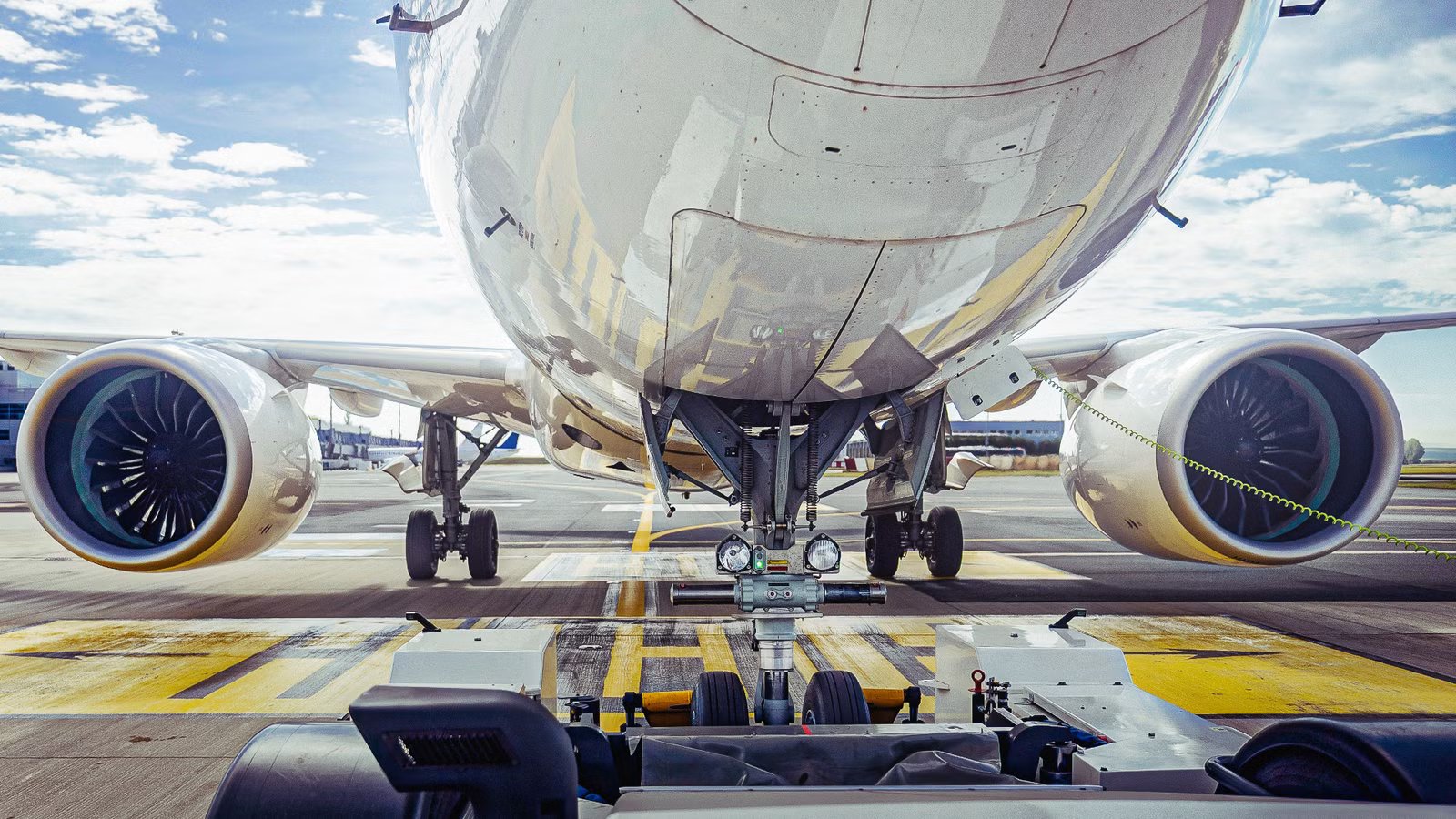
While you are disembarking the aircraft and preparing for the annoyance of passport control, the ground crew has already begun a race against time. They have as little as 25 minutes for smaller aircraft to get the plane ready for its next flight. These 25 minutes are the time from ‘chocks on’, when the ground crew chocks the wheels and connects external power, to ‘chocks off,’ when these safety blocks are removed for departure.
Manufacturers design aircraft so that these processes can happen rapidly without disrupting the disembarking passengers. Your Captain and First Officer also have responsibilities after the aircraft has landed. They’ll need to complete an exterior walk around, accurately and efficiently examining the aircraft for signs of leaks and damage. The flight deck checks the aircraft’s airframe, engines, landing gear, sensors, and flaps to guarantee it is safe for the next flight. Engineers also give the plane a once-over.
Emptying The Aircraft

The first major group of jobs to be completed is to take everything off the aircraft that should not be there for the next flight. Passengersexit from one side of the aircraft, while their baggage is unloaded from the other. Any cargo carried in the hold will also be unloaded at this point. The grim job of emptying the toilet system is also essential. Running out of loo capacity on the next trip would be disastrous for everyone onboard.
The cabin also needs to be serviced before the next flight. You’ll likely have seen these key cleaners waiting out of the way on the jetbridge for everyone to disembark the aircraft. Ground agencies usually conduct this work, and there is a lot to do. Rubbish, used items and lost property all have to be taken off the aircraft. Galleys, toilets and seats all need to be cleaned.
There are varying levels of thoroughness for jobs like these. An aircraft has to be much cleaner before a long-haul flight than a short hop. This process took longer during the pandemic, when enhanced cleaning and disinfection had to take place throughout the cabin to avoid the spread of coronavirus.
Airlines Have Previously Explored Cutting Down On Cleaning Time

Crews of cleaners are well-rehearsed in how to get an aircraft clean enough for the next set of passengers. Yet, it remains one of the most time-consuming jobs that need doing after a plane has touched down. In 2019, British Airways tested completely removing cleaning on short-haul stopovers, except for those that went through London Heathrow Airport (LHR). The British flag carrier hoped the change would cut down on both costs and the time required on the ground between flights.
British Airways conducted the trial across four days on a single route. The cleaning team only came aboard the aircraft to remove rubbish, and didn’t actually clean anything. Senior managers then boarded the aircraft to confirm whether British Airways’ standards had been breached. These managers didn’t find significant issues, and there were no customer complaints about the aircraft’s cleanliness.
The process is significantly more rigorous for private aviation, as shown in the reel embedded below:
Despite what could be regarded as a successful trial, it was canceled, and no permanent changes were made to the cleaning processes of British Airways aircraft. They remain fundamentally unchanged to this day. The global pandemic likely contributed to this decision in the years that followed. It is now easy to imagine passengers turning their noses up at reductions in cleanliness and hygiene.
Aircraft Loading

With the aircraft emptied from the previous flight, it is now ready to be loaded with everything that will be needed for the next trip. The loading process begins alongside unloading. Ground crews only wait for areas of the unloading to be completed where it is absolutely necessary to do so. Cateringtrucks usually pull up on the right-hand side of the aircraft to bring meals onto the aircraft. Refueling also starts as soon as possible after arrival.
Catch what other flight trackers miss
Emergency squawks, holds, NOTAMs — live signals, no signup.
Open tracker
Catch what other flight trackers miss
Emergency squawks, holds, NOTAMs — live signals, no signup.
Open tracker
Some jobs start long before the aircraft arrives at the airport. For example, baggage handling crews get your bags as ready as possible. Pre-sorting baggage and cargo means that it can be loaded more efficiently. Widebody aircraft often use Unit Load Devices to make things even quicker. Bags may have to be loaded manually on narrowbody aircraft. That’s why you sometimes grit your teeth as you see baggage handling teams tossing your hold luggage around.
The final thing to load onto the aircraft is you. Airlines optimize the right boarding time and have made priority boarding a product, helping ensure that passengers entering the aircraft don’t delay its departure. That’s why you’ll sometimes hear pleas to board as rapidly as possible coming across the aircraft intercom.
Checking The Aircraft Is Safe For Departure

While the aircraft is being loaded and unloaded, pilots and engineers have to make sure that everything is safe for the aircraft to take off as planned. Any maintenance issues will cause delays as engineers and mechanics on the ground will need to fix them. It is primarily the pilots’ responsibility to do this. Usually, the first officer will carry out a visual inspection of the aircraft’s exterior. They’ll report any issues to the captain and engineers.
There are several standard checks, as well as some that are added by local aviation authorities based on common issues that have been happening recently. One example was in 2021, when the Civil Aviation Safety Authority told pilots and ground crews to check for wasps nesting in the pitot tubes or static ports.
The Australian watchdog was responding to research on keyhole wasps showing that “the species has established in a challenging environment but one that provides all the basic requirements for population persistence and has identified a potential nesting opportunity that is both transient and mobile. In doing so, (the keyhole wasp) poses a significant risk to aviation safety.”
Alongside these necessary exterior checks, further onboard checks are required. Once those are done and everything is loaded, the pilots can seek clearance to leave the gate and start the next flight.
Pushback From The Gate

The hard deadline for all these stages to be complete, in as little as 25 minutes, is the block time. However, the pilotsand ground crews can’t run straight up to this deadline. Aircraft doors need to be closed, and all ground equipment (air bridges, steps, and more) have to be removed three minutes before the block time. That gap allows the plane to begin pushback right at the start of the block time, preventing it from missing its slot and being severely delayed.
The sheer volume of tasks that need to be conducted within these 25 minutes is astonishing. Hundreds of passengers need to be unloaded and loaded. Tons of rubbish, baggage and cargo need to be unloaded. Ground crew also need to put thousands of gallons into the jet. Any mistakes can cause delays and serious safety problems for the next flight.
Once everything is done and the jet has departed, ground crew have to move on to the next stand. Here, their task starts all over again, and they keep working solidly until their shift is over.
The Contractors Conducting The Ground Handling

It is rare for airlines to conduct their own ground handling. Instead, they’ll work with the airport to outsource the work to contractors. Popular companies include DHL and Swissport. DHL offers its customers ground handling services, along with cleaning, airport logistics, sustainability solutions, and maintenance, repair, and overhaul (MRO).
A notable airline that has recently decided to work with DHL is Air France. The airline and contractor have signed a three-year partnership for its busy  London Gatwick Airport (LGW) to Paris Charles de Gaulle (CDG) route. David Johnson, the VP of Operations, Aviation & Travel, DHL Supply Chain UK & Ireland, commented on the route back in March.
“We’re excited to be partnering with Air France as it launches this new route. Ground operations are critical to keeping airline schedules running smoothly, and our role is to bring the service and technical expertise needed to keep every turnaround running to plan.”
DHL has long had a firm foothold in the British aviation industry. In 2024, it announced that easyJet had appointed it to manage ground-handling operations at Liverpool Airport (LPL). The contract was for five years, and expanded upon a partnership between the two firms that has been in place since 2017.
Sustainability was a notable aspect of this partnership, with the introduction of an electric fleet of ground logistics vehicles, as DHL hoped to transition to a 90% electric fleet by September 2024. On this front, Johnson added that “the past seven years have seen our partnership with easyJet develop significantly, and we are both proud and excited to see it expanding into a fourth major UK airport.”

![Only 222 Seats: United Airlines’ 8 New Ultra-Premium Boeing 787 Routes Revealed [Map]](https://dailynewsnblog.com/wp-content/uploads/2026/08/771-united-airlines-boeing-787-9-markus-mainka-_-shutterstock.jpg)