dailynewsnblog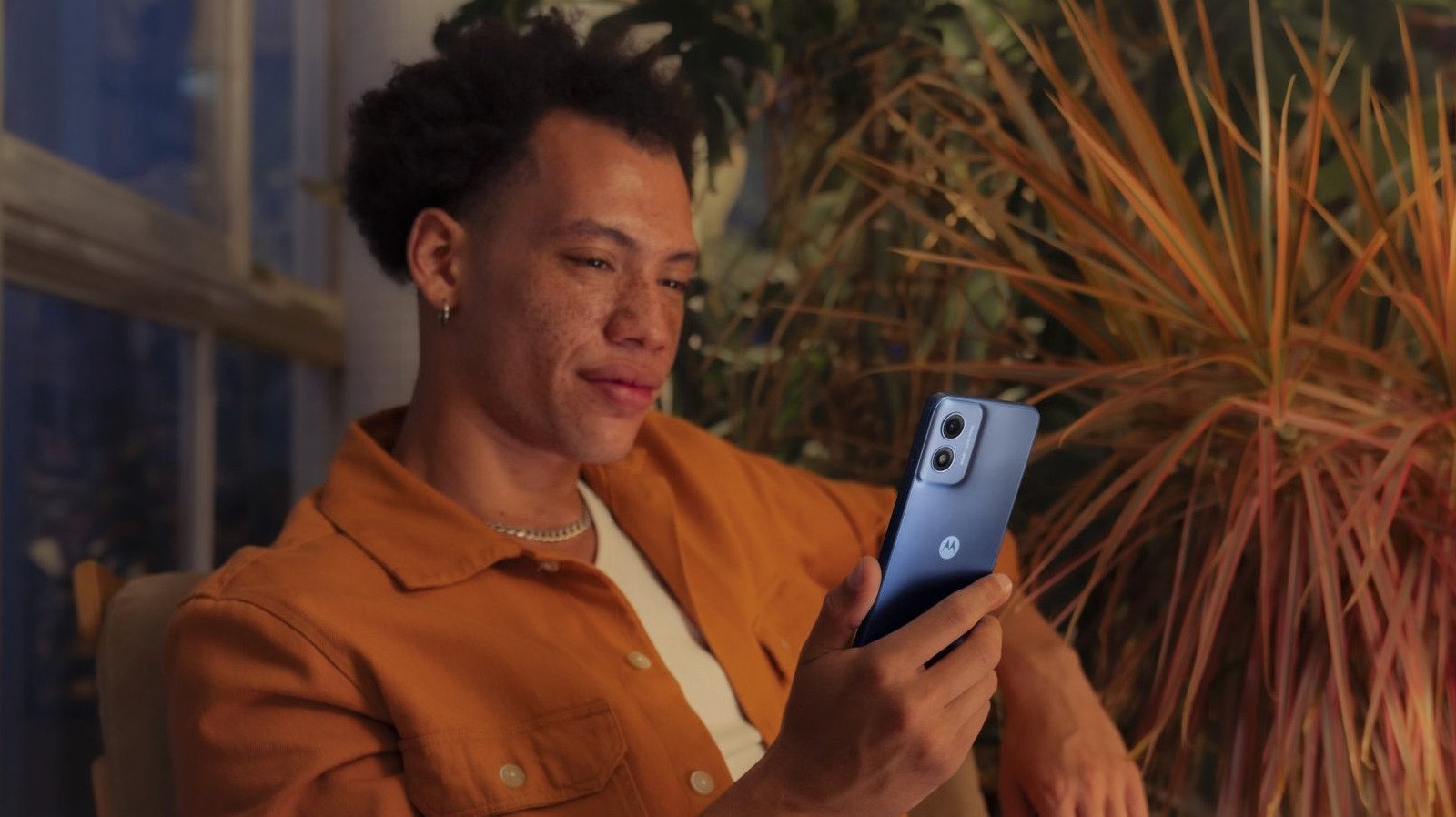
A small budget doesn’t always mean a junk phone.
Not everyone needs a flagship phone. With rising prices and a growing backlash against digital excess, some people like the idea of getting back to basics. Really, most features on today’s premium models are more “nice to have” than “essential.” (Do you really need a 200-megapixel camera with 100x zoom for your dog pics?) If all you want are calls, texts and essential apps, you can absolutely get that for under $100. Just know that it comes with compromises.
What counts as a sub-$100 phone depends on the sacrifices you’re willing to make. The list of fully unlocked models is short and underwhelming. Prepaid carrier deals offer better hardware, but then you’re tethered to a single provider. And while the used market puts older flagships in play, you’re gambling on things like battery health and software support.
Still, $100 does get you a full-color touchscreen, modern Android apps, Wi-Fi, Bluetooth, GPS, at least one rear camera and a decent battery. With fully unlocked models, 720p LCDs are more common than 1080p displays. But prepaid deals can bring 5G, FHD+ AMOLED displays, 128GB of storage and multiple rear cameras into the mix. Just don’t expect much in the way of speed, camera quality, premium materials or… well, any other modern luxuries.
The truly unlocked
If you want a phone that works on the major US carriers out of the box without any big surprises, you might want to keep your expectations in check. At $100 or less, you’re looking at something that’s about as basic as it gets.
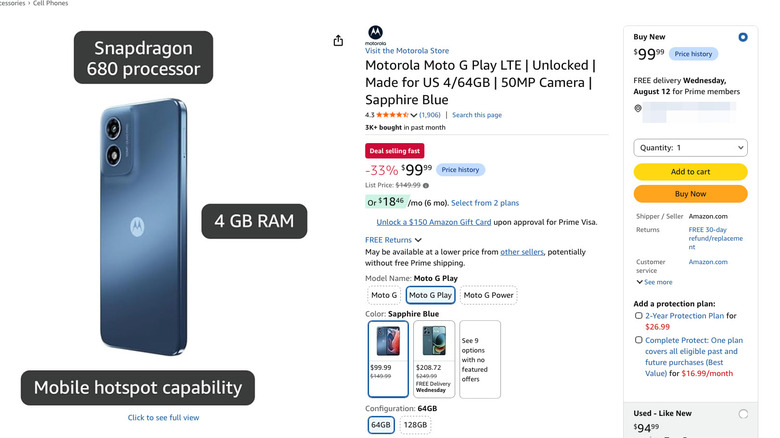
Probably the best option in this category is the Motorola’s 2024 Moto G Play, often discounted from its $150 list price to $100. It has a big 6.5-inch HD+ screen at 90Hz, a 50-megapixel main camera, 64GB of storage with a microSD card slot and 4GB of RAM. Its 5,000mAh battery should at least get you through the day, and its mostly stock Android experience is a plus. The catch is that it maxes out at 4G LTE speeds.
That spec sheet is nothing to get excited about. (That is, unless you’re a time-traveling smartphone enthusiast from 2012.) But it does the job well enough for people who just want the bare minimum.
The TCL 30 Z is unlocked and advertised as compatible with the major carriers, but it’s a turd of a phone. You get a 6.1-inch HD display, a smaller 3,000mAh battery, 32GB of storage, 3GB of RAM, a rudimentary 8-megapixel rear camera and 4G LTE. On the bright side, an “Amazon Renewed” model costs only about $61. Brands like BLU also sell new unlocked phones below $100, but they come with rock-bottom specs and limited carrier compatibility.
That’s about as good as the fully unlocked options get. What you’re paying for here is freedom from restrictions, not a phone you’ll likely enjoy.
Prepaid deals: a few strings attached
The most impressive new models under $100 often come with a catch: They’re either locked to a specific prepaid carrier or have limited carrier compatibility.
Samsung’s prepaid phones offer much better value than the fully unlocked ones. The Galaxy A15 5G can drop to around $40 or $50 through prepaid carriers like Straight Talk, Boost Mobile or Cricket. At that price, you get a 6.5-inch FHD+ AMOLED screen, 5G, a 50-megapixel main camera and a 5,000mAh battery.
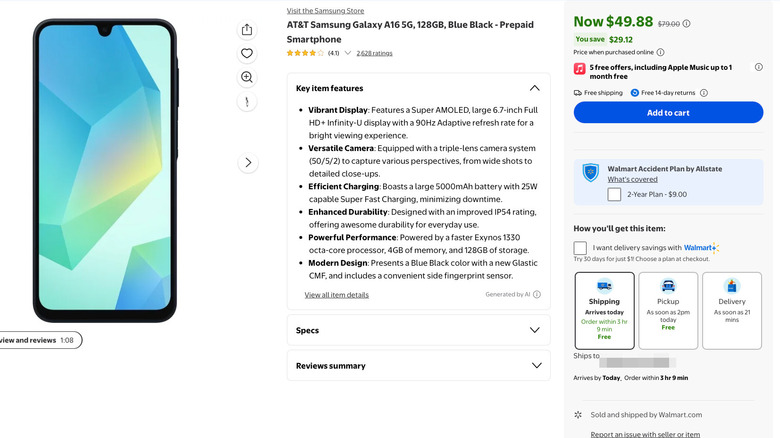
For around the same price, Walmart currently sells an AT&T-locked Galaxy A16 5G with a larger 6.7-inch 90Hz display, 25W charging and up to 128GB of storage. The Galaxy A26 5G is even better, with 6GB of RAM, a 120Hz display, IP67 water resistance and longer software support. Its Straight Talk-locked version sometimes dips to around $100.
Despite that carrier-lock restriction, these prepaid models feel more like a “normal” phone than something that barely clears the “usable enough if you don’t care about a good experience” bar.
The used market
If you open the field to used phones, your options widen dramatically. Marketplaces like eBay and Swappa are full of older midrange and flagship models that offer higher-end hardware for that strict budget.
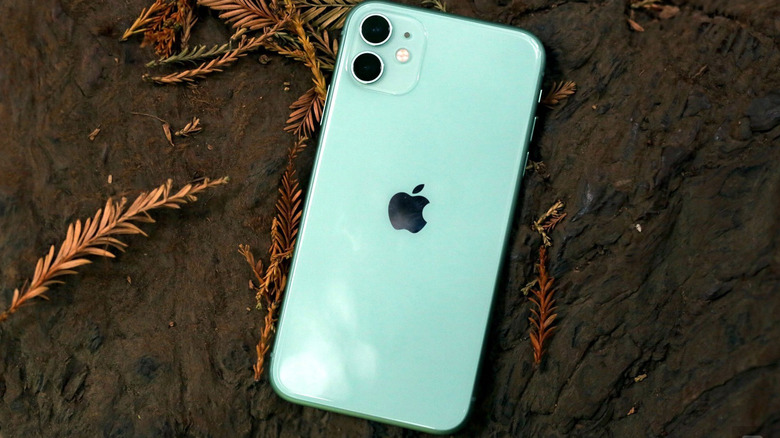
This is also the only realistic way to find Apple hardware in this price range. The 2022 iPhone SE can sometimes be found for around $100 used. It has a 4.7-inch Retina HD display, an A15 Bionic chip, 5G, and a 12-megapixel main camera. The iPhone 11 can also drop below $100, while the iPhone 12 usually costs slightly more. All three models will get the iOS 27 update this fall.
The Android side gives you many more options. A Galaxy A52 5G can dip under $100, and some Galaxy S10 and S10+ and Galaxy S20 FE 5G listings can come close. These used models usually show their age in battery degradation, software support and cosmetic condition. But they do offer much sharper screens, better cameras and more premium designs than the new phones at this price.
There are also Goldilocks options: mid-ranged phones that aren’t quite as old as the used flagships. The Galaxy A53 5G can show up in this range, as can the Moto G Power 5G (2025) and Moto G Stylus 5G (2023). The Pixel 6a can come close, with listings in the low to mid-$100s. These can be more balanced choices for people who want something relatively modern without going far above that $100 threshold.
Of course, buying used comes with its own compromises. But worn-out batteries can be replaced, and an older flagship will usually give you a much better screen, camera and design than a new phone in the same price range.