dailynewsnblog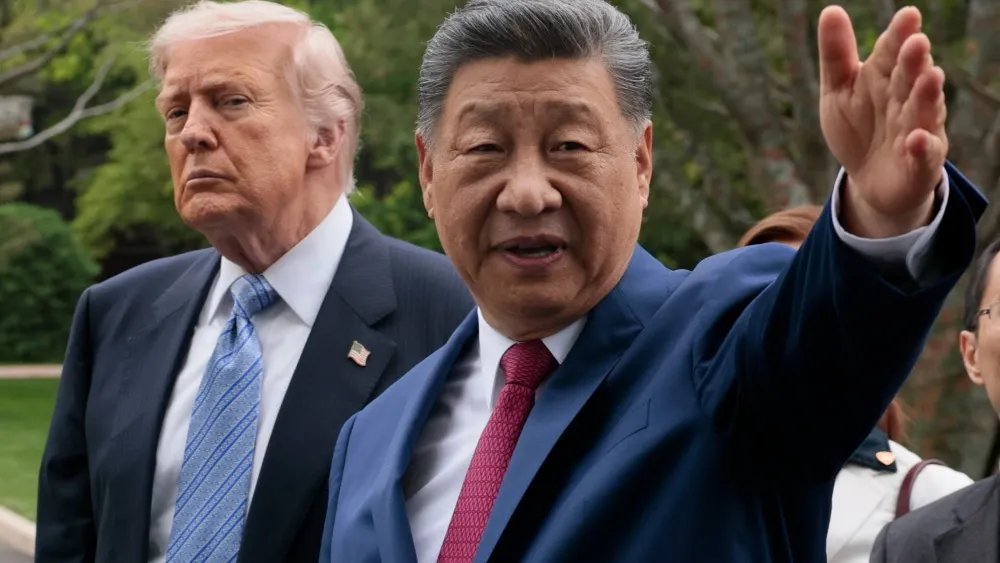
President Donald Trump will welcome Chinese President Xi Jinping at Joint Base Andrews on Wednesday, kicking off a long-awaited three-day visit wherein the two leaders are expected to discuss the future of the relationship between the United States and China as it relates to artificial intelligence, involvement in global geopolitics and trade.
Xi will arrive at the White House on Thursday for official bilateral talks with Trump and other administration officials, including Treasury Secretary Scott Bessent and U.S. Trade Representative Ambassador Jamieson Greer, and many are wondering: will this be a make-or-break moment for U.S.-China relations?
Or, will it be a continuation of the delicate détente achieved over the past year—a condition China’s government dubbed “constructive strategic stability” when Trump and Xi met in Beijing in May?
The scales tip toward the latter, at least in Greer’s estimation. On Monday, the U.S. trade czar indicated that the two nations have explored the prospect of extending the trade truce brokered last October in Busan, South Korea, but they remain divided on the terms.
Greer told Bloomberg Television that a three-to-six month extension of the agreement, which expires Nov. 10, is on the table. Under the pact, Trump walked back triple-digit tariffs on Chinese imports to the U.S. under the promise that China would maintain exports of critical minerals needed for the production of cars, semiconductors and other industrial goods.
Currently, a wide range of manufactured items from China face a 25 percent tariff under Section 301 of the Trade Act of 1974—legacy duties dating back to Trump’s first term in office. China is also subject to 50 percent global duties on steel and aluminum levied last year under Section 232 of the Trade Expansion Act of 1962, as well as 100 percent duties on electric vehicles.
In July, China was hit with 12.5 percent Section 301 duties imposed over allegations of importing goods made with forced labor. It is also one of 16 targets of a second Section 301 investigation related to excess industrial capacity that could result in more double-digit duties within the coming months, though recent reports indicate that the announcement of the results of that investigation has been delayed due to Xi’s visit.
Those aren’t the only recent U.S. trade actions with the potential to inject a chill into this week’s negotiations.
Last week, Congress passed the Sanctioning Russia Act, which empowers the president to take decisive action against economies that he believes are supporting the Russian war effort through the purchase of energy products. Trump could, as now authorized by the legislative branch, impose 100 percent duties on China-made goods.
With both a longstanding history of trade tension and a very recent record of escalation, Greer hedged when asked about the continuation of last year’s tenuous truce.
“We will continue to have discussions about that,” Greer told Bloomberg, noting that there is “some time” before the current deal expires. “My expectation is that we’ll continue talking and I think both sides want it,” he said.
The Busan agreement hasn’t been a study in successful dealmaking; China’s exports of highly coveted rare earth minerals dropped 21 percent month over month in August, according to the country’s customs data. China’s export controls on those resources remain a key point of contention, which is why Greer is reticent to renew last year’s deal for an extended period.
Bessent indicated Monday on CNBC that another possibility was on the table: that both sides could lower duties. The Treasury Secretary, who, alongside Greer, met with Chinese officials on Sunday, said Greer floated the idea of a “30-by-30” deal in which tariffs would be slashed about $30 billion worth of “noncritical” traded products from both the U.S. and China.
Tariffs would be reduced on American agricultural goods and energy products, he said, while China would see better tariff terms on everyday items being brought into the U.S. market.
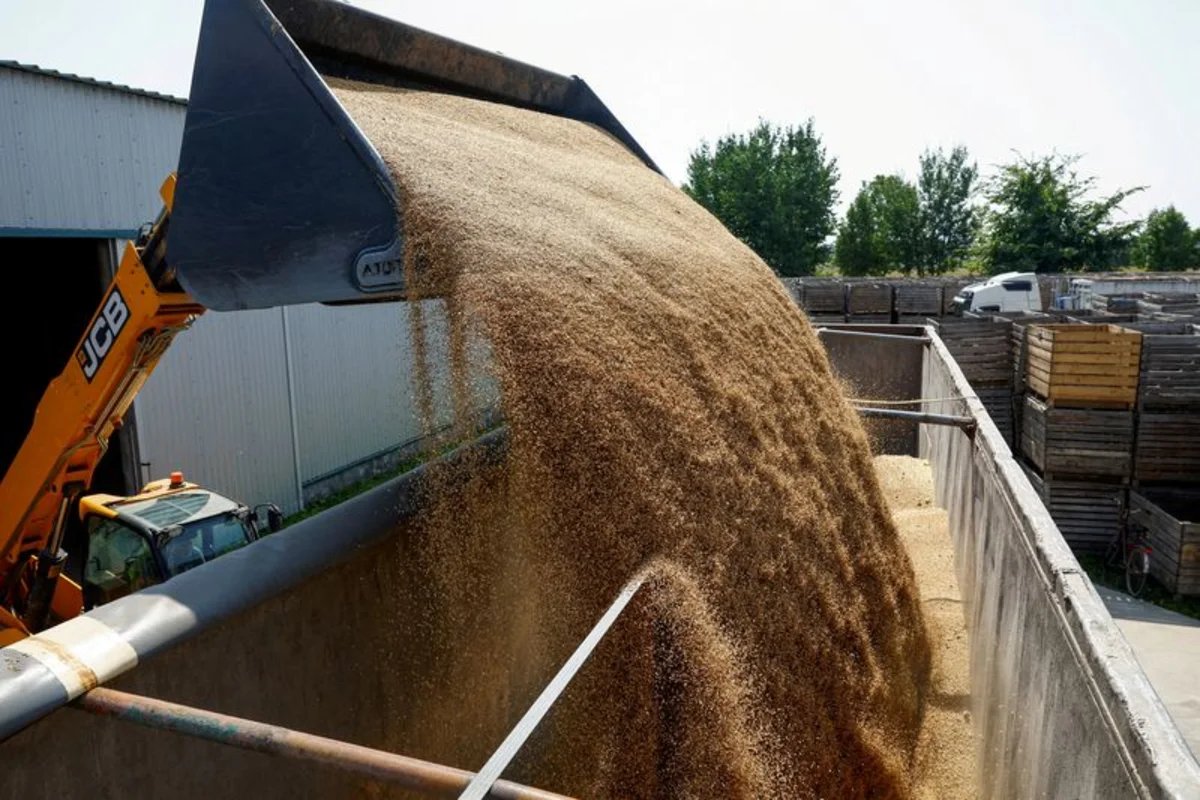
Officials have hinted that the U.S. soybean purchase agreement brokered during Trump and Xi’s last meeting in May could be expanded, and that China might agree to buy more Boeing airplanes as a show of good faith.
Espousing a more optimistic tone than Greer, Bessent said tariffs remain a key “focal point” in the bilateral relationship, and that the administration aims to maintain the “great stability” achieved through the Busan deal last fall.
Amid these developments, China’s government has promoted trade diplomat Li Chenggang, making him the top international trade representative, Chinese state media outlet Xinhua reported Sunday. Li, who previously served in the Commerce Ministry, will join Xi’s delegation this week in Washington.
While this week might not represent a watershed moment for U.S.-China trade, Beijing is likely eager for Xi to remain in close contact with Trump, as more frequent face time could help normalize relations. Xi is likely to urge the American president to attend the Asia-Pacific Economic Cooperation (APEC) Economic Leaders’ Meeting in Shenzen, China, in mid-November. Should Trump make the sojourn, Beijing has said that Xi will in turn make a trip to Trump’s stomping grounds for the Group of Twenty (G20) Miami summit in December.
With those dates on the books, both sides may be less willing to take more decisive, or damaging, action in the near term.