dailynewsnblog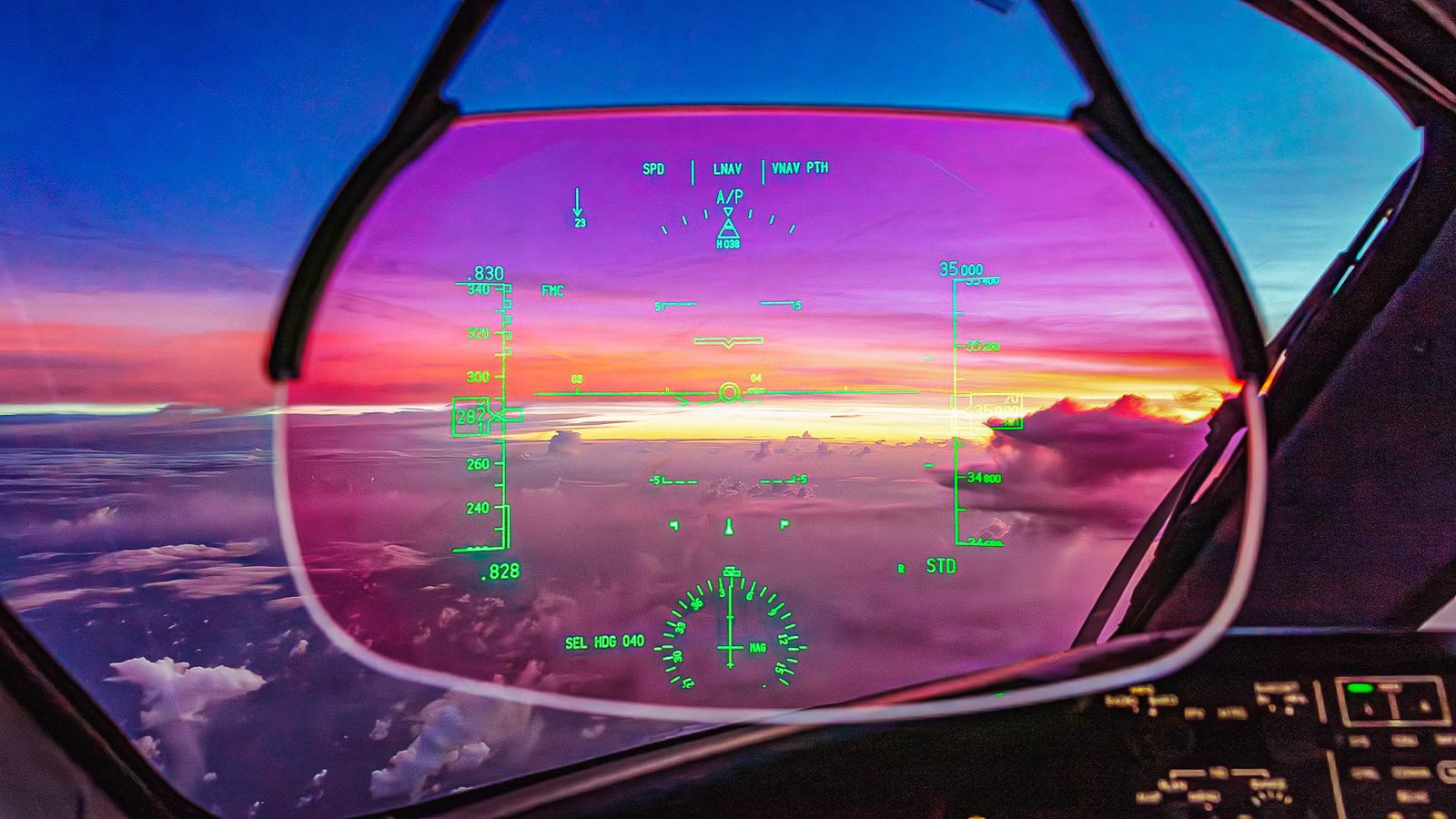
For passengers, a transatlantic flight can feel uneventful. After takeoff, the aircraft climbs to cruising altitude, the seatbelt sign is switched off, meal service begins, and the cabin settles into several hours of apparent routine before descent begins on the opposite side of the Atlantic. From the cabin, it can appear as though the pilots simply engage the autopilot and monitor the aircraft while it flies itself across the ocean.
The reality on the flight deck is considerably more complex. Crossing the North Atlantic requires crews to operate within one of the world’s most carefully managed pieces of airspace, where radar coverage is absent for much of the journey and aircraft are separated almost entirely through precise procedures rather than continuous surveillance. Long before reaching the ocean, pilots receive an oceanic clearance, verify their assigned route, review diversion options, and prepare communication systems that differ significantly from those used over land.
Throughout the crossing, they continuously monitor fuel, navigation accuracy, aircraft performance, weather, and system status while complying with strict operational requirements. Although the work is rarely dramatic, it demands constant attention, disciplined cross-checking, and close coordination between the pilots and air traffic control. The result is a highly structured operation that allows hundreds of flights to cross the Atlantic safely every day.
Preparing For Oceanic Airspace Begins Long Before The Coast

By the time an airliner approaches the eastern coast of North America or the western coastline of Europe, much of the preparation for the ocean crossing has already been completed. Unlike domestic flights, where aircraft remain under continuous radar surveillance and can often receive amended clearances while en route, transatlantic flights enter organized oceanic airspace governed by a different set of procedures. Before reaching the ocean entry point, the flight crew must obtain an oceanic clearance from the appropriate Oceanic Area Control Center.
This clearance is typically requested at least 40 minutes before the aircraft reaches its designated oceanic entry waypoint. According to SKYbrary’s guidance on North Atlantic operations, requesting clearance early provides sufficient time to resolve routing issues before the aircraft enters procedural airspace. Controllers assign the aircraft a specific route, usually along one of the North Atlantic Tracks (NATs) published each day.
Because upper-level winds constantly change with the movement of the jet stream, these tracks are rebuilt every 24 hours to maximize efficiency while maintaining safe separation between aircraft. Eastbound tracks generally take advantage of favorable tailwinds overnight, while westbound tracks are optimized for daytime operations against the prevailing winds.
In addition to the assigned track, the clearance specifies an exact flight level, Mach number, and sometimes additional routing restrictions. Once accepted, the crew is expected to maintain these parameters with a high degree of precision unless air traffic control approves a change. This differs significantly from domestic flying, where controllers routinely issue heading changes, altitude adjustments, and speed assignments throughout the flight.
Over the North Atlantic, predictability is essential because aircraft are separated by procedural standards rather than continuous radar observation. Any discrepancy between the cleared route and the flight management system must be corrected before entering oceanic airspace. Even a simple waypoint error could place the aircraft on the wrong track, creating unnecessary conflict with other traffic hundreds of miles from the nearest radar installation.
Following The North Atlantic Tracks Is A Precision Exercise

Once an aircraft receives its oceanic clearance, the crew’s attention turns to ensuring every element of the assigned route has been accurately programmed and verified. The foundation of the crossing is the North Atlantic Organized Track System (NAT OTS). Rather than using fixed airways, air traffic authorities publish a series of eastbound and westbound tracks each day based on forecast jet stream winds and expected traffic demand.
Eastbound flights typically take advantage of favorable tailwinds, while westbound services are routed to minimize headwinds. According to AeroSavvy, the system improves both fuel efficiency and traffic flow while safely accommodating hundreds of daily crossings. After receiving an assigned track, one pilot verifies it against the published North Atlantic track message while the other confirms every waypoint in the flight management system. Many crews also plot the route on an oceanic chart as an additional safeguard against programming errors. That chart includes more than just the route.
Pilots identify the Equal Time Point (ETP), where continuing across the Atlantic becomes faster than turning back in the event of an emergency. They also review ETOPS diversion airports, which may include Keflavik International Airport (KEF) in Iceland, Lajes Airport (TER) in the Azores, airports in Greenland, Bermuda L.F. Wade International Airport (BDA), or Shannon Airport (SNN) in Ireland.
Weather and operational conditions at these airports are monitored throughout the flight should a diversion become necessary. Another standard procedure is the Strategic Lateral Offset Procedure (SLOP). Rather than flying directly on the centerline, aircraft may offset their position by up to 2 nautical miles (3.7 kilometers) to the right of the assigned track. This creates an additional safety margin against navigation errors and reduces the risk of wake turbulence from aircraft ahead.
Pilots must also maintain their assigned Mach number as accurately as possible. Because aircraft over the Atlantic are separated procedurally rather than by radar, unexpected speed changes can affect planned spacing between flights and require air traffic control approval. By the time the aircraft reaches its oceanic entry point, the route, speed, altitude, diversion strategy, and contingency plans have all been thoroughly reviewed. While passengers may simply notice the aircraft settling into cruise, the flight deck has already completed one of the crossing’s most important phases.
Communication Changes Completely Once Radar Coverage Ends

One of the biggest differences between flying over land and crossing the North Atlantic is how pilots communicate with air traffic control. As aircraft leave radar coverage, the continuous voice communication common in domestic airspace gives way to a system built around satellite technology, data links, and long-range radio. Modern aircraft operating across the North Atlantic are required to carry two independent long-range communication systems.
Today, the primary method is Controller Pilot Data Link Communications (CPDLC), which allows pilots and controllers to exchange text-based messages rather than having to rely on voice transmissions. Through CPDLC, crews receive altitude changes, routing amendments, and other instructions electronically, reducing radio congestion and minimizing the risk of misunderstanding spoken clearances.
High Frequency (HF) radio remains an essential backup. Although HF transmissions are often affected by atmospheric conditions and can sound noisy or distorted, they provide a reliable means of communication if data link services become unavailable. Flight crews regularly monitor the appropriate HF frequency throughout the crossing and can contact oceanic controllers whenever necessary.
Position reporting has also evolved significantly. Aircraft equipped with an Automatic Dependent Surveillance Contract (ADS-C) automatically transmit their position, altitude, speed, and other flight information to air traffic control at predetermined intervals. According to the National Business Aviation Association (NBAA), revised North Atlantic procedures introduced in March 2024 eliminated the need for routine manual HF position reports for aircraft using ADS-C and CPDLC, streamlining communications while reducing pilot workload.
Catch what other flight trackers miss
Emergency squawks, holds, NOTAMs — live signals, no signup.
Open tracker
Catch what other flight trackers miss
Emergency squawks, holds, NOTAMs — live signals, no signup.
Open tracker
Even with these automated systems, crews remain actively engaged. At each waypoint, both pilots verify that the aircraft crossed the correct position, compare actual fuel burn with flight plan predictions, and confirm navigation accuracy. They also monitor their two independent altimeters to ensure both remain within the required tolerance, an important cross-check in airspace where precise altitude separation is critical.
Although passengers may notice little more than hours of uninterrupted cruise, the cockpit remains a busy environment. Rather than responding to frequent radio calls, pilots spend much of the crossing monitoring automated systems, verifying aircraft performance, and ensuring every aspect of the flight continues exactly as cleared.
Continuous Monitoring Replaces Hands-On Flying

Contrary to the common perception that pilots simply monitor the autopilot for several hours, the cruise portion of a transatlantic flight is a period of continuous oversight. Automation handles much of the aircraft’s flying, but the crew remains actively engaged in monitoring the flight’s progress and verifying that every system is operating as expected. At each oceanic waypoint, pilots perform a series of cross-checks.
They confirm the aircraft crossed the correct position, compare actual fuel burn with the flight plan, verify the next waypoint, and ensure the flight management system remains on the cleared route. These routine checks help identify even small deviations before they become larger issues. Weather also requires constant attention, as the North Atlantic can have strong winds, for example. Pilots monitor updated forecasts for turbulence, thunderstorms, icing, and changing winds while evaluating whether a different altitude would improve ride quality or fuel efficiency. Any requested changes must first be approved by oceanic air traffic control.
The crew also keeps a close watch on the aircraft’s systems, including engine performance, fuel balance, hydraulic and electrical systems, and cabin pressurization. On longer crossings, pilots rotate through scheduled rest breaks in accordance with company procedures, while at least two qualified pilots remain on the flight deck at all times. Although passengers may experience hours of uninterrupted cruise, the cockpit remains a disciplined working environment where continuous monitoring and careful decision-making replace the constant hands-on flying more common during takeoff and landing.
Every Crossing Ends With Careful Preparation For Landfall

As the aircraft approaches the far side of the Atlantic, the cockpit begins transitioning from oceanic procedures back to conventional air traffic control. Long before passengers notice the initial descent, the crew is preparing for landfall. Pilots check in with controllers and receive updated weather information for the destination, review the expected arrival route, and brief the planned approach and landing. They also verify fuel status, runway conditions, and any operational notices that could affect the arrival. If conditions have changed since departure, the crew evaluates whether adjustments to the approach or even an alternate airport may be necessary.
As radar coverage returns, responsibility for the flight is transferred from oceanic controllers to domestic air traffic control. Instead of relying primarily on CPDLC and HF radio, crews resume frequent voice communication with controllers, who can now monitor the aircraft continuously and issue headings, altitude changes, and speed instructions as traffic requires. The pace in the cockpit increases noticeably during this transition.
Checklists are completed, navigation systems are updated for the arrival procedure, and both pilots review the approach to ensure they share the same plan. Although the aircraft has spent hours flying a highly structured route across the Atlantic, the final stages require the same level of coordination and precision as any other commercial flight. By the time passengers begin preparing for landing, the crew has already completed a carefully managed transition from procedural oceanic operations back into one of the world’s busiest and most closely monitored air traffic environments.
Oceanic Flying Will Continue To Evolve

Modern technology has transformed transatlantic flying from a pioneering endeavor into one of aviation’s safest and most efficient operations, yet the principles behind it remain unchanged. Precision, preparation, and disciplined monitoring continue to underpin every ocean crossing, even as digital communications and surveillance systems reduce pilot workload and improve situational awareness.
Future advancements, including expanded satellite-based surveillance, more capable flight management systems, and increasingly connected cockpits, will likely make oceanic operations even more efficient. Even so, highly trained flight crews will remain central to the process. While passengers may remember a transatlantic flight as a long, quiet journey, the cockpit tells a story of constant verification, careful planning, and professional teamwork that ensures hundreds of aircraft safely cross the North Atlantic every day.