dailynewsnblog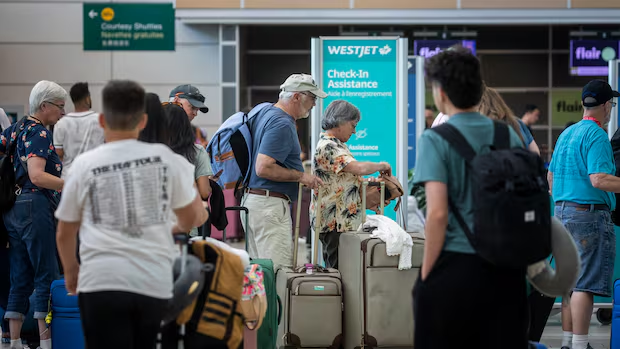
As WestJet’s flight attendants prepare to walk off the job as soon as Sunday if a deal isn’t reached by then, passengers are bracing for disruptions.
The Canadian Union of Public Employees (CUPE), which represents WestJet’s 4,400 flight attendants, issued a 72-hour strike notice early Thursday morning. In response, WestJet issued a 72-hour lockout notice of its own.
A strike notice doesn’t mean flight attendants have to walk off the job, but according to a representative for the union, the two sides are still far apart on some key issues.
That has passengers like Ken Wallin worried that they won’t be taking off as planned.
He and his wife are supposed to fly to Ireland to celebrate their 29th wedding anniversary on Monday. They’ve been saving for the vacation since they had to cancel their last trip due to the pandemic.

The union representing 4,400 flight attendants at WestJet says it has issued a 72-hour strike notice, paving the runway for a possible strike during a busy summer travel season. WestJet, in a statement, said the airline responded to the union’s strike notice by issuing a 72-hour lockout notice. A strike could begin as soon as Aug. 2 if the two sides don’t reach a deal.
If the strike disrupts this flight, it’ll mean another scrapped vacation for the pair.
“It’s eight, nine months of planning and a lifetime of waiting … out the window,” said Wallin.
He’s looked into booking with another airline, but Wallin says he hasn’t been able to find any other direct flights at a reasonable price. And while WestJet is letting passengers with flights booked between July 30 and Aug. 4 switch or cancel their bookings at no cost, Wallin is only able to get a travel credit in his case — which isn’t a great option for him, as a not-so-frequent flyer.
“We’re just holding out that it’s all gonna turn out in the end,” Wallin said.
But for other travellers, like Armin Ataee, missing a flight isn’t an option. Ataee travelled to Edmonton to visit his parents with no problems, but he had to rebook his return flight to Vancouver with another airline so he can make another flight out of Vancouver early next week for work.
He took the WestJet credit, but had to spend an extra $200 for the last-minute booking back to Vancouver.
“At the end of the day, it was better than losing it all,” Ataee said of the credit. “But there is frustration there because I thought at the very least I would get the cash back.”
Travellers can rebook or wait
WestJet reiterated in their Thursday statement that some passengers can still rebook or cancel flights at no cost.
But only passengers with certain kinds of bookings can get a refund back to their original form of payment. Those who booked PremiumFlex and BusinessFlex flights, or premium and business passengers travelling between Canada and Asia, can get their cash back, and others will get a refund in the form of a travel credit.
“So you could be stuck with a bunch of money sitting in an account that you can only use for flights booked on the WestJet website,” said T.J. Dunn, a Vancouver-based travel expert and writer.

Despite ongoing talks, WestJet and its flight attendants have signed off on a plan to wind down operations ahead of a possible long-weekend strike. Some 4,400 union members could walk off the job this Sunday.
Travellers who booked a WestJet flight through a third party will also have to make changes through the agency they booked with directly.
If WestJet cancels flights, Dunn says the company has a responsibility to rebook passengers via other airlines — but that could be easier said than done on a busy summer long weekend.
“If your flight hasn’t been cancelled yet, in theory it’s still scheduled to run,” Dunn said. “If you’re able to wait and hold off … things could get resolved in the meantime.”
As of midday on Thursday, WestJet didn’t appear to have started cancelling flights.
Dunn recommends travellers look for alternative flights that they could possibly rebook on in case their trip does wind up cancelled, which could make things easier should they have to make new plans.
Still time to make a deal
With strike and lockout notices issued, the pressure is on for both sides to reach an agreement.
And sometimes that pressure is a good thing, says Barry Eidlin, a McGill University professor and labour scholar.
“That pressure cooker environment … often creates the conditions that are necessary for the parties to actually knock their heads together and come out with a negotiated agreement,” Eidlin said.
That’s often why the two sides seem so far apart, before they reach an 11th-hour deal and narrowly avoid a strike, Eidlin says. That’s what happened with Air Transat’s negotiations with its pilots in December, when the union and the airline came to an agreement just hours before pilots were set to take job action.

The big issue both sides are still fighting over is fair pay.
Flight attendants say an average of 35 hours per month go unpaid under WestJet’s current “credit hour” system. That pay structure compensates flight attendants for ground duties, delays and other required work by paying them a set amount of credit hours per flight, which can change depending on the trip.
WestJet says the credit system is standard in the industry, and it argues flight attendants are paid at a higher rate under this pay structure in order to compensate for additional duties during what flight attendants consider unpaid time.
It’s similar to the issue at the heart of Air Canada’s flight attendant strike last year. In that case, John Gradek, former Air Canada director and aviation management professor at McGill University, says the union was able to galvanize a lot of public support for flight attendants, who ultimately secured an agreement that pays them for some time worked on the ground.
“I think that CUPE in the WestJet case is hoping for that same wave,” Gradek said.