dailynewsnblog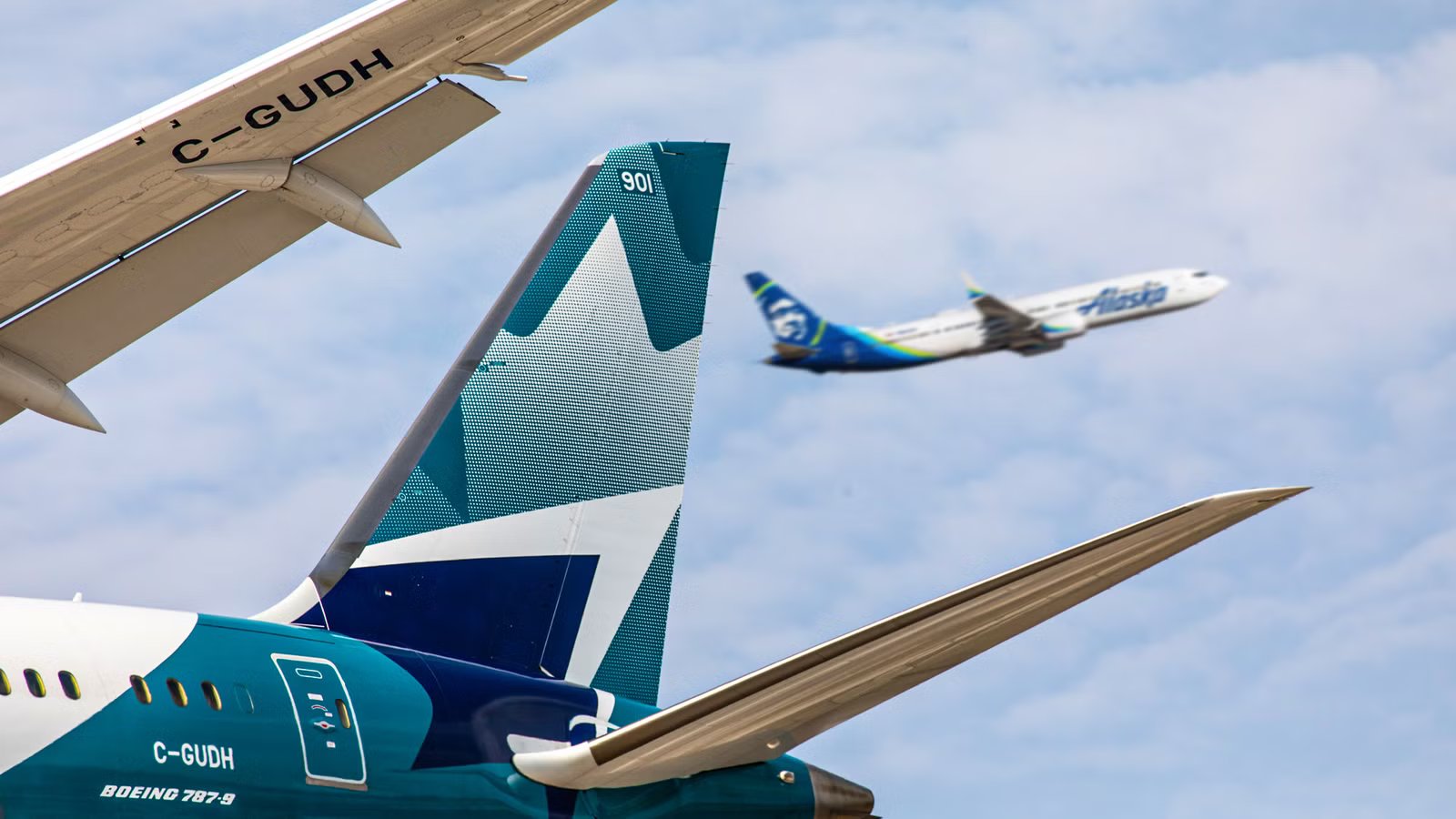
The race to be the launch customer of the Boeing 737 MAX 10 is becoming less about Boeing and more about software compatibility, regulatory sequencing, and which airline can move fastest once the FAA finally signs off on the aircraft. Alaska Airlines has been the loudest carrier when discussing its timeline, with the carrier’s Chief Operating Officer, Jason Berry, saying that certification was expected by the end of September 2026, followed by an entry into passenger service between April and mid-May.
Four days later, however, the FAA delayed certification after a newly disclosed flight management computer issue emerged. That delay has created an unusual situation in which WestJet, rather than Alaska Airlines, has the stronger contractual claim to the launch-customer position, while Alaska Airlines has supplied the more detailed public schedule. WestJet is already operating Boeing 737 MAX aircraft with the affected GE Aerospace software.
Meanwhile, Alaska Airlines and  United Airlines have avoided the software in their existing fleets and have pushed back against deliveries equipped with it. With the FAA now having determined that the software issue does not pose a safety risk, the contest is increasingly about readiness, delivery sequencing, and airline-specific certification work rather than simply which carrier talks first about its new aircraft.
WestJet Has The Contractual Position

WestJet’s position comes from a deal with Aviation Capital Group that places 13 Boeing 737 MAX 10 aircraft with the Canadian airline under long-term leases. More importantly for the launch discussion, Aviation Capital Group said it expects to deliver WestJet’s first 737 MAX 10 from its own order book once the aircraft receives type certification, making WestJet the lessor’s first customer for the type.
WestJet therefore has a concrete contractual pathway to receiving an aircraft immediately after certification rather than merely having an announced future delivery schedule. The broader order picture reinforces why WestJet remains central to the discussion. WestJet has 101 Boeing 737 MAX 10 aircraft on order, while the 13 aircraft arranged through Aviation Capital Group form a specific near-term delivery stream.
The lease also fits WestJet’s existing fleet strategy because the 737 MAX 10 will retain commonality with the airline’s Boeing 737 operation while offering additional capacity. That combination gives WestJet a practical reason to be among the first operators once deliveries can begin. Per the latest data from ch-aviation, WestJet’s fleet is currently made up of 169 aircraft, as detailed below.
Aircraft | Number In Fleet | Number On Order |
|---|---|---|
Boeing 737-700 | 34 | – |
Boeing 737-800 | 52 | – |
Boeing 737 MAX 8 | 69 | 9 |
Boeing 737 MAX 10 | – | 101 |
Boeing 787-9 Dreamliner | 7 | 9 |
The distinction between being a launch customer and operating the first revenue flight is nevertheless important. A contractual launch-customer designation does not automatically mean an airline will perform the first passenger service.
This is because Boeing’s delivery sequence, final regulatory approvals, aircraft acceptance, crew preparation, and airline-specific requirements can all change the order. WestJet therefore holds the stronger contractual claim today, but the first commercial flight remains dependent on what happens between certification and actual entry into service.
Alaska Airlines Has Been The Loudest

 Alaska Airlines made its position unusually clear in September 2026, when Jason Berry said the airline expected the Boeing 737 MAX 10 to receive FAA certification by the end of that month. The carrier expected its first aircraft in spring 2027 and planned to begin passenger service between April and mid-May. Alaska Airlines also expected 22 MAX 10 deliveries in 2027, followed by another 30 in 2028, making the aircraft an important part of its near-term fleet planning.
Catch what other flight trackers miss
Emergency squawks, holds, NOTAMs — live signals, no signup.
Open tracker
Catch what other flight trackers miss
Emergency squawks, holds, NOTAMs — live signals, no signup.
Open tracker
The scale of Alaska Airlines’ commitment is substantial. In January, the carrier placed the largest aircraft order in its history, including 105 Boeing 737 MAX 10s and purchase rights for another 35. The aircraft is intended to provide additional seats on heavily traveled routes without requiring additional frequencies.
Indeed, Alaska Airlines specifically identifies markets such as New York John F. Kennedy International Airport (JFK) and  Boston Logan International Airport (BOS) as potential applications. That makes the timing of certification commercially significant for the airline rather than simply an industry milestone.
However, Alaska Airlines’ public timetable was built around an assumption that certification was only days away, and that assumption changed on September 28. The FAA said it would delay certification until it was satisfied that the software issue had been resolved, while declining to estimate whether the process would take days, weeks, or months. Alaska Airlines’ projected spring delivery and April-to-mid-May service window therefore became a target rather than a timetable backed by an approved aircraft.
The Software Issue Changes The Race

The software problem involves versions 14 and 14.1 of the flight management computer software supplied by GE Aerospace. Under a specific sequence following a missed approach, the issue can cause the aircraft’s vertical navigation mode, or VNAV, to disengage, potentially increasing pilot workload during a go-around.
The FAA responded by convening a Corrective Action Review Board before allowing the Boeing 737 MAX 10 certification process to proceed. WestJet’s role in discovering and operating around the issue is particularly significant. WestJet pilots identified the anomaly during an entry-into-service validation flight in 2024 and subsequently provided  Boeing with supporting data.
WestJet later confirmed that some aircraft in its 737 MAX fleet use the affected U14.1 software, but said it had received no reports of the condition during normal line operations and had procedures and training in place to manage it. That creates the central irony in the Boeing 737 MAX 10 launch race: the airline with the clearest contractual route to the first aircraft is also the airline already operating aircraft with the software configuration that temporarily disrupted the certification process.
Alaska Airlines, by comparison, does not currently operate the affected software and has been working with Boeing and the FAA while the issue is assessed. The difference does not establish which airline will fly first, but it does mean that the two carriers approach the final stage from materially different operational positions.
United Airlines Adds Another Variable

United Airlines remains an important part of the launch discussion because its MAX 10 order book is larger than Alaska Airlines’ or WestJet’s. The  Star Alliance carrier has 167 Boeing 737 MAX 10 aircraft on order, meaning the carrier has a larger contractual stake in the aircraft than either of the two airlines receiving the most attention in the launch debate.
However, the number of aircraft ordered alone does not determine which airline receives the first example. United Airlines has also taken a notably cautious approach to the affected software. The airline has asked Boeing not to deliver aircraft equipped with the software version under review and has suspended acceptance of aircraft carrying it.
That position creates another layer in the delivery sequence, because an airline can have a large order book and still delay acceptance of individual aircraft if the configuration does not meet its operational requirements. This is why the Boeing 737 MAX 10 launch race cannot be measured simply by order totals.
United Airlines has the larger backlog, Alaska Airlines has the most detailed public service timeline, and WestJet has the specific Aviation Capital Group arrangement that positions it to receive the lessor’s first 737 MAX 10. Once certification is secured, Boeing will have to coordinate aircraft readiness with each customer’s acceptance criteria, creating several possible paths from type certification to the first passenger flight.
Certification Is Not The Same As Entry Into Service

The FAA’s certification process is only one part of the timeline, as Alaska Airlines itself demonstrated when Jason Berry said the carrier would still need to complete certification work for its specific head-up display configuration after the MAX 10 received its aircraft-level approval.
Berry said that work could take a few months, making Alaska Airlines’ planned April-to-mid-May passenger launch dependent on more than the type certificate alone. That additional requirement matters because WestJet’s contractual position could become more valuable if its own aircraft and operational approvals are ready sooner.
Aviation Capital Group has already stated that its first Boeing 737 MAX 10 for WestJet is expected after type certification, while WestJet already has experience operating the relevant 737 MAX software environment. The airline also operates a substantial Boeing 737 fleet, which provides an established operational framework for introducing another 737 MAX variant.
At the same time, the FAA’s October 2 finding changed the immediate regulatory picture again. After reviewing the software issue, the agency’s Corrective Action Review Board concluded that the glitch did not pose a safety risk because pilots remain in control and cockpit indications are clear. The finding removes a major obstacle to certification, although Boeing still needs to implement the regulatory response and work through the remaining certification process before deliveries can begin.
The Boeing 737 MAX 10 Backlog Raises The Stakes

The Boeing 737 MAX 10 is not a niche addition to Boeing’s product lineup. The variant represents roughly 30% to 31% of Boeing’s undelivered 737 orders, while the wider 737 MAX 10 backlog stands at more than 1,400 aircraft. Certification therefore affects a large pipeline of future deliveries rather than a small number of launch aircraft.
The aircraft also occupies an important position in the narrowbody market because it is the largest member of Boeing’s current 737 family and is designed to provide more capacity without moving an airline into a larger aircraft category. Alaska Airlines plans to use that capacity on dense routes, while WestJet expects the type to support fleet renewal and network growth.
United Airlines’ large order similarly reflects the role of the Boeing 737 MAX 10 as a high-capacity narrowbody aircraft within a broader fleet strategy. The next phase of the launch race will therefore be determined by details that are less visible than public statements about certification dates. WestJet has the contractual relationship that puts its first leased Boeing 737 MAX 10 directly into the conversation, and Alaska Airlines has a stated spring delivery and April-to-mid-May service target.
However, it also faces additional HUD certification work. Meanwhile, United Airlines has the largest order book while rejecting the affected software configuration. With the FAA having cleared the software issue from a safety-risk perspective, the question shifts toward which airline, aircraft, and delivery sequence can move through the remaining steps first.