dailynewsnblog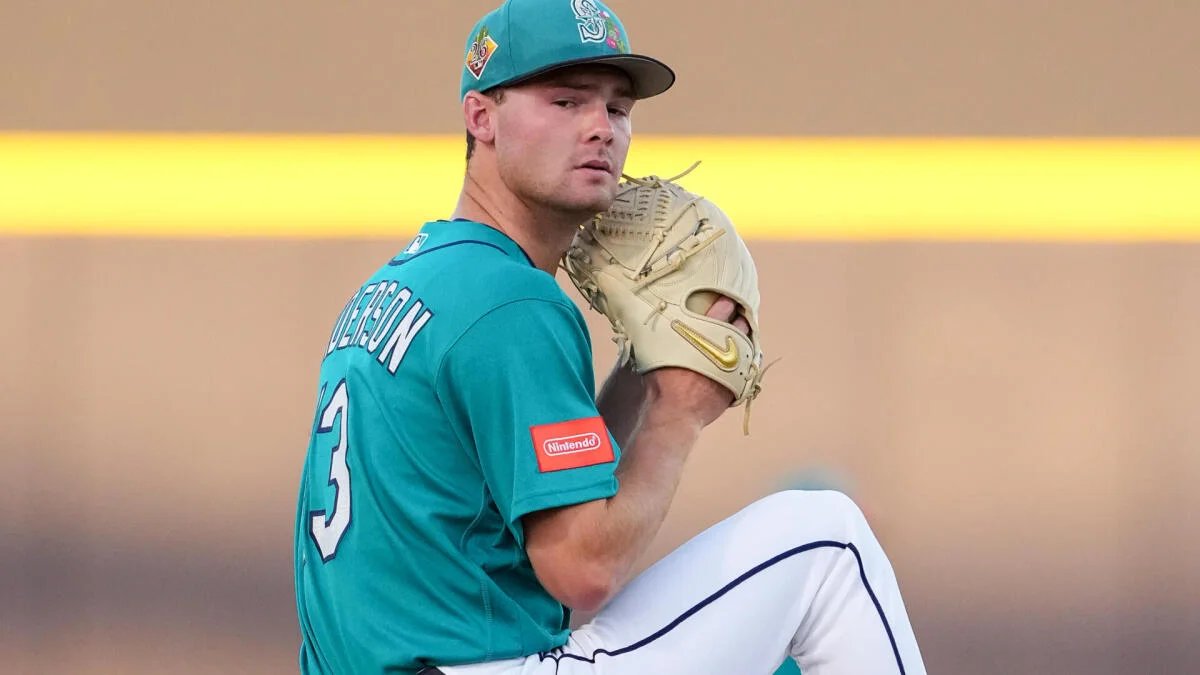
The All-Star break is here, and it’s time to catch our breath. Grab some orange slices, drink some water, and make sure you’re rested and ready for the stretch run. Because, while the “second half” of the season is about to start, the truth is, it’s more like the stretch run – when games come back next weekend, we’ll be less than two weeks away from the trade deadline and another two months away from the end of the regular season.
It’s a good time to take stock of where your teams stand. In a points league, you’ve got to figure out whether you’ve got a chance to make the playoffs, and if you’re on the fringes, it’s time to start putting together a team that can win in the short term. That might mean making some tough decisions on injury stashes and focusing on players who can help you right now, even if they might have less upside come September. You’ve got to make the playoffs first before that matters, you know.
In Roto, you don’t have to worry as much about winning immediately, but you do need to make sure you’re in a position where you can win at the end. That might mean trading from positions of strength to fix some weaknesses on your roster, so take stock of what you need to improve on over and try to make those moves in the next week.
The FBT Newsletter and podcast aren’t going dark this week, so we’ll be here to help you through it. Today, we’re doing our typical waiver-wire column, but focusing less on who is hot and who needs to be added right now, instead focusing on players who are available in at least 25% (usually a lot more) of CBS Fantasy leagues who could end up making an impact over the next two and a half months. Some of these are stashes with an eye on the long term, others are players positioned to come out of the second half hot. But they all could help you make a run to the championship.
Over the next few days, we’ll be focusing on recapping the first half and getting you ready for the rest of the season with some buy-low candidates, a first-two-rounds redraft, and some second half bold predictions. For now, here’s who you can look to add on waivers this week and beyond:
Week 17 Waiver Targets
Catcher
Ryan Jeffers, Twins (66%) – Jeffers returned from the IL Saturday after recovering from a hamate bone fracture. He was enjoying a breakout season before the injury and could find himself in a better lineup by the trade deadline.
Francisco Alvarez, Mets (44%) – Consistency remains an issue for Alvarez, but the strikeout rate is manageable and he’s hitting the ball hard. I still think there is top-12 upside here.
Yainer Diaz, Astros (38%) – It’s been a while since we’ve gotten much of anything from Diaz, but he’s heating up in July with three homers so far and remains a talented hitter in his physical prime.
Endy Rodriguez, Pirates (18%) – Rodriguez’s IL trip came at a bad time, as it looked like the former top prospect was finally figuring things out, putting up excellent quality of contact metrics and plate discipline. Let’s hope he’s back shortly after the break.
Owen Ayers, Cubs (2%) – Ayers has played a bit of first base and a bit more DH, and he could be a very interesting trade chip as the Cubs look to upgrade their rotation at the deadline. He’s hitting .319/.419/.641 on the season, mostly at Double-A, and could be a name to know if he gets a chance somewhere.
First Base
Bryce Eldridge, Giants (73%) – His park and lineup don’t provide a ton of help, but Eldridge is hitting the ball hard, striking out at acceptable rates, and more than holding his own against lefties. He’s been good so far, but he could still be great.
Curtis Mead, Nationals (64%) – The only thing left for Mead is to cut the occasional off days to zero. He’s putting up solid metrics across the board, combining above-average pop with strong contact skills. And his triple eligibility (2B and 3B in addition to 1B) only helps the case.
Charlie Condon, Rockies (38%) – The Rockies probably need to trade away some veteran types, but Condon should get a chance here in the second half after hitting .289/.414/.584 in his first taste of Triple-A. Those numbers are inflated by his home park, but we know that’ll happen in the majors, too.
Abimelic Ortiz, Nationals (3%) – Ortiz was acquired as part of the Mackenzie Gore trade and it’s not clear how much of a role there is for him upon his promotion. On the other hand, he batted third as the team’s DH in his MLB debut Sunday, which seems to tell us something. He was hitting .235/.332/.481 at Triple-A, but with plus raw power and strong contact skills, so there could be something here.
Ralphy Velazquez, Guardians (12%) – Velazquez has slowed down a bit since a promotion to Triple-A, but he’s still hitting .293/.386/.490 across his age-21 season, and we know the Guardians could use some punch in the lineup down the stretch. It just depends on when they really want to pull the plug on Rhys Hoskins.
Second Base
Brendan Donovan, Mariners (71%) – It’s not quite clear where Donovan is going to play now that the Mariners have called up Colt Emerson, but Emerson has struggled enough that it might just be a clean swap once Donovan is recovered from his groin injury. Failing that, he’ll likely take on a super-utility role that keeps him in the lineup most days.
Cole Young, Mariners (42%) – Young has been solid so far, but there’s some room for growth – his .330 xwOBA compared to a .313 actual mark tells us as much. The biggest question for me: Could he run more? He has only two steals, but with 65th percentile sprint speed, maybe he could be more like a double-digit guy? It would help make the profile look a bit more complete.
Matt Shaw, Cubs (18%) – Shaw is going to need a bit more time after the All-Star break to recover from his hand injury, but he’s a solid all-around contributor with some upside and plenty of positional flexibility when healthy. There are multiple pathways to everyday playing time in the event of an injury.
Pedro Ramirez, Cubs (6%) – Ramirez seems like a strong trade candidate because there just isn’t much room for him to play in Chicago despite some flexibility. He could be a solid five-category contributor in a Sam Antonacci way if he gets extended run somewhere else.
Third Base
Royce Lewis, Twins (56%) – Here’s Lewis’ 162-game pace since his return from Triple-A: .270 batting average, 37 homers, 99 runs, 84 RBI, 16 SB. You’re telling me that doesn’t work for your league at either corner spot?
Caleb Durbin, Red Sox (60%) – Durbin is hitting .294/.351/.555 since June 1, and while I buy his breakout a lot less than I do Lewis’, Durbin is a solid all-around player on a hot streak with multiple eligibility, so you can probably find a spot for him somewhere, even if he isn’t likely to be a long-term difference maker.
Joshua Kuroda-Grauer, Athletics (12%) – Kuroda-Grauer has played his way into a big role for the A’s in a short time, and while it mostly comes down to .474 propping up a .419/.432/.512 line, there’s some speed and a ton of contact skills that could make him an interesting deep league Roto option, at least.
Andrew Fischer, Brewers (11%) – The Brewers already have a glut of corner options, but third base remains a notable weak spot in the lineup. Would they call Fischer up after just a few weeks at Double-A? Probably not with a 34% strikeout rate. But it’s not impossible, especially as he is hitting .291/.437/.690 with 28 homers in 75 games and hasn’t really been challenged in his first pro season.
Shortstop
Jacob Wilson, Athletics (75%) – It’s been a disappointing season for Wilson, but it’s not like he’s been bad – he just has a narrow margin for error to make an impact for Fantasy, and if he’s hitting below .290, it’s hard for him to make an impact. But he’s a solid starter and is always capable of putting up a stretch where he hits more like .310 and is really useful. If we’re being honest here, it’s hard to find shortstops who aren’t widely rostered who deserve to be, so the rest will be pulling from the extraordinarily deep pool of shortstop prospects.
Kaelen Culpepper, Twins (16%) – If not for some injury issues that cropped up in June, Culpepper might’ve already gotten the call. He’s hitting .272/.376/.492 in 63 games as a 23-year-old at Triple-A and brings 20-20 potential to the table whenever he gets called up. And if the Twins opt to use him at third or second base enough to gain eligibility there, all the better.
George Lombard, Yankees (20%) – Aaron Boone and Brian Cashman have both hinted that Lombard could be on the verge of a promotion in recent days once he gets back from a hand injury. He struggled early on in his promotion to Triple-A, but for the season he has eight homers and 12 steals while hitting .258/.387/.446 overall. He might be on the passive side of the “passive vs. patient” scale, and there are some hit tool questions, but there’s certainly an opportunity for him to emerge as the Yankees starting shortstop if he gets the chance.
Franklin Arias, Red Sox (19%) – I’m surprised the Red Sox have left Arias down at Double-A as long as they have, because it hasn’t seemed like he’s been at all challenged since the start of the season. He’s hitting .325/.411/.596, and while a 2027 debut seems more likely, he might already be better than any of the team’s current middle infield options.
Seaver King, Nationals (5%) – A former top-10 pick, King is hitting .306/.385/.504 for the season while showing at least average (maybe better) quality of contacts at Triple-A. He’s tapping into the power more this season and has shown 30-steal upside in the past, so it’s just a question of when the Nationals want to upgrade from Nasim Nunez’s bat. King could also presumably move to either second or third base if they want to keep Nunez’s glove around.
Outfield
Cole Carrigg, Rockies (68%) – .281/.360/.530 with four homers in his first 30 games, with no real obvious red flags in the profile? I mean, what’s the hold up here? He gets the occasional day off? Yeah, that’s mildly annoying, but Carrigg has been too good for that to last and he’ll benefit as much as anyone from the Rockies likely clearing up some of these playing time gluts at the deadline. And he could run a lot more in the second half than he has, too.
Dominic Canzone, Mariners (66%) – The Mariners recently said Canzone is going to start playing more regularly against lefties, which has been the biggest thing holding his Fantasy value back. The rate stats might take a hit as he faces more lefties, but the counting stats should benefit enough to make up for it. He could be a 25-plus homer guy with everyday at-bats.
A.J. Ewing, Mets (65%) – Like with Carrigg, I’m genuinely curious why Ewing isn’t just universally rostered at this point. He’s hitting .280/.355/.446 on the season with seven homers and nine steals in 57 games, and while his game is better suited for Roto than H2H points, his solid plate discipline will play in any format.
Luis Robert, Mets (64%) – Robert wasn’t doing much before his most recent injury, and there are real playing time questions looming whenever he returns for the Mets. They could opt to shift him to DH to keep him fresh, but I think the likelier outcome is he gets traded more or less as soon as he shows he is healthy, and we know there is rare power and speed potential here with Robert in those rare instances when he actually manages to stay healthy.
Joshua Baez, Cardinals (47%) – If the Cardinals had fewer corner outfield options or more faith in Baez’s ability to play center field at an MLB-caliber level, I bet we’d have already seen him. That being said he’s already played 81 games at Triple-A and proven himself, with 28 homers and 14 steals despite a 30% strikeout rate. The swing and miss issues here are real and could sink him against better pitchers, but it’s an intriguing enough skill set that we want to see him get the chance soon.
Luis Lara, Brewers (38%) – Lara started four of the first six games after his promotion, which is more or less what we expected – his promotion came at a time when the Brewers’ lineup was already overstuffed, after all. But he hasn’t looked overwhelmed in his brief chances and was enjoying a breakout season at Triple-A, so if the playing time stabilizes he could take off pretty quickly.
Mike Sirota, Dodgers (12%) – Few players have looked as composed as Sirota this season, as he is hitting .319/.475/.562 across Double-A and Triple-A. And that OBP isn’t a typo – he has walked 74 times in 77 games, and has basically been exactly as effective at Triple-A as he was at Double-A to play his way into Scott White’s top-10 prospects at mid-season. Whether it’s as part of a trade package or because of an injury to one of the Dodgers’ corner outfield options, Sirota could get an opportunity down the stretch.
Walker Jenkins, Twins (27%) – Staying healthy has remained an issue for Jenkins, who missed time with a hamstring injury this spring and then with a shoulder strain in May. He’s healthy now and doing his usual thing of running huge walk rates, only now he’s added a couple of ticks to his average exit velocity from last season. The Twins are already playing for the future and while Luke Keaschall recently seems to have made a full-time move to the outfield, Jenkins could get a shot if the Twins opt to move Trevor Larnach at the deadline, which seems possible.
Starting Pitcher
Jared Jones, Pirates (65%) – Jones continues to frustrate, but he showed us what he’s capable of with six perfect innings in his final start before the deadline. He was still pulled after just 81 pitches, so the question
Gage Jump, Athletics (68%) – The past few starts have been pretty underwhelming, but we’re still talking about a top-100 prospect with a 3.51 ERA and 3.30 FIP in his first nine MLB starts. The other ERA estimators aren’t quite that bullish, but even his 3.97 xERA would be more “underwhelming” than “bad.” You’d like to see more than a strikeout per inning from Jump, but there’s certainly room for more strikeout upside as he gets more comfortable. I think there’s top-40 upside here in the second half.
Nick Pivetta, Padres (66%) – Pivetta has thrown a few bullpen sessions as he works his way back from a flexor tendon strain and it looks like he could be back some time in August. Pivetta was probably never going to repeat his 2025 success, but he’s still likely to be a good pitcher if healthy – a true plus in WHIP, helpful enough in ERA, and with close to a strikeout per inning.
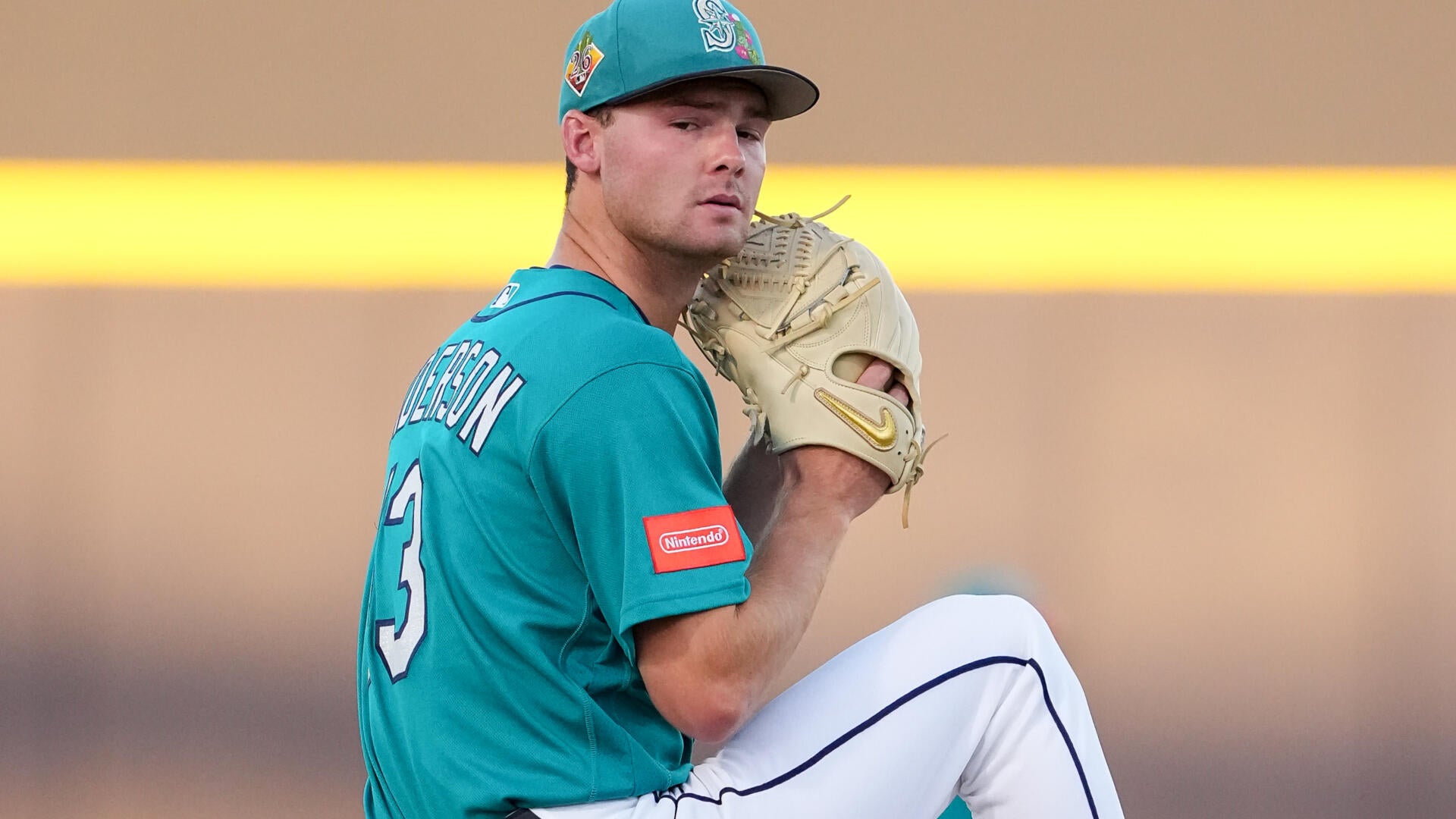
Kade Anderson, Mariners (52%) – It’s hard to break into a rotation when a team already has six good starting pitchers, but rumor has it the Mariners are open to dealing from their starting pitching depth, and they watched Emerson Hancock leave Sunday’s game after taking a comebacker off his hand. Anderson is only at Double-A but he’s been arguably the most dominant pitcher in professional baseball this season, putting up a 1.36 ERA and 41.4% strikeout rate, so there doesn’t seem to be much left for him to learn down there.
Corbin Burnes, Diamondbacks (32%) – Burnes was working his way back from Tommy John surgery when he suffered a strained shoulder during a live batting practice session in early June, but he has restarted a throwing program in recent days and plans to return this season. It might just be a September cameo, but he could be worth using by then.
River Ryan, Dodgers (23%) – Ryan has stumbled a bit recently, and then a hamstring injury has had him out for the past few weeks. By the time he’s healthy the other Dodgers’ starters may be as well, but he remains intriguing trade bait and someone who could still make an impact when he gets the chance – his 4.46 ERA at Triple-A is mostly the result of a couple of bad starts, and he was dominating before that. He’s another possible trade candidate who could matter somewhere else.
Relief Pitcher
Daniel Palencia, Cubs (65%) – We haven’t gotten many updates on Palencia’s elbow injury since he went down in mid- June, but nobody else in the Cubs bullpen has run away with this job, so it should be there waiting for him whenever he’s healthy. And Palencia has looked like a difference maker since the start of last season, so it just comes down to health.
Tyler Wells, Orioles (33%) – Wells has been a pleasant surprise out of the bullpen for the Orioles, and with Ryan Helsley dealing with an elbow injury and was looking like he might be emerging as the team’s top closer option until Andrew Kittredge got a couple of consecutive saves this weekend. That complicates things, but Wells has been the better pitcher this season, so I’ll make the bet on him. Kittredge is also an option, but there is one other name to keep in mind here: Felix Bautista, who is working his way back from shoulder surgery and has drawn positive reviews for his first few bullpen sessions to date. If Bautista is anything like his pre-injury form (a big if these days), he could provide a big boost down the stretch.
Grant Taylor, White Sox (41%) – If not for a couple of poorly timed bad weeks in the second half of June, Taylor might have already taken the White Sox’s closer job. It sure looked like it was leaning that direction at one point, and though they might prefer to keep his usage flexible to take advantage of his ability to lock down over multiple innings, Taylor’s 2.79 ERA and 34% strikeout rate could be hugely impactful as the closer.
Garrett Whitlock, Red Sox (23%) – The Red Sox don’t seem as likely to sell as they did a few weeks ago, but they’re still a couple of games below .500, so it’s not like they’re realistic championship contenders, either. With a vesting option for 2027, Aroldis Chapman isn’t necessarily guaranteed to be traded, but it seems like a good bet, and Whitlock’s 2.256 ERA over the past two seasons suggest he could be well suited to step in as the closer. Though it’s worth noting that could happen on another team too, if the Red Sox decide they can get something big for him, too.