dailynewsnblog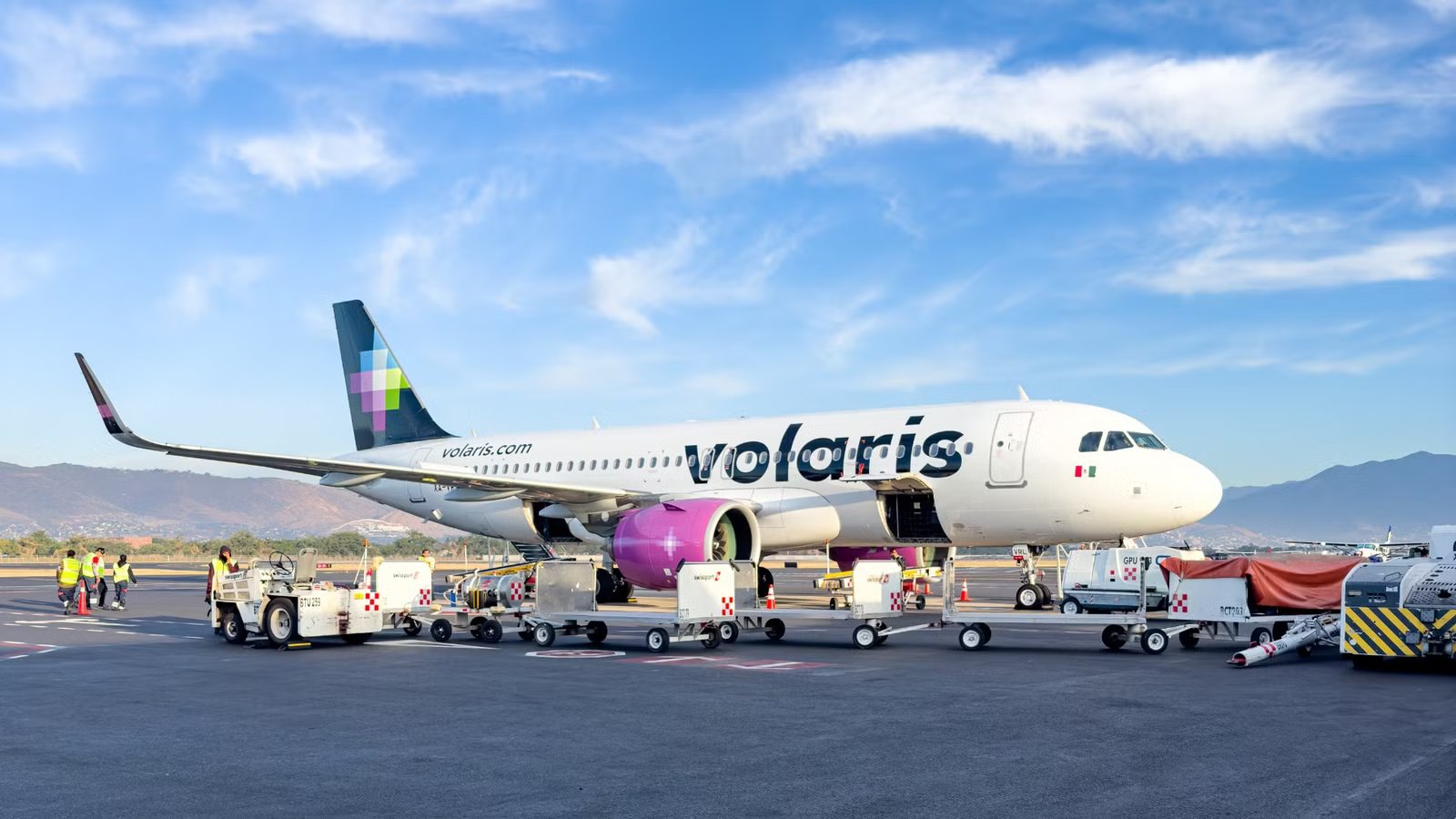
June has got off to a busy start for Mexican budget carrier Volaris, with the ultra-low-cost airline having started two new routes to destinations in the United States of America in the first two days of the new month alone. Five of them began yesterday, with the others commencing operations today, as the airline looks to boost its capacity between Mexico and the US ahead of a busy World Cup summer.
It is interesting to note that none of the ten new routes originates in Mexico City. Instead, Volaris is focusing its growth on its operating bases that are located away from the Mexican capital, with these new corridors originating in four different smaller cities. Using data from Cirium, an aviation analytics company, let’s take a closer look at the new routes and their operational frequencies this month.
Five New Routes Yesterday

Of the five new US-bound Volaris routes that commenced operations yesterday, two originated in Guadalajara (GDL). Their destinations are Detroit (DTW) and Salt Lake City (SLC), and both of these corridors will be served 13 times this month, equating to three flights a week. Elsewhere, Puebla (PBC) saw one new US-bound route start yesterday, namely the four-weekly service to Los Angeles (LAX).
Volaris’ other two new US routes that commenced operations yesterday originated in Querétaro (QRO), with their destinations being Houston (IAH) and Orlando (MCO). The former route will see a greater frequency of service than the latter corridor, with three flights a week compared to two. Enrique Beltranena, Volaris’ President and CEO, explained in May that US flights remain a priority for the carrier:
“Amid elevated global jet fuel prices and as discussed during our first-quarter earnings call, we implemented targeted capacity reductions during [April], mostly in the domestic market, while prioritizing the higher-yielding transborder segment.”
Today’s Debuts

As for the five new US-bound routes that Volaris is launching today, Querétaro is home to another two. Both of these transborder corridors serve destinations in the state of Texas, namely  Dallas/Fort Worth International Airport (DFW) and San Antonio (SAT). In both cases, passengers can expect a weekly frequency of three flights in each direction, with a grand total of 13 round trips scheduled in June of 2026.
The aforementioned Hermanos Serdán International Airport in Puebla will also see two more US-bound route launches today, namely to Newark Liberty International Airport (EWR) in New Jersey and Houston George Bush Intercontinental Airport (IAH) in Texas. The Newark route matches Puebla’s new service to Los Angeles in frequency, with four flights a week, while Houston will be served three times a week.
The fifth and final new US route that Volaris is launching today, and its tenth overall in the first two days of June 2026, originates at an airport that we have yet to discuss, namely San Luis Potosí (SLP). Today will see the carrier commence operations from there to Chicago Midway (MDW): with four flights a week, this exceeds the thrice-weekly frequency on its existing US-bound routes out of San Luis Potosí.

Revealed: The Top 15 International Airlines Flying To The US
How many of them can you name?
The US Is An Important International Destination For Volaris

Given the sheer size of the commercial aviation industry in the United States, and its proximity to Volaris’ Mexican homeland, it is unsurprising to see that the country is an important international market for the budget carrier. All in all, Cirium’s scheduling data for June of 2026 shows that the airline has penciled in a grand total of 360 US-bound departures this month, averaging out at 12 flights a day.
The importance of the US market is also evidenced by the fact that Volaris generally deploys its larger aircraft on these routes. Indeed, the stretched Airbus A321-200 will account for 162 of its 360 US-bound flights this month, with its next-generation A321neo counterpart picking up another 103. Meanwhile, the smaller A320neo accounts for just 65 of these flights, with the final 30 operated by the older A320-200.