dailynewsnblog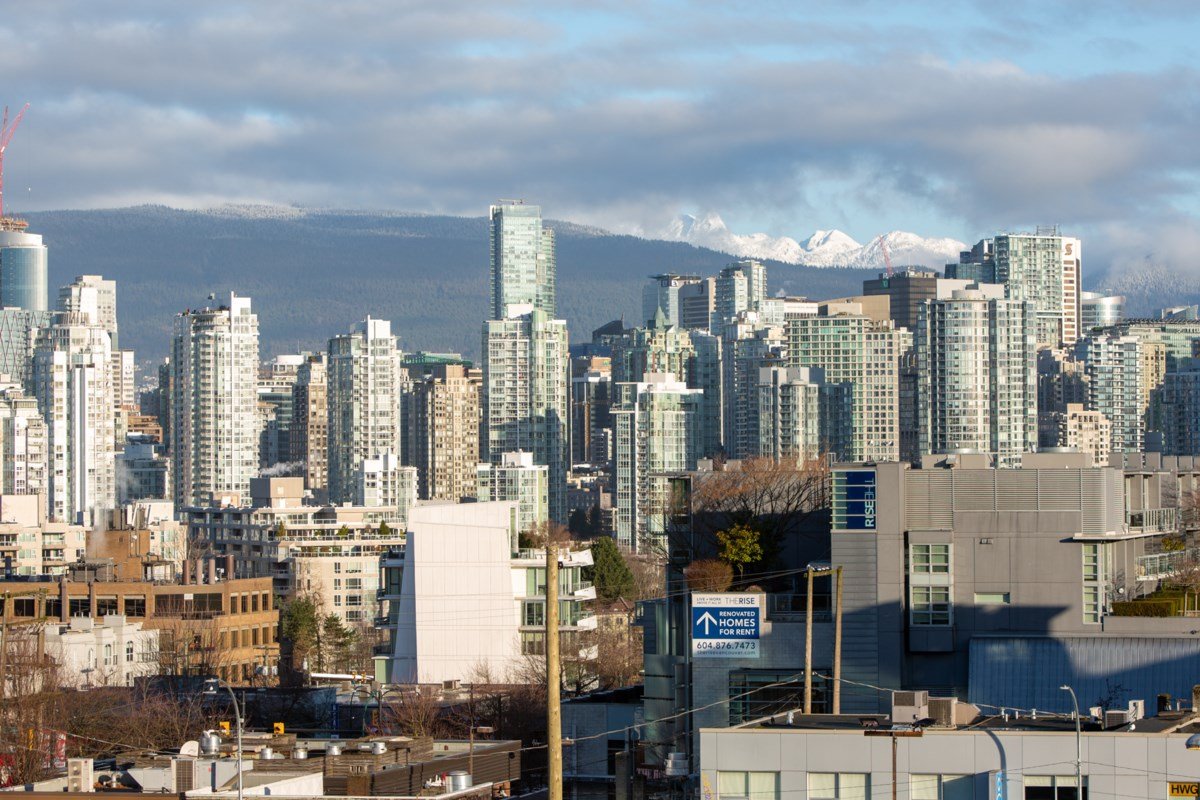

Chief Planner Josh White said there are opportunities to thoughtfully introduce higher heights into Vancouver’s downtown
The City of Vancouver has launched a public feedback exercise that seeks input on the planning department’s move to update an existing policy that currently allows for taller buildings downtown.
The central question is this: How much higher should buildings be allowed to be built downtown?
That question is one Business in Vancouver posed to Josh White, the city’s chief planner, in a recent interview on his department’s push to update the current Higher Buildings Policy, which was last reviewed in 2011.
“Well, I guess the [revised] policy will help us determine that, right?” White said.
“We don’t have any preconceived ideas of what those numbers should be,” he added. “We’re going to allow that to play out through the policy. What we do know through our research, of course, is that there could be limiting factors beyond what policy will dictate—the economics of projects and how high they can be, given our kind of seismic context.”
Although the policy was reviewed in 2011, it has been in place since 1997. During that span of time, only six buildings have been built that reach above average heights, including the 62-storey Living Shangri-la, which is Vancouver’s tallest building at 659 feet.
The other five buildings are Vancouver House, Paradox, The Stack, The Butterfly and One Burrard Place.
Whatever the revised policy dictates regarding height maximums, White said Vancouver is not aiming to be the next Dubai, which is known for its tall buildings. The tallest building in the world—the Burj Khalifa—is in Dubai and reaches 2,717 feet.
“We think of these things all through the Vancouver lens and what’s appropriate contextually to our situation, our geography, our specific locations within the downtown,” he said.
“We’re going to be looking very granularly at what types of locations and what types of heights are appropriate, and it will very likely not be a one size fits all.”
Exhibit, survey
Residents are invited to visit the Vancouver Lookout exhibit Saturday, May 9 between 10 a.m. and 6 p.m. to better understand building scale and skyline impacts, as well as learn more about the review of the Higher Buildings Policy.
The Lookout is in the Harbour Centre at 555 West Hastings St. Admission to the exhibit is free to B.C. residents. Residents are also encouraged to fill out an online survey on the city’s website.
In the meantime, White provided more details on the review in the following question-and-answer format. The answers have been condensed and edited for clarity and length.
Why does the city need a new higher buildings policy?
The existing policy has been around since the 1990s and was last reviewed about 15 years ago. As we know, the downtown is quite built out. So there’s interest potentially in looking at opportunities to go to higher heights than we’ve previously seen. What we want to do is make sure our policy is contemporary, and that it applies to the reality of today and what we expect in the future.
We also did a review in 2024 of the protected views, and through that review it has opened up opportunities that hadn’t existed that we want to evaluate. We want to look at those locations where the public views are not impacted, we want to understand how the policy can be updated to address the design characteristics, for example, of buildings of this type of scale.
We want to make sure that we have the right guidance in place to make sure that these projects can positively contribute to our downtown, both the cityscape, the skyline, as well as public benefits.
The Higher Buildings Policy was first approved in 1997. But since that time, I was surprised to learn that only six buildings were constructed through the policy. That small number doesn’t seem to indicate demand for higher buildings?
These are exceptional projects, so we wouldn’t expect it to be every project. That’s what kind of makes this a unique policy: its guidance for really just the tallest buildings within the downtown. We’re starting to see interest in buildings that are of quite a different scale and height than we’ve previously seen, and part of that is just the amount of available land compared to 30 years ago when the policy first came in.
City council has made it clear that it wants more hotels built in the city. Are developers saying they would build more hotels if they can build higher?
Not specifically related to that. A typical hotel is not going to be at the scale. But I think one thing you might see is just given the state of the strata market, you could potentially see hotels coupled with residential uses that could push into that higher building realm.
We do happen to have one application for the tallest building in the city, the tallest of which is the hotel component of a project. We wouldn’t expect that to be the norm, but you could see hotels combined with residential uses. Our update to the hotel policy spoke to the viability of the opportunity to pair medium scale key hotels with residential projects.
That proposal you mentioned about a tall hotel, is that the Holborn Group’s project for several blocks in the Seymour-Dunsmuir streets area?
Yes, so the tallest of the three towers proposed is a hotel tower. It would be a very large-scale hotel, which is novel and unique and is influenced by the higher buildings policy, even as it is now.
In what stage is Holborn’s application at with the City of Vancouver?
It’s still under review.
Are developers driving the need for this revision of the Higher Buildings Policy?
No. Certainly we’re sensitive to the activity and the market interest out there. But it’s not in reaction to any specific project or application. Updates on a regular pace [to policy] are the norm to keep it contemporary. But certainly, just understanding that there is some market interest out there is certainly one of the factors that we’re looking at to make sure that as we get applications in, they are evaluated against contemporary policy.
Higher buildings don’t always equate to architectural masterpieces. So I’m curious what city staff will be doing in revising the policy to ensure that any new higher buildings will be more than just dull-looking towers of glass?
That is one of the foundational elements of the higher buildings policy today. And we can expect into the future that architectural excellence is one of the principal goals that we’re trying to drive. These are marquee projects. They’re skyline defining and we would expect that architectural excellence, given the buildings place in our cityscape, in our skyline, continues to be a central goal with policy.
I happened to be in Toronto recently. There’s pockets downtown that don’t get much or any sunlight because of the height of the buildings. When Vancouverites hear that city staff wants to revise the Higher Buildings Policy, I’m sure many people would be concerned that they might experience the same issue in the future under a new building policy. What do you say to that?
We want to look at things like ensuring we have sufficient tower separation, which has a lot to do with access to sunlight. We want to look at where we focus or potentially concentrate higher buildings so that there’s not an over-proliferation of them, that we consider other sunlight protection of important public spaces in there.
Certainly, there’s things that we can learn from other places in Canada and across the world to make sure that we can still live up to those values that we know are very important to livability in the downtown core. So those will all be very central in how we shape this policy.
How much of the decision to revise the policy is driven by anticipated population growth in a city that is dominated by single-family homes?
All our housing strategies relate to growth. Our Official Development Plan highlights how we’re going to move towards a million people between now and 2050. Our ODP lays out that hierarchy of heights and densities throughout the city. Certainly, the downtown core, kind of intuitively, is going to be the highest density. It already is the highest density, it’ll continue to be the highest density.
And then you have transit-oriented areas, you have areas with frequent bus service. Certainly, access to transit, access to jobs are the main organizing principles around where height density will go. But the downtown core is sort of the pinnacle of that hierarchy in terms of height density. And the higher building policy recognizes that.
How much of the revision of the policy is connected to generating more development cost charges from developers?
Well, I think one thing that’s been true about the higher buildings policy is it acknowledges that through rezoning, you create value out of higher heights and densities. That is a tremendous opportunity to create public benefits.
So part of the review is asking the public what their values and priorities are around what types of public benefits matter most in relating to the higher buildings policy. So is that more public space? Is it investing into plans like Granville [Street] to help fund and support those things? Is it non-market housing? We will expect the policy in the future to utilize the value that’s created from these higher buildings to contribute to public benefits.
That’s really, really crucial.
An excerpt I read in a city document said that if tall buildings are allowed without careful planning and strong policy direction, they can overload infrastructure like water, transportation, emergency services, lead to further inequality by focusing on luxury housing or high-end office spaces, increase shadows and wind at street level, affect the character of neighbourhoods and lead to higher environmental and energy impacts. So how do you ensure none of that happens?
I would suggest like those variables, those factors are things you must consider in any good planning practice, as well as other outcomes. So those are things we’ll be carefully considering in the policy. And I believe that to be just sound planning practice—that you want to make sure that they contribute positively, and that you’re mitigating or alleviating any potential kind of negative effects that could come from hastily considering these things. That’s why we plan.
Just to clarify, is there an appetite that you’re hearing from developers to go much higher than is already allowed?
When land becomes more scarce, and there’s fewer opportunities [for development], that is part of the natural evolution. We believe there are opportunities to thoughtfully introduce higher heights in our downtown potentially in locations where it won’t affect protected views, where we can mitigate against those potential negative impacts, like too much shadowing and things like that. And those are the types of things we want to explore through this work. We’re no strangers to skyscrapers in Vancouver.
You mentioned the seismic context. I’m not an engineer, but I am curious with Vancouver being in an earthquake zone, how much discussion related to building higher buildings is connected to concerns about the effect an earthquake would have on a tall building downtown?
Well, we have tall buildings today and we have a building code that considers seismic activity here.
So how long are you anticipating it will take before a new Higher Buildings Policy will go before city council for approval?
I think we would expect around this time next year, probably Q1 or early Q2 2027. There’ll be a couple of rounds of engagement. This first phase of engagement is a lot of information gathering, understanding of values and principles and getting people’s feedback. There will be subsequent phases later in the fall where we may have some draft principles or policies to further engage the public and involve stakeholders. And that will help form our final recommendations to the update [of the policy].
[email protected]
X/@Howellings