dailynewsnblog
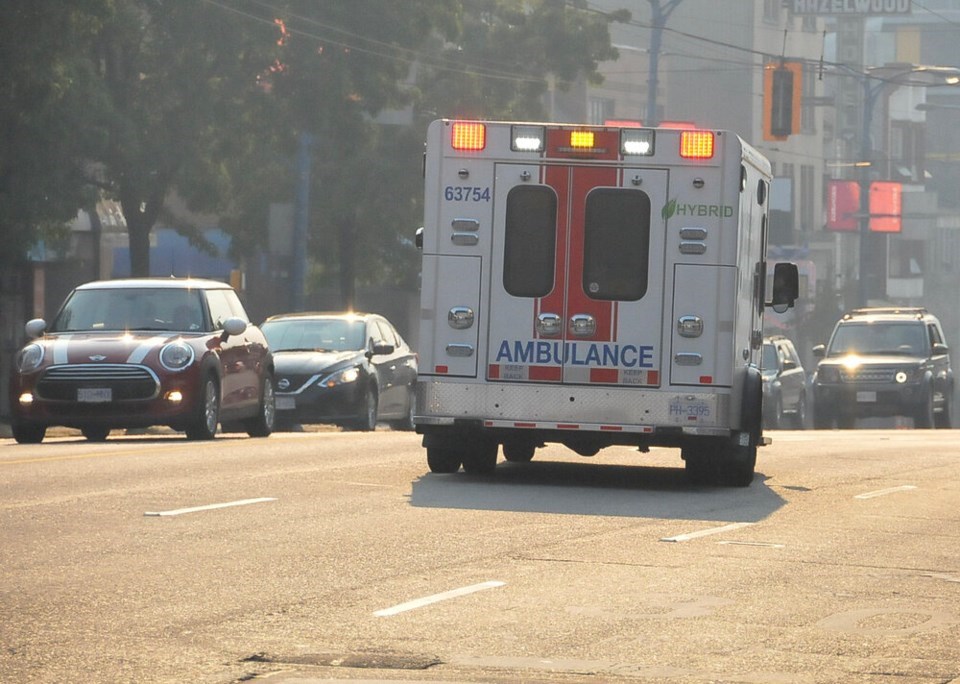
Indoor heat study found tenancy agreements, strata bylaws restrict use of cooling outright in some rentals
A city staff report scheduled to go before Vancouver city council June 3 recommends that landlords who fail to allow tenants in rental homes to use portable air conditioners be subject to a fine of $1,000.
The report was triggered by a motion in November 2025 from councillors Sean Orr and Lucy Maloney, who requested to create a bylaw to prevent landlords from prohibiting or preventing tenants from using portable cooling devices when no air conditioning is otherwise provided.
“High indoor temperatures and lack of cooling systems in dwellings are a life-threatening hazard,” the councillors’ motion read. “High indoor temperatures and lack of cooling systems in dwellings are also a human rights and climate justice issue.”
The staff report recommends council approve amendments to the city’s licence bylaw that would make disallowing portable air conditioning devices a ticketable offence, with a fine of $1,000.
Council has the authority under sections of the Vancouver Charter to regulate licensed businesses and impose requirements on landlords through the licence bylaw.
The report references the Vancouver Indoor Heat Study, a community science project that worked with local residents between 2021 and 2023 to understand how hot it gets inside people’s homes during hot weather.
City staff partnered with Vancouver Coastal Health and BC Centre for Disease Control to collect more than 4,500 indoor temperature measurements taken in Vancouver homes in the summer months.
Participants shared information about their homes, heat-related health impacts, access to cooling and lived experiences during heat events.
The study, released in May, found that nearly seven in 10 homes reported maximum temperatures of 26 degrees Celsius or higher, and 13 per cent reported temperatures at or above 31 degrees Celsius.
The study showed that 41 per cent of respondents in 2023 reported barriers to purchasing, installing and/or operating mechanical cooling equipment in their home.
Many mentioned affordability challenges, including the high cost of living as limiting their ability to purchase or use effective mechanical cooling. Others reported challenges with installation due to building characteristics such as window size, unit layout and electrical capacity.
‘Summer days expected to be hotter’
Residents of multi-unit buildings reported more barriers to cooling their homes (44 per cent) than those living in other housing types (34 per cent), and tenants more frequently reported barriers to installing air conditioning compared with homeowners (49 per cent versus 36 per cent).
“Several participants described circumstances that landlords and strata corporations explicitly prohibited the use of both mechanical and passive cooling in multi-family buildings,” the study said.
During the 2021 heat dome, B.C. experienced record-breaking daytime temperatures and sustained overnight temperatures resulting in 619 heat-related deaths; 117 deaths were recorded in Vancouver.
The BC Coroners Service found that 98 per cent of deaths occurred indoors and most were in homes without adequate cooling systems such as air conditioners.
The staff report said climate change is increasing risks to health and well-being as Vancouver is projected to experience higher year-round temperatures, “with the hottest summer days expected to be hotter, and extreme heat events more frequent and longer.”
Environment Canada forecasts 2026 to be among the hottest years on record.
‘Undue hardship on landlords’
Though a $1,000 fine is recommended for landlords who don’t allow tenants to use portable cooling devices, the report also includes an exception to support landlords who are unable to “reasonably comply.”
Under this process, the landlord may apply to the city’s chief licence inspector, on the advice of the chief building official, with evidence as to why compliance is not reasonably achievable.
The report said documentation must be prepared or authenticated by a certified professional such as an architect, engineer or field safety representative. Documents should “clearly identify the legitimate barrier” preventing an occupant from using a portable cooling device within the rental unit.
“Examples of reasonable challenges could include limited electrical capacity or building integrity issues,” the report said. “The intent of the exception is to mitigate undue hardship on landlords where constraints exist that could otherwise require significant building upgrades or pose major safety concerns.”
Maximum indoor temperature standards
The City of New Westminster uses similar regulations for cooling regulations where an owner may apply for an exception from the rules on the grounds that the building owner is unable to reasonably comply with the bylaw.
The staff report also recommends the following:
- Mayor Ken Sim send a letter to the Minister of Housing and Municipal Affairs to advocate for provincial regulations under the Residential Tenancy Act and Strata Property Act to prohibit landlords and strata corporations from restricting or preventing residents from using portable cooling devices.
- The mayor should also request an update on the province’s progress toward enabling amendments to the Vancouver Charter that would allow the city to establish maximum indoor temperature standards, as approved by council on June 11, 2024.
[email protected]
X/@Howellings