dailynewsnblog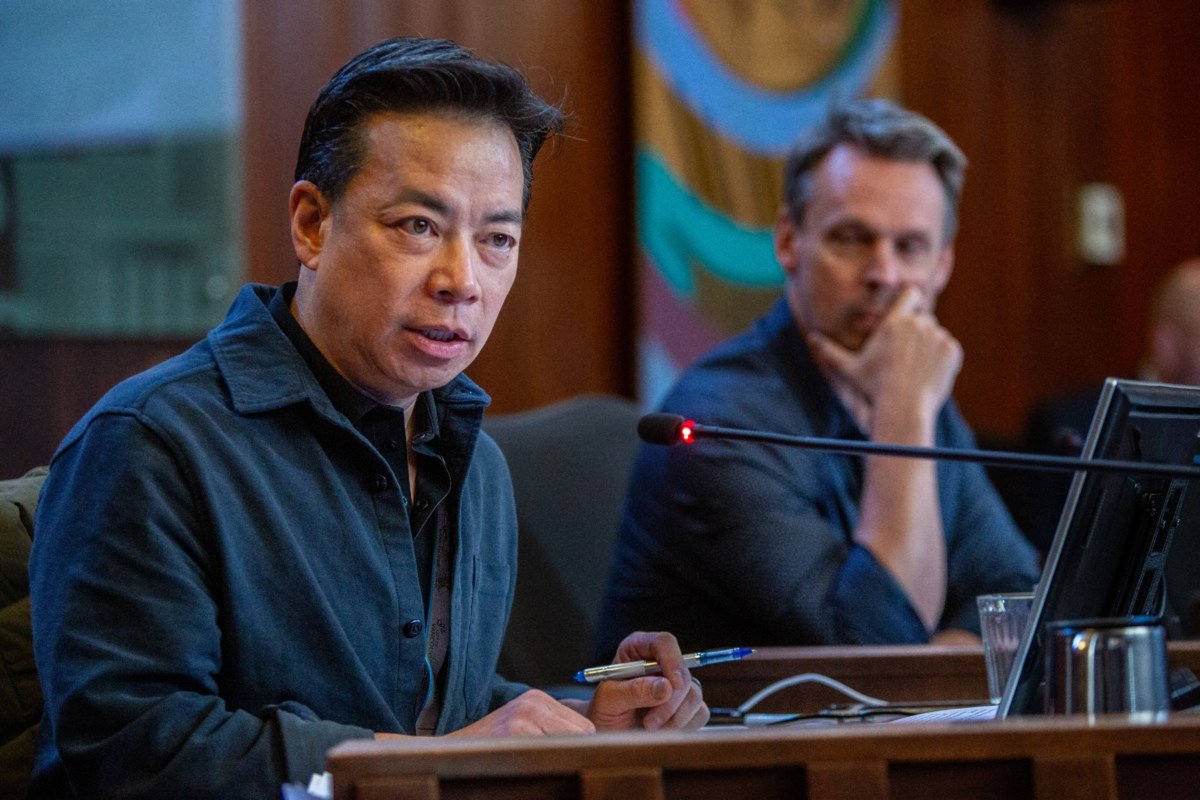
The mayor’s expanded push to deregulate gas heating in buildings has been met resistance from B.C.’s housing minister and those who say his cost-saving claims are unrealistic
Vancouver Mayor Ken Sim has accused B.C.’s housing minister of interfering in city affairs after he proposed a motion that would pause and repeal multiple climate bylaws designed to phase out gas heating and electrify buildings.
Slated to be introduced Wednesday, the motion seeks to immediately halt enforcement of a green retrofit by-law and directs staff to repeal an existing ban on installing gas-powered hot water systems. It also seeks to role back the city’s efficiency standards in new buildings to align with minimal provincial guidelines.
The actions, according to Sim’s motion, seek to eliminate regulatory barriers to make housing cheaper in one of the “most unaffordable housing markets in the world.”
In advance of the meeting, Sim issued a news release with comments based on a letter he received Tuesday, May 19 from Christine Boyle, a former Vancouver city councillor who is now the province’s minister of housing and municipal affairs.
Boyle’s letter urged Sim to delay the introduction of any bylaws until she could confirm the province’s approach to zero-emission building codes this fall.
So far, 32 communities have adopted level three or four of the Zero Carbon Step Code, which sets the path for all new buildings to be zero carbon by 2030, according to Boyle. That represents roughly 45 per cent of the B.C. population, including all of Vancouver’s neighbouring municipalities, she said.
“Any sudden changes to Vancouver’s approach introduces contusion, costs and delays to builders,” wrote Boyle.
In response, Sim described the letter from Boyle as an “11th-hour attempt to intervene” on a city debate over “energy choice and affordability.”
“It is the right of Vancouver City Council to debate and pass these policies without undue pressure from a provincial cabinet minster,” Sim responded.
Sim says bylaws create ‘regulatory divergence’
If it passes, Sim’s motion would halt enforcement of the city’s Energize Vancouver program, which seeks to reduce building emissions through energy tracking, annual reporting and support programs.
It would also direct staff to consult industry stakeholders over cost efficiencies and bring back a bylaw that repeals restrictions on gas heating, among other things.
In his motion, the mayor argued that having a stand-alone building code in Vancouver requires builders, designers and manufacturers to adapt projects specifically for Vancouver.
That has led to “regulatory divergence” that limits the ability to use standardized designs, modular construction and prefabricated components that are otherwise compliant across the province, the motion says.
Sim also wants to restore the ability of Vancouverites to choose a hot water heater replacement “that best suits their needs.”
In 2022, the city passed a ban on natural gas for heating and hot water in construction of new detached homes.
Buildings are the largest source of greenhouse gas emissions in the city, contributing nearly 60 per cent of total carbon pollution, according to the city.
Latest attempt to reintroduce gas
Sim’s deregulatory push comes nearly two years after the mayor and his allies on council introduced a similar motion seeking to reverse restrictions on natural gas heating and hot water for new home construction.
That motion narrowly passed in July 2024, but was reversed a few months later after an intense round of public hearings led several of Sim’s own ABC party councillors to break ranks.
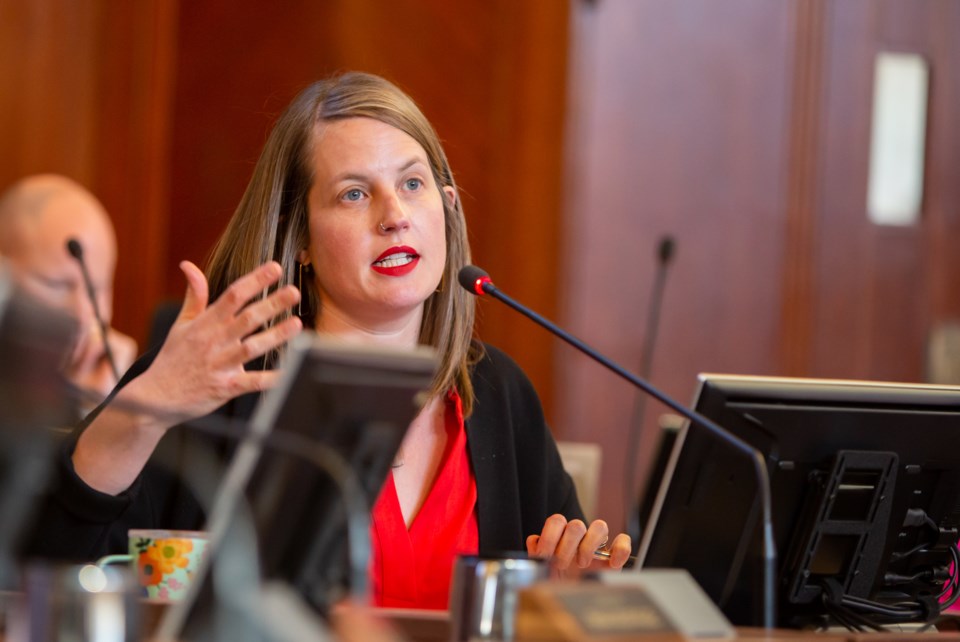
Coun. Rebecca Bligh, supported the move in July but switched her position in the November vote, arguing that she had more information and facts to make a proper decision.
“I believe we made the wrong decision [in July],” Bligh told council at the time. “The fact is, the initial policy of using electricity for heat and hot water in new buildings is the right one for people in Vancouver.”

’Cheaper and better’
Bligh said electricity is at least the same cost as gas to operate for the type of heating, and that estimates show it will be cheaper in the long run for owners and renters to invest in electrification.
“I’ve heard from builders who say electricity is cheaper and better, and I’ve also heard from young people that felt disappointed and let down by the vote in July,” she said. “They saw what I see now.”
Bligh has since been expelled from ABC Vancouver and has formed her own party, Vote Vancouver. Bligh is running for mayor in the October civic election. Sim has told Business in Vancouver that he is seeking re-election.
Motions follow lobbying from gas utility
In the months leading up to the initial motion, the province’s largest gas utility, FortisBC, had hired Prospectus Associates Public Affairs partner Gurpreet Vinning to lobby Vancouver’s elected councillors on the advantages of gas heating.
Correspondence released through a freedom of information request show Vinning making an argument to keep gas in Vancouver’s energy mix based on affordability.
“I know the intent of full electrification was done with good intentions but the unintended consequences of rising costs of electrification are going to hit any new construction project,” the lobbyist wrote Coun. Sarah Kirby-Young in a December 2023 email.
Vinning went on to lay out an example where a homeowner allegedly had to pay $50,000 for electric hookups in a new three-storey home with a separate basement and lane-way home.
“If he had been able to heat with renewable natural has, he would not have needed 400 amps and would not have been required to pay $30,000,” added Vinning.
On May 26, 2024, Vinning wrote a letter to the mayor’s senior advisor, David Grewal, warning against closing the door on “future energy options.”
“The move by some municipal governments [Nanaimo, Burnaby, Victoria and Saanich] to effectively ban the connection of new homes and businesses to natural gas comes to mind,” he wrote.
“We can reduce emissions, work to maintain affordability and enhance our economy to pay for health care and education. But this path demands action instead of energy wishful thinking—and soon.”
Sim’s latest motion is significantly broader and more aggressive than his 2024 attempt to reintroduce gas heating.
While the 2024 motion was tightly focused on a single issue—reversing the natural gas ban for future, new home construction—the 2026 motion targets multiple policies that seek to lower carbon emissions from buildings.
Cost savings of gas over electric not based on current reality, say city staff
Should Sim’s motion pass, it could stall the growth of B.C.’s green economy by disrupting the supply chains and local expertise needed to install heat pumps and electric infrastructure at scale, warned Nanaimo Coun. Ben Geselbracht.
“The case for having heat pump heating and cooling in your house, in multi-family buildings, is far superior now,” said Geselbracht. “This is definitely coming out of the blue.”
Vancouver city staff, who spoke on background because they were not authorized to speak to the media, said the costs quietly presented by FortisBC’s lobbyist to councillors don’t reflect current reality. That’s partly because the city has reduced requirements to bury electric wires outside of neighbourhoods that explicitly choose to do so.
A Nov. 12, 2024, city staff report found there is “very minor differences in affordability” between a building code that requires electrified heating and one that allows for gas. Those findings aligned with a wide body of research outside of the city, including a report from BC Housing that found high performance buildings can be built at or below cost.
One city staff member told BIV there are some cases where exceptions or subsidies are needed to retrofit old buildings. But in most cases, the claims in the mayor’s motion suggesting gas heating would lower the cost of housing no longer exist and are “not based in reality,” said staff.
“This effort will deliver something for the gas utility,” added one staff member. “This would allow them to get more connections than they get today.”
Motion could disrupt industry, says expert
The motion has sparked a strong response residents, industry groups and climate experts. A total of 121 people had registered to speak to council Wednesday regarding the mayor’s motion, which wasn’t likely to be heard until late afternoon or early evening. Sim’s motion was the second-to-last item on council’s lengthy agenda.
Some of those slated to speak include business and industry groups that have been critical of the ban on gas hook-ups in the past. Others are representing climate advocacy groups, while many more appear to be residents of the city.
Betsy Agar, director of buildings policy at Efficiency Canada, said that’s no surprise, especially when municipal bylaws seeking to electrify buildings threatens the business model of gas utilities.
“They want to keep as many buildings on natural gas as possible,” she said. “We have players who aren’t really playing for the sake of the system and the sake of the public good.”
But when it comes to the cost of housing, Agar said there’s little evidence that electrified buildings fetch a higher price. What appears to be happening, she added, is that some builders are seeking to protect their profit margins—not consumers.
At the same time, many developers and construction companies that have moved to adapt to city bylaws and provincial step codes face the prospect of losing their investments and laying off workers, said Agar. The real concern, she added, is how disruptive regulatory changes are to industry.
The debate comes at a difficult time where nobody in government is taking fuel costs and efficiencies lightly, said Jessica McIlroy, a City of North Vancouver councillor and director of government relations at the Pembina Institute.
“These decisions have repercussions for decades,” she said. “We don’t want to be locked into expensive fuel costs into the future.”
McIlroy said she understands some in industry might find it challenging to work across municipalities with different bylaws, but that dropping regulation in the name of affordability only serves to move policy backward.
“There’s no justification for it,” she said. “In all levels of government, we’re effectively just having a race to the bottom and using affordability as an excuse.”