dailynewsnblog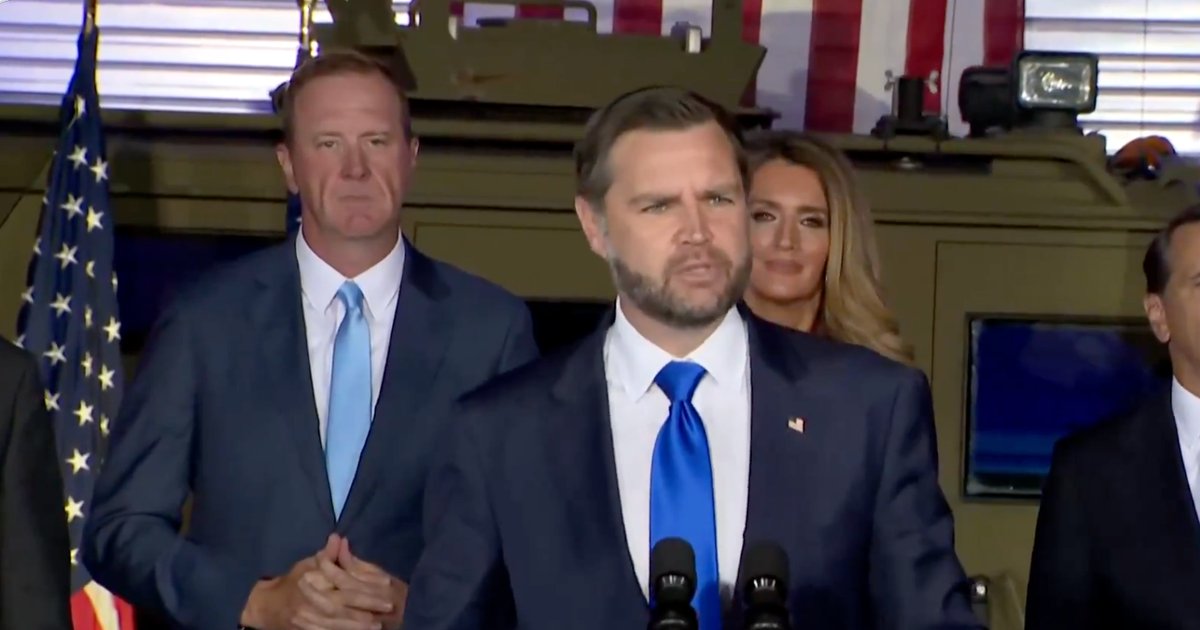
Kansas City, Missouri — Vice President JD Vance announced Monday the Trump administration will suspend roughly 870,000 people suspected of defrauding pandemic-era small business programs from receiving future federal loans.
The vice president contended that borrowers who stole taxpayer money should no longer be eligible to receive loans from government-backed programs.
“If you screwed the American taxpayer, the federal government is now going to say you’re cut off, no more,” Vance told reporters. “You shouldn’t be applying anymore, and if you do apply, you’re no longer able to get those benefits.”
His remarks came as the Justice Department announced a slew of cases in a nationwide crackdown on fraud involving the COVID-19-era Paycheck Protection Program.
The department’s enforcement push, which ran from June 12 through Sept. 1 and was dubbed “Heartland fraud surge,” resulted in actions involving more than 160 defendants and approximately $245 million in intended losses to taxpayers. The operation was put into action more than five years after the government pushed emergency loans to businesses nationwide that were struggling as a result of the coronavirus pandemic.
The initiative involved prosecutors from 44 U.S. Attorney’s Offices, along with more than 20 federal and state investigative partners.
SBA Administrator Kelly Loeffler said the suspensions announced by the vice president are tied to an estimated $39 billion in suspected fraud from across 45 states and territories. Combined with earlier enforcement actions, Loeffler said the SBA has now suspended borrowers connected to roughly $49 billion in alleged fraud across all 50 states.
SBA has previously stated that all suspended borrowers are barred from future small-business and disaster loans and from programs including its 8(a) federal contracting program.
“Exposing these criminals is only the first step,” Loeffler said. “This summer, we referred $22 billion to the United States Treasury for collections.”
The SBA had previously announced that it had referred more than 560,000 suspected fraudulent borrowers, tied to roughly $22.2 billion in delinquent PPP and COVID Economic Injury Disaster Loan program loans, to the Treasury Department for collection.
While not criminal prosecutions, treasury collections are aimed at recovering outstanding debt owed to the federal government.
Attorney General Todd Blanche told CBS News in an interview Monday, “We have 500 prosecutors now in D.C. and around the country focused on this. We have prosecutors in all 93 U.S. attorneys’ offices now directly focused on this.”
Throughout the surge, federal prosecutors and investigators pressed felony charges against nearly 80 defendants in cases involving roughly $100 million in intended losses connected to Small Business Administration COVID-era programs, including the PPP and EIDL programs.
Another approximately 43 defendants pleaded guilty in SBA-related COVID fraud cases involving roughly $44 million in intended losses, while about 40 defendants were sentenced in cases involving nearly $100 million in intended losses.
In total, the summer enforcement activity targeted more than 160 criminal defendants and roughly $245 million in intended losses total, according to the Justice Department.
The cases involve a broad range of alleged schemes, including fabricated businesses, false payroll and revenue information, plus identity theft.
Vice President JD Vance, Attorney General Todd Blanche and FBI Director Kash Patel appeared alongside federal and state law enforcement officials in Kansas City to announce the results of the operation.
The federal investigation targeted fraud in a program that stopped issuing new loans in 2021. Congress established the PPP or the Paycheck Protection Program in March 2020 to prevent businesses from collapsing as sweeping shutdowns and pandemic restrictions upset the economy. Backed by the Small Business Administration, banks and other lenders ultimately made roughly 11.8 million loans totaling about $800 billion. While loans could be forgiven, borrowers had to meet strict requirements, including using the money for payroll and other eligible expenses.
Still, government safeguards lagged behind an onslaught of applications, and since the creation of the program, government watchdogs discovered that major screening tools were not in place until after the approval of hundreds of billions of dollars. The SBA’s inspector general previously estimated that more than $200 billion distributed through PPP and a separate pandemic disaster-loan program show signs of fraud.
Why now?
The new operation calls into question why investigators are still uncovering massive alleged schemes involving loans issued years ago.
Blanche told CBS News that prosecutors now have the funding and the staff to take cases they previously might not have had resources to pursue: “What we’re saying now is, yes, you do. You do have the time. You do have the resources. You need to take that case and investigate it.”
Last month, the Justice Department created a National Fraud Detection Center designed to comb through data from agencies maintaining separate records.
A March 2025 Government Accountability Office report found that roughly two million of nearly three million pandemic-loan fraud referrals contained incomplete, incorrect or duplicative information, limiting investigators’ ability to act on them.
A central question for investigators is whether the remaining pandemic-fraud caseload consists largely of individuals who exploited unusually loose safeguards or whether investigators are still uncovering larger networks involving brokers, application preparers and others who allegedly helped multiple borrowers obtain money.
Fraud in the heartland
The operation includes the prosecution of Jamie Gray in the Western District of Missouri, charged with wire fraud and money laundering in an alleged scheme amounting to nearly $56 million in intended losses.
Gray submitted both PPP and EIDL applications claiming ownership of dozens of businesses that purportedly existed pre-pandemic. But prosecutors allege nearly all of the businesses were not operating before the programs’ eligibility deadline. Among others, Gray allegedly claimed to own, “Fur Lives Matter,” an existing Texas company that prosecutors say had no connection to Gray. The indictment alleges information about ownership, employees, revenue and business operations was entirely fabricated.
In a different case, a federal grand jury housed in the Northern District of Iowa indicted Adrian Rafael Pupo Perez and Helen Yaima Leyva Santiesteban with 47 counts of wire fraud, money laundering and conspiracy.
Prosecutors claim the defendants and more than 100 other individuals participated in a sweeping scheme involving approximately 470 fraudulent PPP applications submitted in the names of people across the country. The group allegedly sought more than $4.5 million in PPP funds, of which approximately $2.4 million had been disbursed. Both Pupo Perez and Leyva Santiesteban are on the run, according to the Justice Department.
The Western District of Missouri has led efforts to prosecute pandemic-relief cases this year, including defendants accused of fabricating payroll figures, submitting false tax documents and using PPP proceeds for personal expenses.
During a meeting with federal and state officials before the announcement, Deputy Attorney General Colin McDonald said altogether the U.S. has carried out over 1,200 major fraud actions over the last 160 days.
Weak safeguards
The wave of new charges raises old questions about safeguards — when Congress and the first Trump administration initially created the PPP program at the height of the economic emergency.
After the spring of 2020, federal watchdogs concluded that the SBA weakened or in some cases even delayed safeguards that could have been switched on to identify suspicious borrowers before the government issued any payments.
Expanded automated screening and reviews were only put in place in January 2021 — after more than $525 billion in PPP loans had already been approved — according to the Government Accountability Office.
Future fraud
In 2023, the SBA inspector general estimated that more than $200 billion in PPP and COVID Economic Injury Disaster Loan funds might have been funneled to potentially fraudulent actors, an estimate based solely on unearthed fraud indicators and data analytics.
Congress previously extended the statute of limitations for investigation into potential PPP and COVID-related fraud to 10 years, giving prosecutors until 2030 or 2031 to bring forward additional cases.
“Every one of these arrests, every one of these takedowns … we are saving money for the American people — real money, millions and millions and millions of dollars,” Blanche said in his interview with CBS News.
For a Trump administration that has discussed fraud frequently, Monday’s announcement is also intended to showcase a broader effort extending beyond PPP. Earlier this year, the Justice Department established a National Fraud Enforcement Division, and the White House announced a government-wide task force chaired by the vice president to go after fraud involving taxpayer-funded programs. McDonald told federal law enforcement gathered ahead of Monday’s press conference that the office has grown to 500 personnel since that announcement.
McDonald said the department will continue growing its fraud task force to meet the scale of fraud targeting federal programs.
“And we are growing even bigger. Why? Because the American people demand it,” McDonald told a room full of dozens of law enforcement officers and public officials. “They demand our best. They demand our resources. They demand that we take it personally when someone decides to steal from the United States of America, and we will not shrug our shoulders at such conduct.”