dailynewsnblog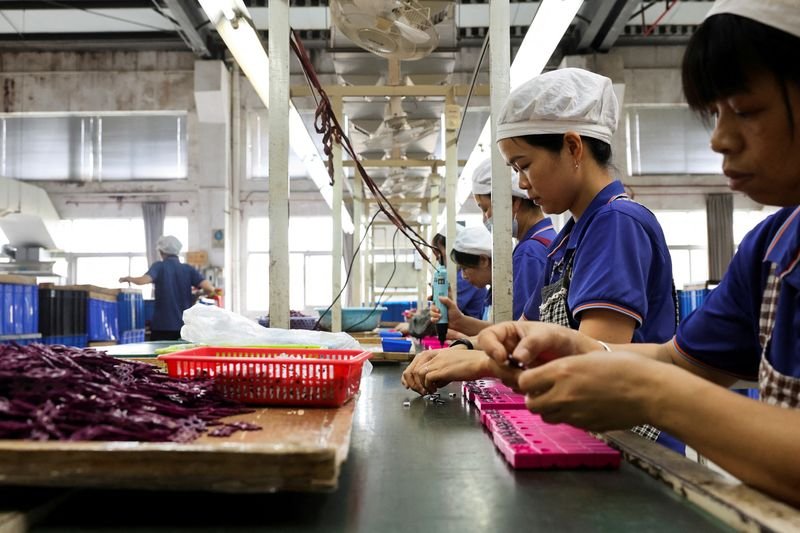
By Casey Hall
SHANGHAI, May 13 (Reuters) – Had the United States kept tariffs on Chinese imports at triple digits for just one more day last year, Huntar Company would have collapsed, said David Cheung, who runs the family-owned toy maker with his brother Jason.
When Washington and Beijing reached a trade truce in Geneva on May 12 last year, rolling back the most-punishing levies, Huntar’s production moulds were about to clear Chinese customs as the company made a last-ditch bid for survival by moving some production to Vietnam.
The Cheungs called back the shipment as soon as they heard the news, realising only later the firm’s “11th hour” decision had saved their business.
Allowing the moulds to cross the border would have forced Huntar to install the equipment in Vietnam or return the tools to China through time-consuming customs procedures. Either scenario would have delayed output by the equivalent of two production cycles – costing the firm vital cash flow.
“That one day would have changed everything,” said Cheung. “We were very, very lucky.”
Huntar’s dramatic turn of fate shows how damaging the tit-for-tat tariff war was for businesses – and how disruptive further decoupling could be.
Companies like Huntar, which employs 400 to 500 workers in the southern city of Shaoguan making educational toys bound for retailers including Walmart and Target, hope Trump’s meetings with his counterpart Xi Jinping in Beijing this week could lead to more stable ties.
Most analysts say a tariff truce extension is likely, citing Beijing’s grip on rare earths production – vital for U.S. industry, including defence firms – which China successfully used as leverage in trade negotiations last year.
China’s export curbs were “an important reminder that economic interdependence cuts both ways,” said Neil Shearing, chief economist at Capital Economics.
“President Trump discovered that the U.S. did not, in fact, ‘hold all the cards’.”
But, he added, attempts to stabilise the relationship did not address the underlying cause of their tensions, namely China’s $1.2 trillion trade surplus and the U.S. dependence on Chinese imports.
Washington has accused Beijing of mercantilism – the practice of boosting exports and restraining imports as a way to advance a country’s wealth and power – while China has said the U.S. is trying to contain its rise.
“It is a negative feedback loop: geopolitics worsen imbalances, and imbalances worsen geopolitical tensions.”