dailynewsnblog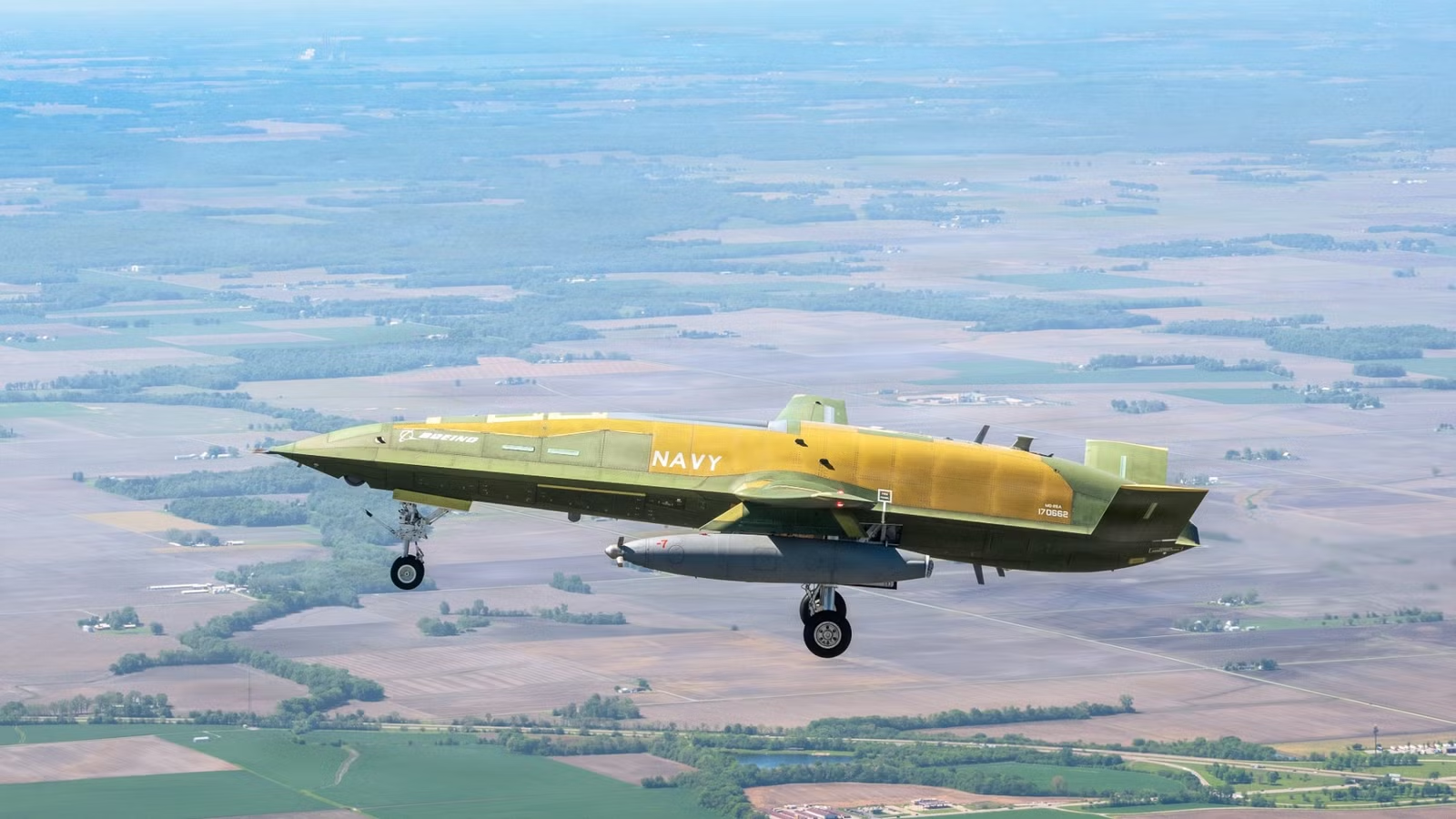
After an aborted attempt on April 22, the  Boeing MQ-25A Stingray took off for its first flight on April 25, soaring into the history of naval aviation as the US Navy’s first operational carrierborne drone. Navy and Boeing Air Vehicle Pilots controlled the aircraft from the Unmanned Carrier Aviation Mission Control System MD-5 ground control station for a total of two hours of flight time.
The stingray took off from Scott AFB/Midamerica Airport St. Louis Airport (BLV) in Mascoutah, Illinois, and passed several key trials in advance of its ferry flight to a Navy facility slated for later this year. The drone represents the first of four test models under an $805 million contract to Boeing that will bring manned-unmanned teaming to the flight deck for the first time.
The Second Time’s The Charm: The Stingray Takes Off

The Boeing MQ-25A represents a Quantum Leap for the Carrier Air Wing. The successful flight of the first production representative airframe is a major step forward in realizing one of the largest improvements in Air Wing operations at sea in decades. The key mission that will be fulfilled by the stingray of aerial refueling not only makes that specific task more efficient and safer but also, and more crucially, frees up Strike Fighter jets, so they can be used for more important sorties.
This job is currently fulfilled by the Boeing F/A-18E/F Super Hornet multirole Fighters used by the US Navy and US Marine Strike Fighter squadrons around the world. The aircraft is capable of performing ‘buddy tanking’ using a special set of drop tanks with extendable drogue hoses; it is not a very efficient use of the plane or implementation of the task in the grand scheme of things. The Navy has pursued improvement of this crucial task for decades, and the Stingray will finally close the loop and solve one of the largest hurdles for the Air Wing since the beginning of jet-powered Naval Aviation.
Naval Air Systems Command’s Rear Admiral Tony Rossi, who oversees the Program Executive Office for Unmanned Aviation and Strike Weapons at Naval Air Station Patuxent River, gave this remark following the Stingray’s maiden voyage:
“The MQ-25A is not just an aircraft; it’s the first step in integrating unmanned aerial refueling onto the carrier deck, directly enabling our manned fighters to fly further and faster. This capability is vital to the future of naval aviation.”
MQ-25A: Empowering Naval Aviators And The Fleet

One of the major limiting factors for squadrons deployed at sea aboard an aircraft carrier is the enormous amount of fuel consumption required for flight deck operations. Launching and recovering demand massive amounts of fuel to be burned and dumped due to high-performance phases of flight, as well as safety margins. This also creates bottlenecks for flights of fighter jets on their way to complete missions after launching because they need to fill up their tanks before proceeding.
The Stingray enhances the Carrier Strike Group’s lethality and survivability by providing 15,000 lbs (6,800 kg) of fuel at a flying ‘gas station’ at as many as 500 nautical miles (925 km) from the carrier. This nearly doubles the strike range of aircraft like the Lockheed Martin F-35C Lightning II and Super Hornet. Currently, pp to one-third of a carrier’s strike fighters are waster by being diverted from combat roles just to serve as aerial tankers.
While refueling is the priority, the MQ-25A is designed for intelligence, surveillance, and reconnaissance missions as a secondary role. It can present sensors forward in contested environments, taking on ‘dirty, dangerous, and boring’ surveillance tasks without risking human pilots. The drone can loiter for up to 10 hours, providing real-time surveillance and target acquisition on behalf of other strike platforms.
Super Hornets can still perform the mission alongside or in place of a Stingray should they be unavailable for some reason, but ultimately the use of the new drone will significantly enhance the combat capability of Navy Strike Fighter squadrons. On top of that, it will also improve safety for pilots and cut down on the wear and tear of the Rhinos, as F/A-18E/Fs are dubbed.

Here’s Why Landing An F-35 On An Aircraft Carrier Is So Difficult
What it takes to be in the tailhook club.
A Glance Back At How Boeing Delivered The Navy’s First Carrier-Capable Drone

While originally targeted for 2024, the program has faced delays due to design complexities and supply chain issues. Boeing was selected as the winner of the Unmanned Carrier-Launched Airborne Surveillance and Strike competition on August 30, 2018, beating out Lockheed Martin and General Atomics. Boeing delivered the first pre-production aircraft in 2024 and The USS George H.W. Bush became the first carrier equipped with a dedicated drone control center that same year.
The Navy plans to order a total of 76 MQ-25A Stingray aircraft. The program of record includes 67 operational aircraft and nine test and developmental aircraft. In addition to performing the mission set better and allowing fighter jets to perform tactical missions instead of support missions, the use of the Stingray at Sea will also cut down on the number of carrier landings that a human pilot needs to perform, which dramatically improves safety.