dailynewsnblog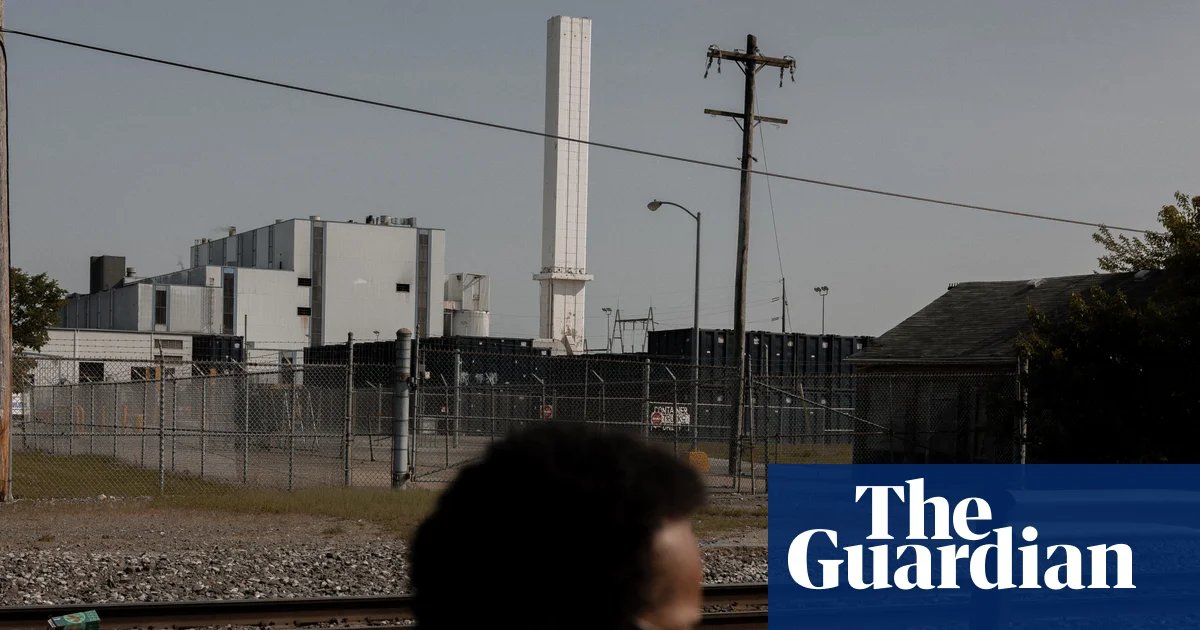
The nation’s garbage incinerators are largely failing to eliminate Pfas “forever chemicals” air pollution, and are putting people in largely low-income neighborhoods at risk, public health advocates and independent experts warn.
The powerful waste management industry is increasingly pushing incinerators as a solution to virtually indestructible Pfas waste, and a new industry trade group report alleges Minnesota’s incinerators are reducing their forever chemical emissions by 99.6%. Other incinerator operators have made similar reduction claims.
The report also comes amid fights to shut down incinerators in Miami, Philadelphia and Baltimore, and a lawsuit filed against the Environmental Protection Agency over what it characterizes as a weak update to its emissions standards for the facilities, which do not include Pfas. Nearly 100 municipal or hazardous waste incinerators operate nationally, including seven in Minnesota.
The new Minnesota report is full of bad assumptions, incomplete data, misleading language, and fails to conduct proper testing, according to an analysis by the Zero Burn Coalition advocacy group and reviews by independent incineration experts.
Instead, advocates say, Minnesota’s facilities are probably poisoning the surrounding neighborhoods with Pfas and a cocktail of other dangerous pollutants that garbage incineration often emits.
The report “deceives the public into thinking [incineration] is safe”, said Nazir Khan, executive director of the Minnesota Environmental Justice Table.
“This trash becomes the problem of the poor and marginalized to deal with in their bodies,” he added.
In a statement, the Minnesota Resources Recovery Association (MRRA) industry trade group that authored the report said Zero Burn’s analysis raised some valid points, but “does not support the conclusion that Pfas emissions from [Minnesota incinerators] are likely to be unsafe”.
Pfas are a class of at least 16,000 compounds most frequently used to make products water-, stain- and grease-resistant. They have been linked to cancer, birth defects, decreased immunity, high cholesterol, kidney disease and a range of other serious health problems. They are dubbed “forever chemicals” because they do not naturally break down in the environment.
Pfas get concentrated in municipal landfills because they are so widely used across the economy and in consumer products. When waste is incinerated, the chemicals can be released into the air. The compounds are designed to resist heat and destruction and are extremely difficult to destroy on an industrial scale.
“I’m not aware of any industrial-scale commercial incinerator that solves this problem,” said Michael Youhana, an attorney with the non-profit Earthjustice, who has litigated on other incinerator issues.
Recent research has shown that exposure to the chemicals via the air is more of a risk than previously thought, though regulators are only beginning to establish health standards.
The MRRA report was developed in response to state regulators’ request for information on their Pfas emissions. The authors wrote their findings suggest “little or no inhalation health risks are associated with the emitted six Pfas compounds” that are regulated in Minnesota.
But opponents say people are exposed to more than just the six regulated compounds, and the report’s findings appear designed to head off new regulations. Denise Trabbic-Pointer, a former DuPont Pfas scientist who now consults on incineration issues, characterized the MRRA report as a “pretty poor study”.
“I don’t know how they can say ‘99% reduction’, because there is too much missing data to make that claim,” Trabbic-Pointer said.
The industry report notes that the incinerators burn at or above 850C (1,562F), which is high enough to “initiate” or “promote degradation” of Pfas, but Trabbic-Pointer said there was scientific consensus that the chemicals require much higher temperatures to be destroyed. The use of language like “promote degradation” does not mean it fully destroys Pfas, she added.
“You can’t just ‘promote degradation’ of Pfas, you have to totally mineralize it and prove that you’ve done it,” Trabbic-Pointer said. “I’m sure the headline grabs people and they think ‘‘Well that’s cool’,” but there is still a health threat, she added.
Incineration often breaks Pfas compounds into smaller-but-still-toxic by-products that either were not measured in the testing, or cannot be measured by most tests. The MRRA only checked for about 50 Pfas compounds when at least 16,000 exist, and hundreds are regularly used commercially.
This issue was illustrated in a 2023 Guardian testing of Pfas air emissions conducted with academic experts near a factory. It found tests like those utilized in Minnesota’s undercounted Pfas. The Guardian testing detected markers of Pfas in the air up to 76 times higher than the more limited tests used by industry.
Zero Burn notes that the EPA in 2024 even called into question the use of incineration for Pfas: “Because there are insufficient data available, there is low confidence in the reliability of this technology to control Pfas releases,” the agency wrote.
Zero Burn wrote that there was also “a large hole” in the toxicity assessment because of the dearth of health information for 16 of 22 Pfas found in the incinerators’ emissions.
The advisory inhalation health standards that the state does have in place are too low, Zero Burn further alleges – far below EPA limits for drinking water when translated to air. When the EPA limits are applied in Minnesota, the levels in the air exceed standards by up to 17 times.
The industry science also fails to take into account the health risk in simultaneous exposure to multiple Pfas along with a litany of other dangerous chemicals released at staggering levels by incinerators, Zero Burn stated.
The MRRA said Zero Burn conversely could not conclude that the levels were unsafe and questioned advocates’ math. “[Zero Burn’s] analysis, extrapolating risks from proposed drinking water standards, is also not a risk assessment,” it said. The MRRA added that the levels it measured in the stack are not higher than the levels in the fence-line neighborhood where people are exposed.
Still, people living around the facilities are exposed to the dangerous chemicals, advocates say. Minnesota and local governments have not committed to addressing the issue, or closing down the facilities. The report will almost certainly be wielded in that ongoing fight, advocates added.
“This is part of a broader history of deception and attempts to mislead public and elected officials,” said Doug Gurian-Sherman, the lead author of the Zero Burn analysis and a former EPA official. “This is a clear example of environmental injustice.”