dailynewsnblog
The Israeli Defense Forces and the United States military have drawn up plans to renew joint strikes on Iran in the coming weeks, according to two Israeli sources familiar with the plans.
The Israeli sources said the strikes would almost certainly take place after the U.S. midterm elections, citing President Donald Trump’s reluctance to further destabilize oil markets in the final days of the campaign.
The White House said Thursday that the U.S. will not resume attacks on Iran before the Nov. 3 midterm elections.

U.S. Navy Command Master Chief John Shubert, assigned to Airborne Command and Control Squadron (VAW) 115, conducts leadership training aboard Nimitz-class aircraft carrier USS Theodore Roosevelt, Oct. 20, 2026.
US Navy
“The United States will not be attacking Iran at any time prior to the midterm elections,” White House spokesperson Anna Kelly said in a statement to ABC News.
“Hunting season is open as soon as the elections end and it’s obvious that they’re not going to wait long,” one Israeli source said.
The New York Times was first to report on the planning.
Asked about the Times’ reporting, a White House official said the administration does not comment on “sensitive military plans that may or may not exist.”
The official added that Trump “keeps all options on the table” to prevent Iran from acquiring a nuclear weapon.
The Pentagon declined to comment.
Israeli Prime Minister Benjamin Netanyahu is firmly in favor of renewed action against Iran, but both sources said the decision for joint strikes to resume is “only for Trump to decide.”
One Israeli source did not rule out Israel striking unilaterally should the U.S. choose not to participate, but added Israel would still require U.S. consent.
Trump has repeatedly said that he would restart the war after the midterm elections and has threatened to “end” it after the midterms.
He gave a somewhat conflicting answer on the status of negotiations with Iran when asked Wednesday night, initially saying talks are ongoing “a little bit,” but moments later saying “I think we’re not negotiating.”
“A little bit, but we’ll see what happens,” Trump said, when asked for an update on negotiations.

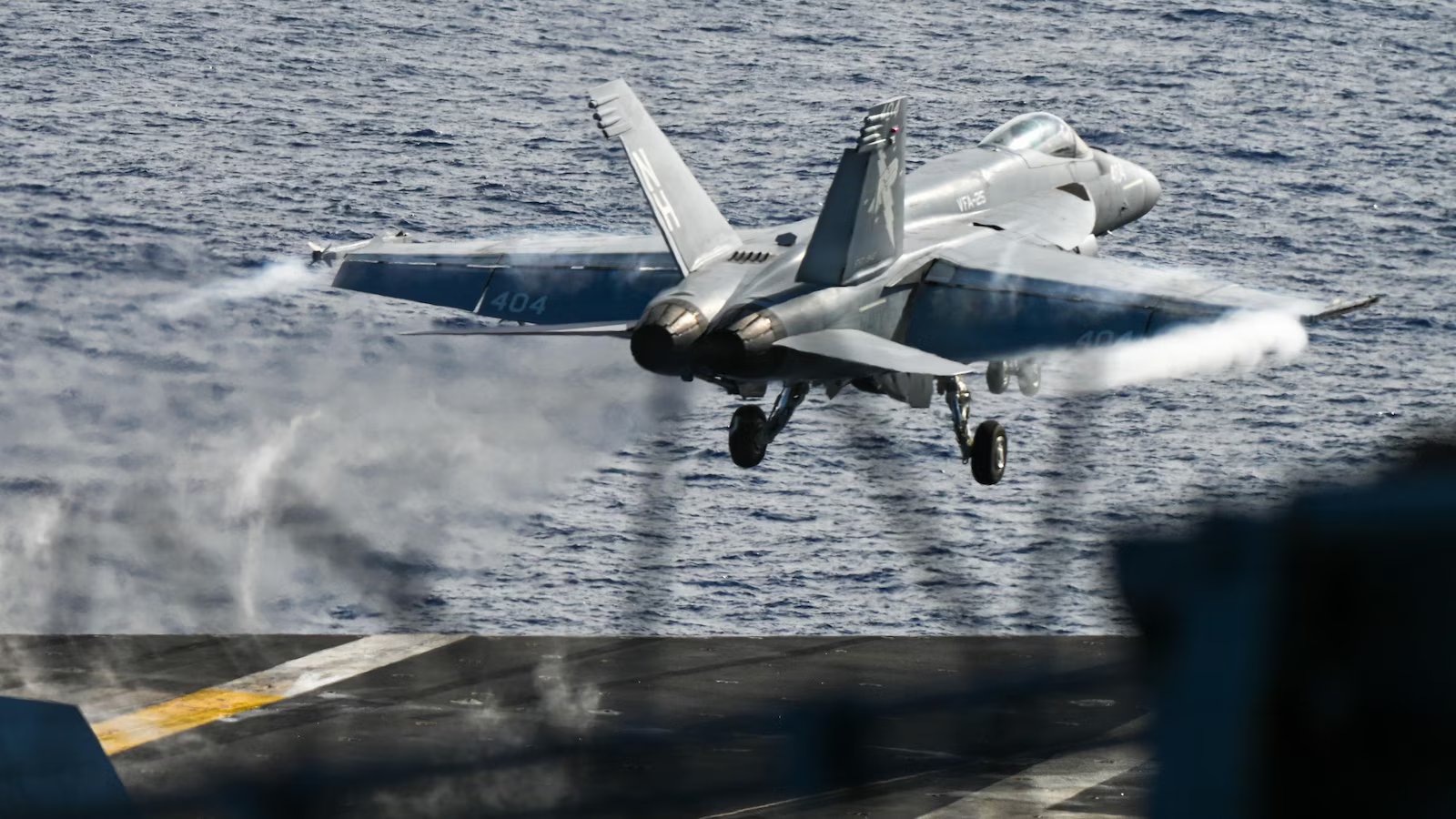
A U.S. sailor signals an F-35C Lightning II assigned to Strike Fighter Squadron 147 as it takes off from the flight deck of Nimitz-class aircraft carrier USS George Washington Oct. 7, 2026.
US Navy
Asked if he is “over” negotiating with Iran, Trump responded, “No, I think we’re not negotiating with — We are going to have something one way or the other that’ll happen fairly soon.”
“Most people seem to think it’s after the election, and we’re going to see what happens,” he added.
The plans to renew joint strikes were discussed during Defense Secretary Pete Hegseth’s unannounced visit to Israel earlier this week, according to one Israeli source, who added that new intelligence was shared between both sides.
New strikes would aim to further erode Iran’s economy and build on the ongoing U.S. blockade, with targets to include petrochemical facilities crucial to Iran’s oil industry, one of the sources said.
The source added that striking Iranian nuclear facilities, such as those at Pickaxe Mountain, is also part of the new plans, but added there are no plans to strike civilian infrastructure like power plants.
The source emphasized that regime change in Iran, and not a negotiated deal, is the Israeli government’s top goal.
“The only question is the timing,” they said.
The U.S. military has been repositioning personnel at U.S. military bases in the Middle East, a source familiar with the matter told ABC News.

Smoke and flames rise from King Khalid Airport, after Yemen’s Iran-backed Houthis said they attacked the airport, in Riyadh, Saudi Arabia, October 8, 2026, in this screengrab obtained from a social media video.
Social Media via Reuters
The repositioning of forces is similar to what occurred quietly prior to the start of the war with Iran in February, according to the source.
Asked for comment on an NBC report about the reduction of military and diplomatic personnel in the region, CENTCOM spokesman Capt. Tim Hawkins said in a statement: “We regularly move U.S. service members and assets to optimize mission readiness. We do not discuss related movements for operational security reasons. U.S. forces remain vigilant and ready to protect American personnel and interests across the region.”
Earlier Wednesday, the State Department ordered the departure of non-essential personnel and family members in Saudi Arabia — a decision officials say is a direct response to the risk posed by Iranian-backed Houthi militants, who have attacked Saudi oil infrastructure and airports on Saudi Arabia from Yemen.
There have been much smaller posture adjustments at several other embassies in the Middle East — changes officials say are also linked to the Houthi threat and other matters not connected to any plan to resume combat against Iran.
ABC News’ Nick Kerr and Emily Chang contributed to this report.