dailynewsnblog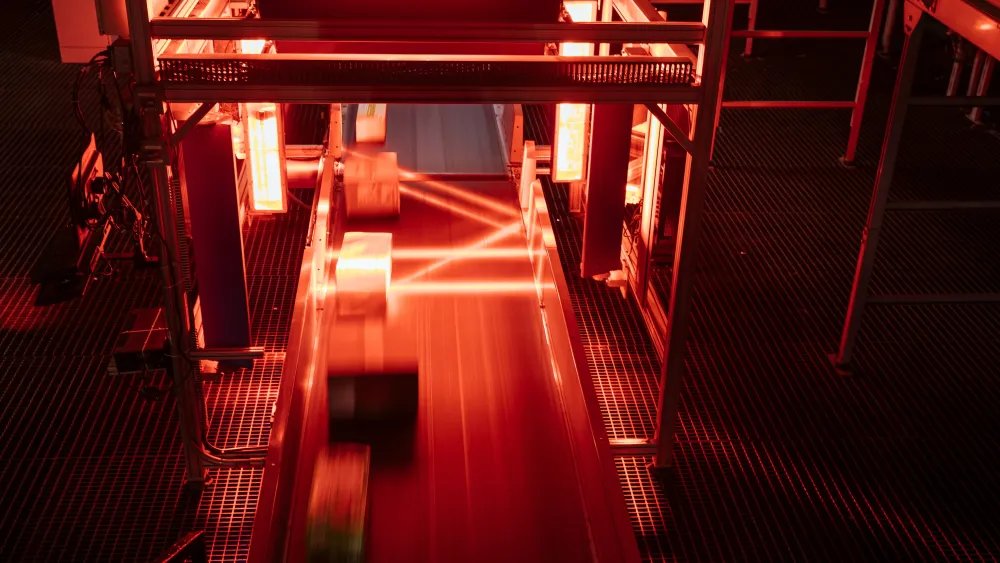
UPS is going all in on RFID.
The logistics giant has invested more than $100 million in projects to roll out the technology across its network, the company revealed on Tuesday.
With the investment, UPS has embedded RFID sensors within all its U.S. package delivery vehicles, as well as in its last-mile delivery facilities and its more than 5,500 UPS Store locations.
“With RFID embedded into labels, on our vehicles and in our loading bays, customers benefit from clear visibility during the entire shipping process—from pickup to delivery, with no manual scanning required,” said Matt Guffey, executive vice president and chief commercial and strategy officer at UPS, in a statement. “The result is commerce that is smarter and predictable.”
RFID (short for radio frequency identification) tagging and labeling technologies have been traditionally used for scanning products and packages throughout supply chains and retail stores, with use cases largely involving inventory management and loss prevention.
But as UPS seeks to optimize its delivery network and cut costs, the company is phasing out its manual barcode scanning equipment, instead moving to sensor-based technology.
The company plans to add the sensors to its middle-mile sortation facilities beginning later this year, according to a report from The Wall Street Journal.
The technology is built to allow UPS to automatically sense and track when a package is moved into or out of a building or vehicle. This near-real-time pickup confirmation can inform customers when and where a package is in the supply chain, and is designed to be a step ahead of traditional shipment tracking, which sometimes lags behind a package’s current location.
For example, if a package is put on the wrong truck, radio sensors will automatically detect it and issue an alert. According to UPS, misloads like this have dropped near 70 percent since the company started using the technology.
The company says the technology will also help it respond faster to customers when weather conditions change, or if other unexpected events take place.
UPS has touted its RFID implementation in recent years through the growth of its Smart Package Smart Facility initiative, which debuted the tech in 2022 across dozens of facilities. At the time, the courier sought to eliminate all the manual scans done by pre-loaders who sort and move packages from the conveyor belt into delivery vehicles. In late 2023, the company expanded the technology from its facilities to its vehicle fleet.
Guffey called the recent implementation “the most significant visibility advancement in the past decade at UPS.”
During the company’s fourth quarter earnings call in January, CEO Carol Tomé said UPS now processes 1.3 million packages per day with RFID labeling, which is “allowing us to earn new commercial business.”
Tomé called the deployment of RFID labeling at the point of origin “smart fulfillment,” noting that it “gives better transparency order-to-cash. Something that customers are desperately seeking. It gives them better control.”
The timing of the announcement comes as UPS undergoes yet another year of staff cuts. Last year, the company axed 48,000 employees, many of which worked as delivery drivers and warehouse workers.
Following up on the labor cost cuts, the Atlanta-based firm is cutting 30,000 more jobs in 2026.
The RFID implementation is one component of a wider shift to warehouse automation within the UPS supply chain as the company looks to retrofit its distribution network and cut costs.
UPS cut $3.5 billion in costs last year as part of the “Efficiency Reimagined” initiative, closing 93 buildings across the U.S. while deploying automation in 57 more. The company has identified 24 more buildings it wants to close in the first half of 2026, with plans to close more.
And while the company had 127 buildings that were automated as of January, UPS plans to implement these projects at another 24 locations throughout the year.
UPS expects to increase the percentage of U.S. volume processed through automated facilities to 68 percent by the end of the year, up from 66.5 percent at the end of 2025. The cost per piece in these automated facilities is 28 percent less than the cost per piece in conventional buildings.
The company is hosting its first quarter earnings call on April 28.