dailynewsnblog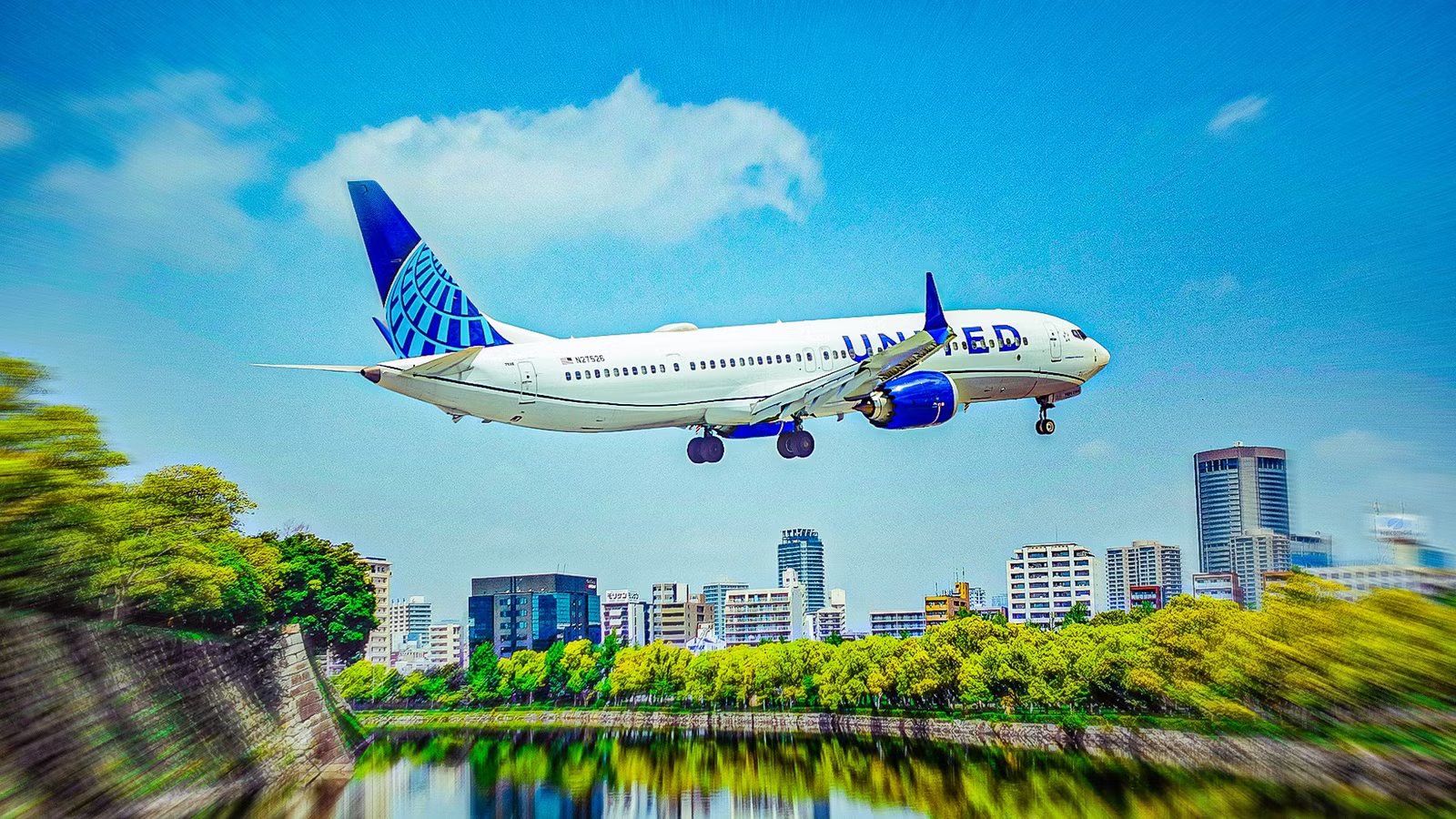
 United Airlines is adding a new transcontinental route from
  Fort Lauderdale-Hollywood International Airport (FLL) to
  Los Angeles International Airport (LAX), putting the carrier directly into one of the more competitive long-haul domestic markets from South Florida. The new service is scheduled to launch on October 25 with five weekly flights, before increasing to twice daily from December 17, giving United a much more meaningful winter presence on the route.
The move is notable because FLL-LAX sits at the intersection of three things happening at once: the collapse of Spirit Airlines, the push by JetBlue Airways to dominate Fort Lauderdale, and United’s own efforts to strengthen its position at LAX, where it continues to trail arch-rival  Delta Air Lines. In other words, this route is not just about filling a map gap. It is a direct challenge in two distinct competitive arenas: JetBlue’s South Florida expansion and Delta’s growing presence in Los Angeles.
United Adds A New Coast-To-Coast Link

United’s new Fort Lauderdale-Los Angeles route starts with five weekly flights on October 25. Independent aviation journalist Zach Griff was the first to report the new route. The bigger move comes less than two months later, when the airline plans to increase the route to twice daily from December 17. That timing makes it a clear winter-season play, aimed at one of South Florida’s strongest demand periods. It will compete with JetBlue and Delta, which both operate the route, and, until recently, Spirit.
United hasn’t confirmed what equipment will be used on the route, but it will be interesting to see whether it provides an aircraft with lie-flat seats. At 2,337 miles (3,761 km), this is one of the longer domestic flights from Fort Lauderdale, and depending on winds and schedule padding, westbound flights to Los Angeles can exceed six hours, putting it firmly in the long-haul category.
Route | Launch Date | Initial Frequency | Planned Increase | Distance |
|---|---|---|---|---|
Fort Lauderdale-Los Angeles | October 25 | 5x weekly | 2x daily from December 17 | 2,337 miles / 3,761 km |
It’s no coincidence that the new route is launching now. Spirit used to operate the route at varying frequencies, from daily to a more reduced two-times-weekly schedule most recently. The collapse of Spirit has left a gap that United can fill, part of its contingency planning that the airline started last Fall in the event that the ultra-low-cost carrier was liquidated. At the time, United increased its FLL schedule to 30 daily flights. Patrick Quayle, United’s SVP of Global Network Planning, said the carrier would support affected passengers.
“If Spirit suddenly goes out of business, it will be incredibly disruptive, so we’re adding more flights to give their customers other options if they want or need them.”
United Is Challenging JetBlue In Its New Backyard

The Fort Lauderdale side of the route will be especially interesting. JetBlue has spent the last year expanding aggressively at FLL, taking advantage of the space opened up by Spirit’s bankruptcy to become the number one carrier in one of the country’s most important leisure markets. JetBlue has also just announced 11 new routes from Fort Lauderdale, and expects nearly 130 daily departures there this summer, giving it its largest-ever schedule at the airport.
By contrast, United’s flying at FLL is almost exclusively to its hub airports, with Cleveland Hopkins International Airport (CLE) being the sole exception. Nevertheless, data from Cirium shows that the airline had 11% growth in Q2 2026 compared to the year prior. But even so, it is very much overshadowed by JetBlue’s 45% growth in the same period and has barely a quarter of the New York-based carrier’s operations.
JetBlue vs. United At FLL: Q2 2026 Vs. Q2 2025 | |||
|---|---|---|---|
Airline | Flights In Q2 2026 | Flights In Q2 2025 | Increase |
JetBlue | 16,316 | 11,246 | 45% |
United Airlines | 4,374 | 3,928 | 11% |
Then there is the route itself. JetBlue is already a serious player from Fort Lauderdale to Los Angeles, offering up to five daily flights using its Airbus A321s. This gives it an immediate schedule advantage over United, building on its stronger visibility with South Florida passengers. For once, United will be the upstart challenger, and JetBlue the heavily favored incumbent to beat.
The product comparison may be even more challenging. FLL-LAX is a Mint market for JetBlue, so each flight is equipped with its award-winning business-class service. That means United is not just competing with JetBlue on schedule or fare. It is also competing against JetBlue’s strongest domestic product. Unless United schedules a premium-configured aircraft with lie-flat seats, it will be offering a standard domestic business-class product against JetBlue Mint on a six-hour westbound flight, and will lose the premium battle.
There is also the awkward alliance question. United and JetBlue are partners through their Blue Sky collaboration, but that does not mean they have stopped competing. The partnership is focused on reciprocal booking, loyalty benefits, and customer-facing integration, not a full joint venture with shared schedules and revenue. United and JetBlue can cooperate where it benefits both airlines, while still competing for traffic in markets where their networks overlap. Fort Lauderdale—Los Angeles is clearly one of those markets.
5 Airports Most Likely To See More JetBlue Flights Soon And What It Means For Passengers
JetBlue is not replacing Spirit everywhere — only where its network gives it an edge.
United Is Also Taking On Delta At LAX

The Los Angeles side of the route is just as important. United operates a hub at LAX, but it is the carrier’s only hub where it is not the number one carrier. According to Los Angeles World Airports’ full-year 2025 carrier statistics, Delta was LAX’s largest airline with 13.92 million passengers and a 19% market share, while United ranked second with 11.87 million passengers and a 16% share. Those numbers underscore how unusual LAX is: this is not a fortress hub dominated by a single legacy airline, but a major airport where two of the country’s biggest network carriers are serious contenders.
Delta has been aggressively expanding at LAX as it seeks to extend its advantage, most recently with new and expanded routes to Florida. United raised the stakes with its summer 2026 schedule, which included new year-round routes to Columbus,  Pittsburgh International Airport (PIT), and Kansas City International Airport (MCI). The new Fort Lauderdale service adds to this with a leisure-focused route that has strong winter demand, providing South Florida passengers the opportunity to connect onward over LAX to California, the Pacific Northwest, Hawaii, and a wide range of long-haul international routes.
The net result is a new route with two competitive stories layered on top of each other. At Fort Lauderdale, United is challenging JetBlue in a market where JetBlue has frequency, focus-city strength, and Mint. In Los Angeles, United is reinforcing its hub, trying to overtake Delta and become the largest carrier. It is a small but revealing move in the battle for post-Spirit Fort Lauderdale and a stronger United position at LAX.