dailynewsnblog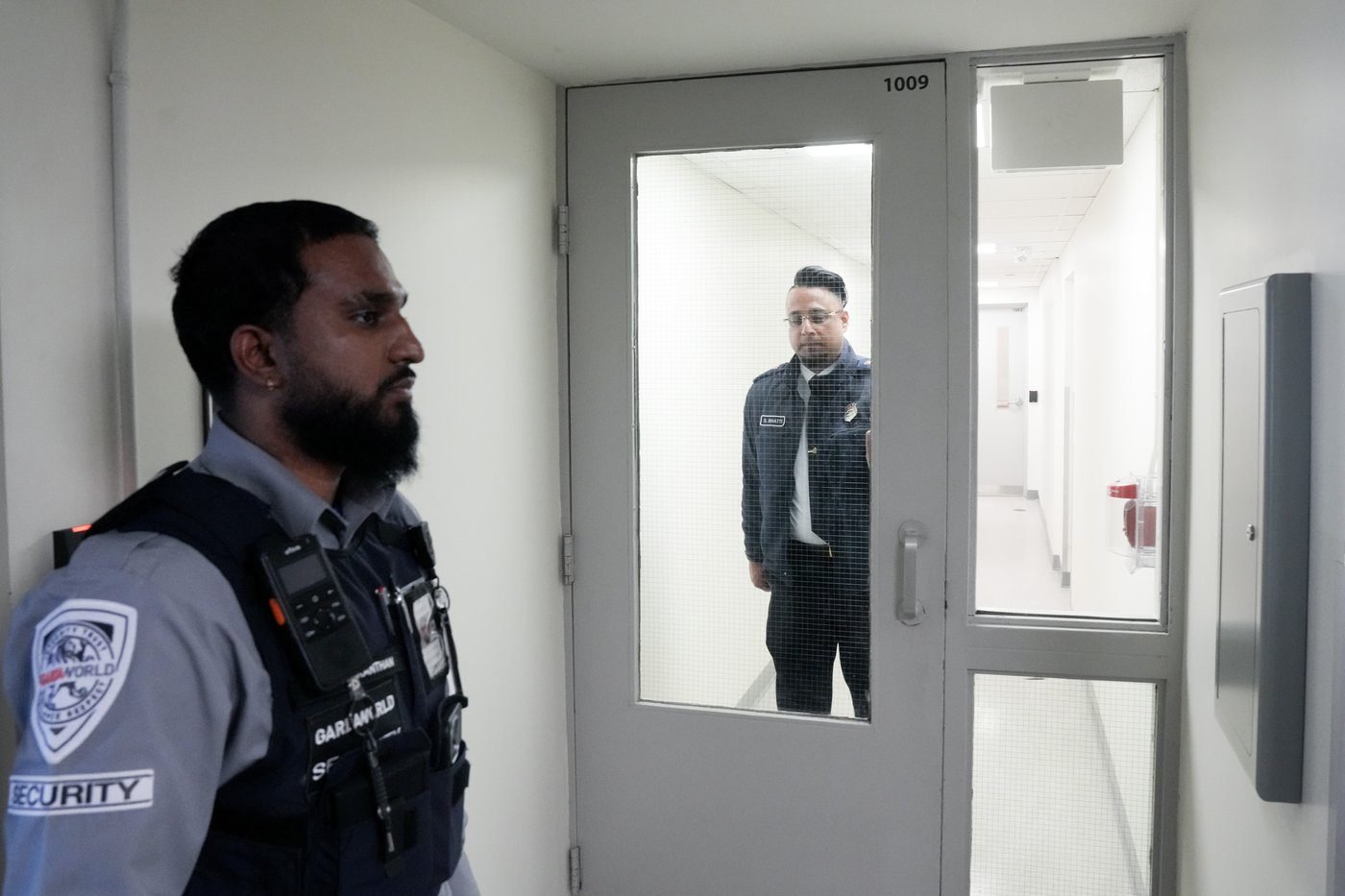
OTTAWA — The union representing Canada Border Services Agency workers says it’s disappointed by the federal government’s decision to provide funding for the agency to hire private sector guards on contract for immigration holding centres, arguing the work should be done by federal staff.
The government’s spring economic update listed $238 million in funding for the CBSA to bring in guards with higher security training at the centres, with $153 million of that money to come from existing departmental resources.
There are four immigration detention facilities across Canada in Surrey, B.C., Toronto, Laval, Que., and Sainte-Anne-des-Plaines, Que.
Luke Reimer, a spokesperson for the CBSA, said in an email that funding is not for additional guard resources but to maintain uninterrupted service as guards’ contracts expire.
CBSA staff, Reimer said, don’t conduct guard services but determine detention placement, ensure detainees are aware of their immigration cases, meet with detainees and monitor their behaviour.
He said hundreds of contracted guards are employed to help the CBSA maintain the care and control of detainees.
“Responsibility and accountability for the care, custody and oversight of detainees rests with the CBSA,” he said. “Given the limited role contractors play, it is important to emphasize that the CBSA itself maintains overall responsibility for ensuring that conditions of detention align with Canadian and international standards, and that detainee rights are respected and upheld at all times.”
Reimer said that as of May 15, the CBSA had seven active contracts with the Garda Canada Security Corporation and GardaWorld, with a total contract value of around $248 million. The CBSA also had one contract with Commissionaires BC valued at about $11.7 million.
Mark Weber, national president of the Customs and Immigration Union, said in an email it’s “disappointing” to see the government continue to rely on the private sector instead of using federal public service law enforcement personnel.
“Like in any detention scenario, detention in an immigration context can be sensitive, and we have seen in the past the unfortunate consequences of relying on the private sector, such as with the 2014 Jimenez case, where a detainee took their own life, in a facility staffed with private guards,” he said.
“One recommendation that emerged from this case was that personnel working in CBSA holding centres should be federal employees, not private contractors.”
Forty-two-year-old Lucia Vega Jimenez was found hanging inside a shower stall at the Vancouver airport holding cells in December 2013 and was removed from life support a week later.
Following an inquest into her death, a B.C. coroner’s jury recommended that a new immigration holding centre within a 30-minute drive of Vancouver’s airport be built and staffed by CBSA employees.
Weber said new immigration detention facilities will be designed to hold high-risk individuals.
“It makes no sense for the government to disregard past recommendations and to not only continue to rely on the private sector, but to task private contractors with even more advanced responsibilities,” he said.
“As per CBSA’s own policy, detention should be a last resort, but with serious cases posing a public safety risk it is sometimes unavoidable. It is therefore essential that the personnel responsible for detention be of the highest calibre — it is a matter of safety for all involved. Past experience shows that the private sector has often failed to meet that standard.”
Reimer said contracted guards perform duties like security, transporting detainees within the facility to appointments or for removals, and screening and managing visitors. He said there are also contracted guards who are trained to a higher standard than regular guards to manage higher-risk individuals.
He said that in addition to training in standard first aid, CPR, use of restraint equipment and dealing with disruptive behaviour, those guards receive training in areas like de-escalation, mental health, prevention of suicide and self-harm, hostage situations and substance abuse and addiction.
This report by The Canadian Press was first published May 20, 2026.
Catherine Morrison, The Canadian Press