dailynewsnblog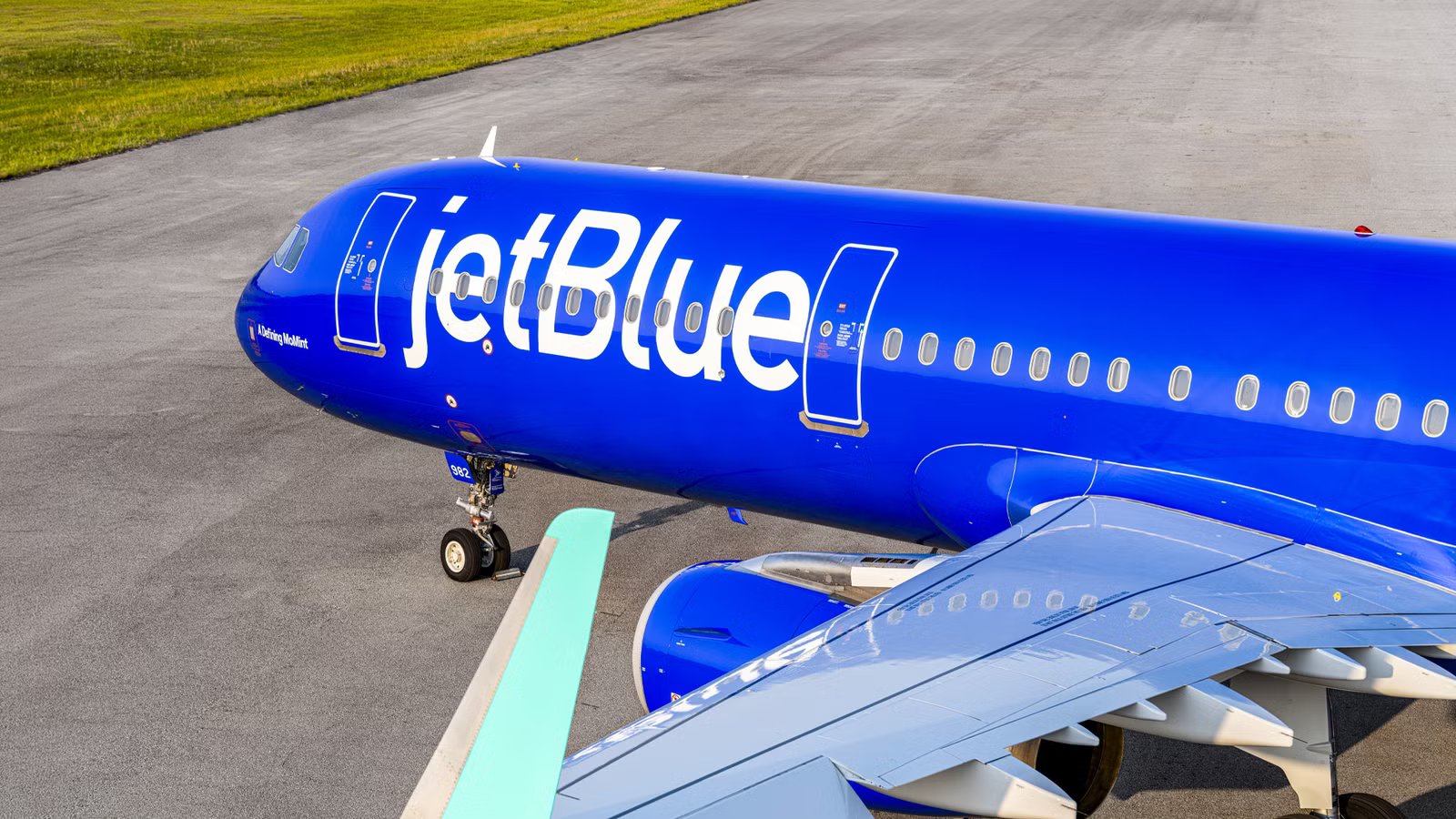
While we, as enthusiasts, often view many airlines positively, admiring qualities like route networks and onboard product innovations, airlines as a whole tend to have a negative public perception. The airline industry is one of the most disliked sectors in the US, with many complaints stemming from irregular operations, lost luggage, poor communication, and opaque pricing tactics. This last point is now being highlighted by a recent controversy involving JetBlue Airways, as the carrier is now being accused of using surveillance pricing to charge higher fares.
This stems from a recent post by a JetBlue representative on social media, responding to a customer looking to attend a funeral who complained about a sudden price increase. The now-deleted tweet advised the customer to clear his cache and cookies or open an incognito window to access the lower fare, suggesting that the carrier attempted to charge a higher price to a traveler who urgently needed to fly. However, there remains confusion as to how JetBlue and other airlines actually price fares, which is perhaps the more pressing issue.
Confirming What Did & Did Not Occur

On April 18, 2026, an X user with the handle of ‘@NuggetSince94’ posted on the platform that prices for a flight they were looking to take rose by $230 after one day of searching, adding that they were looking to travel for a funeral. In response, a JetBlue representative stated, “Try clearing your cache and cookies or booking with an incognito window. We’re sorry for your loss“.
This appeared to be an admission of surveillance pricing, a tactic that involves using consumer data, such as location, browsing history, and urgency, to set individual prices, and one that airlines have long denied using. This post, which has since been deleted, was viewed over 1.5 million times and was used to file a class-action lawsuit against the Queens-based carrier in the Eastern District of New York.
In addition, it’s attracted significant attention, with junior Arizona senator Ruben Gallego, for instance, using the post to claim that JetBlue had actively inflated the customer’s price because they needed to travel for a funeral, while also promoting his Congress bill to ban surveillance pricing. JetBlue, however, subsequently issued a statement clarifying that the post was incorrect and stating that its prices are not determined by user data, but rather by seat inventory and overall demand.
While this has done little so far to influence public perception on the matter, it’s important to note that JetBlue has not officially admitted to using personal data to inflate prices. To date, no major airline has admitted to using surveillance pricing tactics.
The Realities Of Airline Pricing

There is no concrete evidence that any major airline engages in price surveillance tactics, but part of the issue is that airline pricing is complex and far from transparent. Prices can swing rapidly depending on the route and time of booking, with little public reason behind the change. Of course, public confusion regarding airline pricing is the general misconception that price is set by taking cost and adding a profit margin.
In reality, any large corporation selling public goods actually prices their products at the highest value that the market will pay, regardless of cost. Airline pricing is incredibly dynamic, and while there’s no proof that any large airline engages in surveillance pricing, they do heavily segment fares. Carriers set different per-segment prices for one-way trips versus round-trip tickets, they charge different amounts depending on whether you’re traveling with a companion, and of course, prices change over time.
Contrary to common belief, airlines don’t sell the same fare for each seat. Rather, they develop numerous fare buckets with different prices, with the fare and number of tickets in each class dependent on the demand for that particular flight.
What likely happened with the JetBlue example is that, since the customer in question had last checked ticket prices, the remaining tickets in a cheaper fare bucket had sold out, and the remaining tickets were in a more expensive tier. Airlines routinely adjust the number of tickets in each fare class, responding to changes in demand by the day, and also use internal data to predict future shifts in demand. These are the practices that airlines use to price their tickets.
United Airlines Reverts Back To Increasing Ticket Prices For Solo Travelers
Flying alone with United? Check the recent changes first.
Developments In Airline Pricing

Current pricing tactics allow airlines to optimize their revenue flow by taking advantage of the exact moment where demand for a given flight spikes, ensuring that each seat is sold at as high a price as possible. Most companies are more limited in how often they can adjust prices.
This is not the same as price surveillance, which is a term specifically used for when companies use personal data to set individual prices, and it’s a model that works extremely well for airlines. However, airlines continue to experiment with methods to further increase revenue. In July 2025,  Delta Air Lines faced intense scrutiny after the carrier began using artificial intelligence to optimize its pricing model.
|
Delta Air Lines Travel Classes |
Fare Classes |
|---|---|
|
DeltaOne |
Classic, Extra |
|
Delta First |
First Classic, First Extra |
|
Delta PremiumSelect |
PremiumSelect Classic, PremiumSelect Extra |
|
Delta Comfort |
Comfort Basic, Comfort Classic, Comfort Extra |
|
Delta Main |
Main Basic, Main Classic, Main Extra |
After a letter was sent to the airline by senators Ruben Gallego, Richard Blumenthal, and Mark Warner requesting transparency on how the AI model was being used, Delta made a public announcement titled ‘Delta responds to misinformation around AI pricing.’ Here, it clarified that the AI model was used to enhance its existing pricing tactics, and that the airline has never used personal data to set prices. While airlines do not currently engage in surveillance pricing, the technology does largely exist.
As such, there are examples of companies using tactics that appear similar to surveillance pricing. Uber surge pricing is perhaps the most notorious example, where fares increase depending on conditions like whether it’s raining. This, in itself, attracts significant controversy, and given the possibility of companies like rideshare services, booking agencies, and airlines having access to surveillance pricing technology in the future, there are now motions within the US government to restrict or ban such practices.
The Problem With Airline Pricing Tactics

The airline industry is almost universally treated as a private market worldwide, including in the United States, yet air travel essentially serves as public infrastructure today. It’s the only means of long-haul travel, and in many cases, it’s also the only practical means of medium-length travel. The public relies on airlines for travel beyond just flying for vacations, but the industry is dominated by large, for-profit companies that face relatively low competition, including in the US.
The current model of dynamic pricing already causes controversy because of how it inevitably leads to higher fares for those traveling urgently or during peak periods, which some frame as exploitation. It’s a crucial component of current airline success, but leads to people buying essentially the same product (flights) for different prices, even within a single travel class. Airlines are also hardly transparent about what drives changes in demand, and this further fuels public distrust.
Surveillance pricing tactics are already a topic of controversy, and there are ongoing efforts to outlaw the practice in other industries. Given the issues already being raised by current dynamic pricing tactics, the concept of airlines using surveillance pricing raises significant ethical challenges. The idea is resulting in significant attention from lawmakers, and perhaps more importantly, airlines don’t want to be associated with this tactic, especially given the poor public perception of the industry.
The Problem With Airline Seat Density
With seat pitch as low as 28 inches in 2026, these problems are what cause increasing seat density onboard.
What To Watch Out For In Airline Pricing

While surveillance pricing is unlikely to become widespread in the industry, airlines are looking for ways to further optimize their fares. For instance, this can take the form of airlines moving away from traditional fare buckets into continuous adjustments, better matching what consumers are actually willing to pay at any given point. Airlines are also further looking to segment customers by offering various benefits and services, promoting upgrades to extra legroom seats, or attempting to sell lounge access.
While artificial intelligence is not currently being used to tailor prices to an individual, it is being used to help airlines preemptively predict how demand will evolve and allow airlines to act before the shift happens. Airlines rely heavily on past data to determine booking and fare trends, and the increased use of AI will allow carriers to shift from responsive tactics to pre-emptive strategies, further optimizing revenue. As airlines evolve their pricing models, however, they’re also making their strategies more complex and less visible to the public eye.
|
Typical US Airline Ticket Classes |
Typical US Airline Fare Types |
Typical US Airline Fare Buckets |
|---|---|---|
|
International business class |
Refundable |
Multiple ticket prices |
|
Flexible |
Multiple ticket prices |
|
|
Basic |
Multiple ticket prices |
|
|
Domestic first class |
Standard ticket |
Multiple ticket prices |
|
International premium economy |
Refundable |
Multiple ticket prices |
|
Flexible |
Multiple ticket prices |
|
|
Basic |
Multiple ticket prices |
|
|
Economy |
Refundable |
Multiple ticket prices |
|
Flexible |
Multiple ticket prices |
|
|
Basic |
Multiple ticket prices |
As such, customers are seeing increased variability with their ticket prices, yet the explanations as to why fares fluctuate are only becoming more convoluted. With this in mind, while airlines are further optimizing their revenue stream, public trust in these companies is at risk of deteriorating further. Then again, since essentially every large airline follows such practices and the industry essentially faces no external competition, there’s hardly a need to be transparent.