dailynewsnblog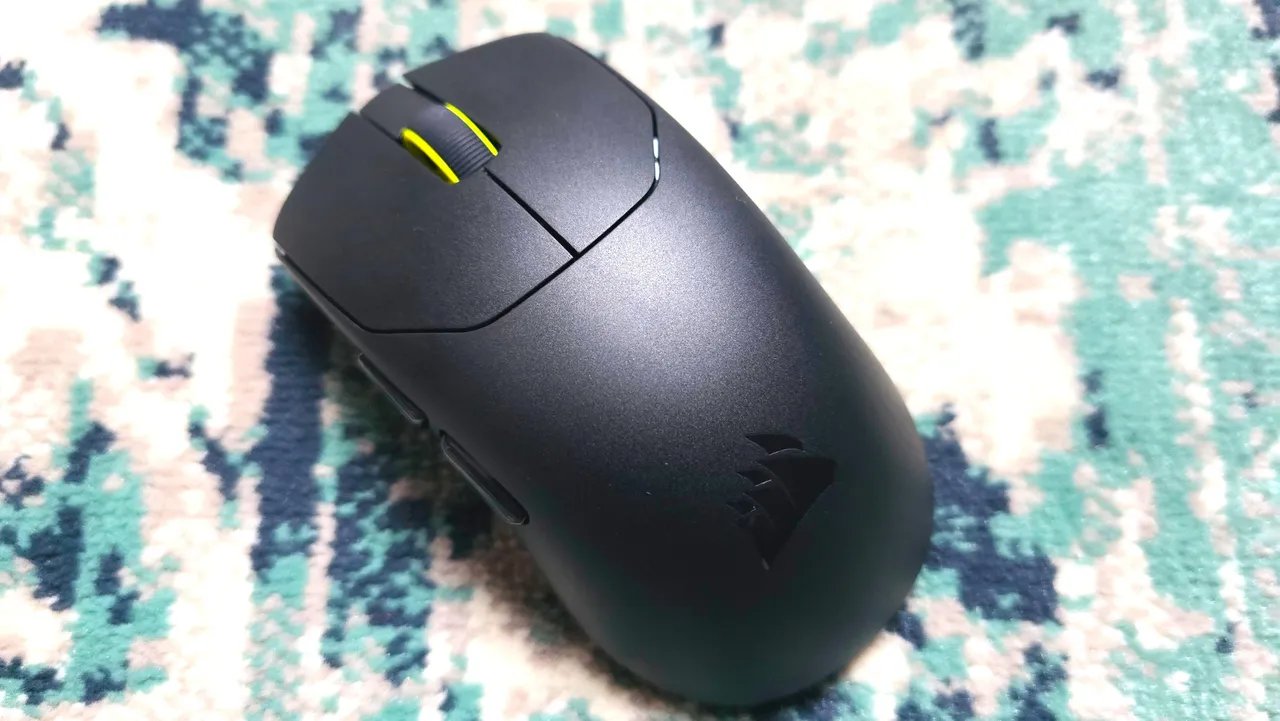
2026 has been a very interesting time for ultralight gaming mice, with different brands having different takes on their flagship offerings. For Logitech, it’s opted for haptic feedback and rapid trigger powers more commonly associated with the best gaming keyboards with its G Pro X2 Superstrike, while Razer has focused on getting the basics nailed with a fast, responsive rodent in the Viper V4 Pro.
Corsair has chosen a different tack with its Sabre V2 Pro, eschewing a lot of features in the name of getting the weight down to just 36g with its flagship choice – for instance, there isn’t any Bluetooth, the software is a bit basic and it isn’t built as well as rivals – but it opens up an interesting conversation about the different approaches taken for ultralight gaming mice and where we might be headed next.

Corsair SABRE v2 PRO Ultralight FPS Wireless Gaming Mouse
0
Where we’ve come from
Before looking ahead to the future, it’s worth noting where we’ve come from. The whole ultralight gaming mouse phenomenon is a recent innovation. Even five years ago, mice were still quite hefty, and the concept of having a low weight and especially high DPI and polling rate options was virtually unheard of.
For reference, the wireless Logitech G502 Lightspeed and older Corsair mice such as the M65 and Nightsword were much heavier than today’s crop, and even had adjustable weights so you could make a mouse heavier rather than lighter. The assumption baked into that design was that more mass, applied thoughtfully, was a feature worth having, not a problem to be engineered away.
This all began to shift as players began to realise the impact a lower-weight mouse could have on overall responsiveness, with faster, lower-effort flicks. The idea therefore took hold that shaving grams off a mouse was a direct, measurable path to quicker aim and a better K/D ratio.
Early ultralight mice from an array of manufacturers began incorporating honeycomb shells, cutting weight down in the search for every last gram. This came alongside innovations such as higher-sensitivity sensors, higher polling rates and lower-latency wireless connectivity, which have since come together in a perfect storm to seemingly make this a golden generation for gaming mice.
Where we are now
It’s intriguing to note the different approaches that mainstream manufacturers have taken as they attempt to push the ultralight gaming mouse segment forwards.
Corsair has taken the most linear approach, I’d argue, with its Sabre V2 Pro, opting to cut as much weight as possible – this rodent weighs only 36g, which easily makes it one of the lightest gaming mice full stop. On the face of it, this is achieved through eschewing features such as Bluetooth and with the unfortunate compromise of sacrificing overall sturdiness against the competition.
Nonetheless, this Corsair rodent mostly impressed in Samuel Horti’s testing, with fantastic performance owing to the combination of such a light mouse and a hefty 30,000 DPI sensor. There is 8000Hz polling available, too, although it means battery life takes a large hit – aiming for such a light weight may have also affected overall battery capacity against rival choices.
For Razer, it has decided to refine the fundamentals in the hunt to be the best gaming mouse rather than reinventing the wheel. The Viper V4 Pro is better in every way than its predecessor, with a slightly lighter chassis thanks to an internal redesign and similar contoured frame that keeps it light and comfortable, plus a new 50,000 DPI sensor that’s one of the zippiest you’ll find on any gaming mouse out there.
Otherwise, Razer has opted for its fourth-gen optical switches inside that the brand has designed from the ground up to be more responsive and have a slightly lighter actuation than before for snappier inputs. It has also moved to a new version of the brand’s HyperSpeed wireless connectivity with true 8000Hz wireless polling and even lower wireless latency. Battery life has also seen a notable improvement.
In my book, the Viper V4 Pro proves lots of little things add up to an awful lot more to make it one of the best ultralight mice you’ll find – you’ll definitely be hard pressed to beat it on spec.
Logitech took an entirely different approach, gutting the internals out of its existing G Pro X Superlight 2 to create something entirely novel for the sector. The G Pro X2 Superstrike employs Logitech’s new HITS system that essentially adds rapid trigger powers and haptic feedback to the main mouse buttons for faster inputs than mechanical and optical switches. Logitech quotes up to 30ms less in the way of response time against more traditional mechanisms.
In my experience, it is a bit of a learning curve, taking me around a week to get used to the rapid trigger and haptic feedback sensation under finger, but it can make a measurable difference to the number of clicks and therefore shots fired in FPS titles, where this rodent is designed to shine.
Otherwise, it’s pretty similar to the G Pro X Superlight 2 with a similar 61g mass, plus a Hero 2 sensor with 44,000 DPI and 8000Hz polling to keep things especially zippy and potent. You also get very competent software support with G Hub and reasonable endurance if you’re realistic with settings.
Put side by side, that’s three genuinely different bets on what “the best ultralight mouse” should mean in 2026: Corsair has bet almost everything on a single headline number, while Logitech is betting that click behaviour is the more interesting frontier than weight, and Razer betting that getting the fundamentals – shape, weight, battery – right beats reinventing any one part of the mouse outright. That’s three completely different approaches, and it’ll be intriguing to see which one turns out right.
Where we could be headed next
We seem to have reached a new frontier for the ultralight mouse arms race, given those different perspectives on where mice go next. Whether that’s a distinct focus on switches, going even lighter, or just refining the existing concept, it’s clear there isn’t a one-size-fits-all answer to this conundrum.
That being said, there are a few observations to draw on. I think there is a law of diminishing returns when it comes to weight shedding. We’re at the point already where flagship wireless mice routinely weigh between 35g and 60g while packing sensors capable of immense tracking. It seems that the days when shaving 10g off a mouse transformed how it felt are arguably behind us. Cut another gram or two from a 36g chassis, and the difference becomes much harder to perceive than jumping from 90g to 60g ever was.
That suggests manufacturers may be approaching a natural floor, not because it’s impossible to go lighter, but because every gram removed carries increasingly obvious compromises elsewhere. Smaller batteries reduce endurance, thinner shells can potentially affect rigidity, and removing features inevitably leaves buyers short-changed from going for a potentially heavier and feature-rich choice. In other words, weight may stop being the defining battleground and become just one part of a much broader equation.
You could argue that’s already beginning to happen – Logitech’s focus on haptics and rapid trigger rather than moving away from a very familiar shell design suggests the next stage of mice may come from rethinking how we can actually get the most out of peripherals beyond beefing up sensitivity and cutting down weight.
We could see other manufacturers experiment with rapid trigger, adjustable actuation, analogue clicks or other clever button behaviour that can be controlled in software. After all, we’ve already seen this applied to keyboards, with the move away from traditional switches in gaming keyboards to optical, then Hall effect, and now TMR keyboards for precision, speed and configurability.
The latest move to TMR refines the concept further, improving precision and power efficiency over Hall effect while retaining many of the same benefits. If Logitech’s HITS system proves there’s room to rethink how mouse clicks work, it isn’t difficult to imagine manufacturers exploring TMR for mouse buttons as well as keyboards and gamepad thumbsticks. A TMR-based switch could theoretically offer adjustable actuation, rapid trigger functionality and analogue click inputs while consuming less power than today’s implementations, giving brands another avenue to improve responsiveness without simply chasing ever-lower weight.
Equally, sensor technology feels like another area that’s due to evolve beyond simply adding more DPI – after all, we’re already up to the dizzy heights of 40-50,000 DPI and who knows how much further things could go. Much like the megapixel race in smartphone cameras eventually gave way to measurable improvements in image processing, gaming mouse manufacturers may reach a point where raw specifications matter less than how intelligently those sensors interpret movement.
More sophisticated motion filtering, improved lift-off detection or software that could subtly adapt to different grip styles all seem more likely to produce meaningful improvements than increasing maximum DPI from 50,000 to 60,000.
We’ve already seen manufacturers such as Razer and Logitech add clever features to software for things such as adjusting the angle of the mouse to compensate for whether folks are aiming straight and true, so there’s mileage in this kind of concept for other applications, too. For instance, we could see software adjust lift-off distance depending on the surface detected underneath or intelligently manage polling rates and battery consumption without requiring manual intervention.
Likewise, battery life is a key concern, especially in conjunction with higher polling rates. While 8000Hz polling reduces latency, it has the consequence of draining a mouse’s battery life. Most manufacturers already encourage users to dial polling rates back outside competitive play, which somewhat undermines the appeal of having those headline figures in the first place.
The solution isn’t necessarily bigger batteries, as it adds weight back that might have already been taken out, but rather more efficient hardware. Things such as lower power sensors, adaptive polling based on application or smarter wireless chipsets all have the potential to keep the current potency but just act smarter with how that power is deployed to help deliver flagship responsiveness without sacrificing endurance as much as we currently are.
Finally, we also have the question of materials. We’ve seen some brands move away from plastic and such to more innovative choices, including carbon fibre and magnesium alloys that allow for reduced weight without introducing flex that can come with thinner plastic shells. This is a trend I’d like to see continue, and is one of the ones I can see being implemented sooner rather than later.
Looking forwards
Whatever happens next, I don’t think the future of ultralight gaming mice will be defined by a single breakthrough in the way the last few years arguably have been. Chasing ever-lower weights has undoubtedly transformed the market, but we’re rapidly approaching the point where removing another gram or adding another few thousand DPI simply isn’t going to change the experience for most players in any meaningful way.
Instead, the next wave of innovation is likely to come from lots of smaller improvements working together, as Razer has arguably done with its small refinements to the Viper V4 Pro, although this may be in a bigger way than that. Elements such as better switch technologies, smarter software, more efficient wireless connectivity, longer battery life and stronger, lighter materials all have the potential to make a greater impact than another headline weight figure ever could. Much like modern smartphones reached a stage where the overall experience became more important than any one specification, gaming mice may be heading in a similar direction.
That also makes this an unusually exciting time for the sector. For years, manufacturers were largely pulling in the same direction, competing to build lighter mice with faster sensors and lower latency. Now, we’re seeing genuine experimentation. Logitech is exploring entirely new button technologies, Razer continues to refine what is already one of the strongest all-round formulas on the market, and Corsair is testing just how far weight reduction can realistically be pushed before compromises begin to outweigh the benefits.
It’ll be fascinating to see which philosophy proves the most influential. If Logitech’s approach catches on, we could see rapid trigger and software-configurable clicks become commonplace across flagship gaming mice in much the same way Hall effect transformed gaming keyboards. Equally, if buyers continue to prioritise comfort and battery life over chasing the lightest possible chassis, manufacturers may decide that refining the fundamentals offers a better long-term strategy than relentlessly pursuing lower numbers on a spec sheet.
Perhaps the most interesting outcome, though, is that there may not be a single winner at all. The best gaming mouse has always been a deeply personal choice, influenced as much by grip style, preferred genres and comfort as it is by raw specifications. If the ultralight arms race is entering a new phase, it may not end with every manufacturer building the same mouse. Instead, it could finally give players genuine choice over what “performance” actually means. I think that’s a far more compelling future than simply asking who can make the lightest mouse.
Reece Bithrey is a twenty-four-year-old freelance journalist who reviews and writes about shiny things for a living. He’s been featured in Trusted Reviews, PC Gamer, PCGamesN, Custom PC magazine, TechRadar, Eurogamer and The Guardian. He also has his own blog, UNTITLED. He is a mechanical keyboard nerd, so you’ll usually find him tinkering there when not writing, or bellowing at virtual footballers on Football Manager.