dailynewsnblog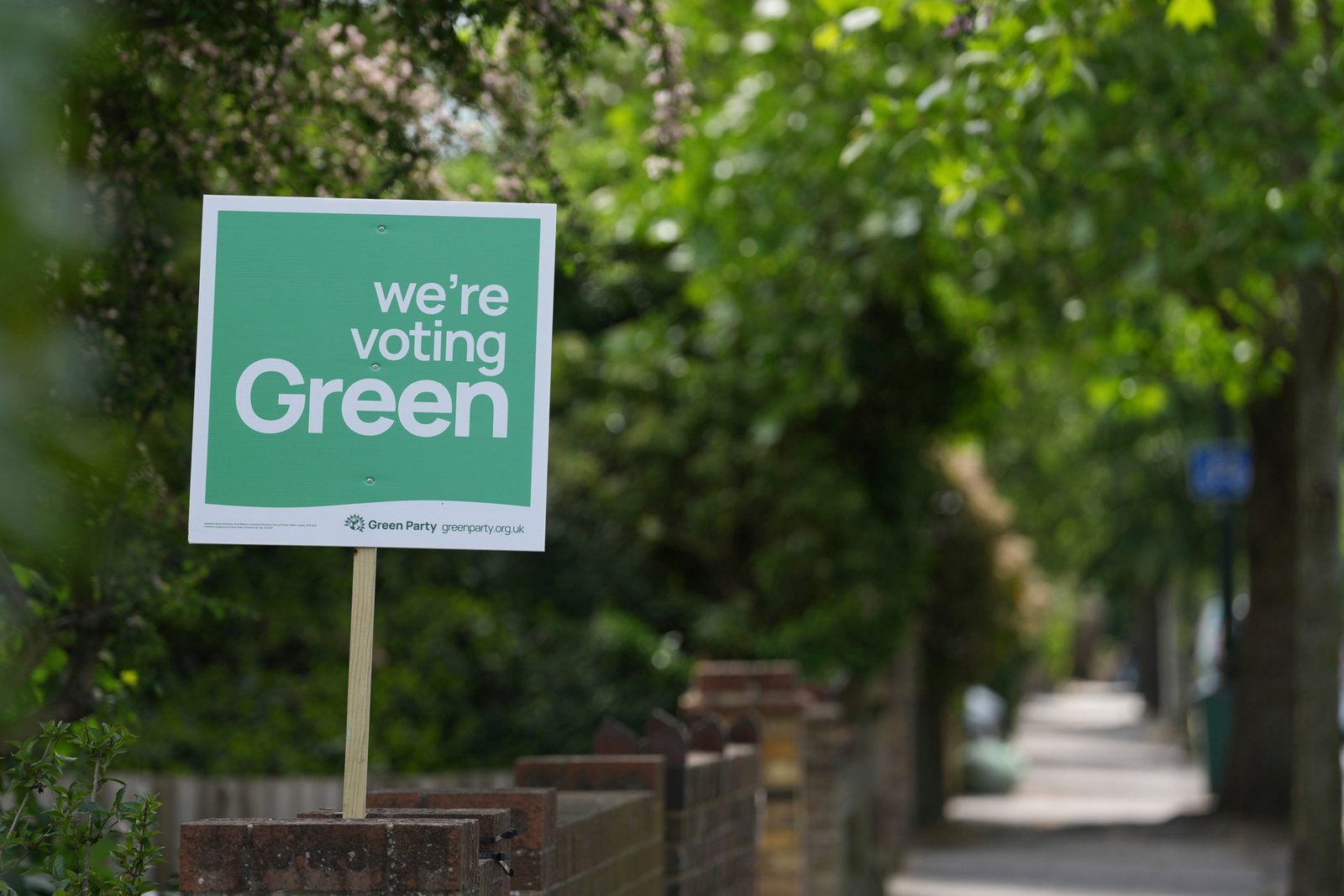
In this week’s edition of Adjournment Proceedings, we explore how Canada’s diminished Green Party is drawing campaign inspiration from breakthroughs across the pond.
Welcome back to Adjournment Proceedings, our weekly long read series. We publish a new edition every Friday. In this week’s edition, we look at the unprecedented gains of the Green Party in the recent UK local election, and whether that success can provide a blueprint for Canada’s battered Greens.
Missed a week? Take a look through our archives here.
“The new politics is the Green Party versus Reform,” argued UK Greens leader Zack Polanski after his party’s record showing in the council elections earlier this month.
The election deepened the ongoing fragmentation of a British political landscape that, for the past two centuries, has been largely dominated by the Labour and Conservative parties.
Although the vote was limited to municipal councils, BBC calculations put the Greens’ projected national share at an unprecedented 18 per cent, securing a second-place finish just behind Reform UK at 26 per cent.
While local elections carry different dynamics than national ones, they provide a reading of the political climate.

In this case, a majority of the electorate backed alternatives to the two main parties.
This stands in contrast to Canada’s recent federal election, where Liberals consolidated the progressive vote and blocked any left-wing breakthroughs, effectively reducing a multi-party landscape to a two-horse race.
The 2025 campaign was largely framed as a high-stakes choice between now-Prime Minister Mark Carney and Conservative Leader Pierre Poilievre as U.S. President Donald Trump ramped up talk of annexing Canada.
This led to the worst-ever election results for third parties.
The New Democrats collapsed and the Greens were almost wiped out of the electoral map, with only one seat left on Parliament Hill.
For the first time in decades, the party’s national vote share dropped below two per cent, meaning it couldn’t even qualify for a 50 cent rebate of expenses from Elections Canada.

But federal Green Party Leader Elizabeth May believes the “sheen or halo surrounding Mark Carney will inevitably fade” and the multi-party system will return.
“It’s the nature of Canadian democracy, and I think it will flow back to that,” she told iPolitics.
“The NDP and Greens will make a recovery.”
But even if the next election were to have less of a binary feel, replicating the British Greens’ fortunes on Canadian soil would be no easy task.
How London and Ottawa compare
Canada’s political system is heavily modelled on the UK’s Westminster tradition and both share a “first-past-the-post” voting system that can make it harder for smaller parties to break through.
While there are constitutional differences in how power is distributed regionally, the political landscapes in Canada and the UK mostly align.
READ MORE: Conservatives call on government to ‘reject the streaming tax increase’ as Carney makes the rounds in NYC
Both countries have a traditional and dominant conservative party focused on fiscal conservatism, and a Liberal/Labour party that offers the primary centre-left alternative.
The smaller parties also have their structural counterparts, from the populist currents on the right to the eco-politics on the left.
Municipal elections can make the difference
The most important difference for the Greens is that, unlike in the UK where local elections are hyper partisan, Canada’s municipal candidates mostly run on their own name and personality.
This potentially deprives Canada’s Green movement from an important launching pad.
“Having a partisan municipal election really makes a big difference in terms of branding,” said Maureen Balsillie, political strategist and Green Party campaign manager.
“For Greens around the world, the perception of being electable is the biggest thing to overcome every time.”
Having Greens elected at a local level helps dispel that narrative, she added.

Over the past decade, Balsillie has been involved in Green campaigns throughout the country, including in Ontario where she recently worked to get Aislinn Clancy elected in Kitchener Centre.
She often collaborates with the Greens in the UK and says she’s learned a lot from them.
“They are really, really focused on ground organizing,” Balsillie tells iPolitics.
“And right now, in terms of field organizing, the Conservatives really are the best, but that’s really what Greens need to do to win.”
She says the UK Greens are also very good at doing long campaigns in strategic areas, working for voters before they are even elected.
“That’s what [Ontario Green Party leader] Mike Schreiner did. In his 2018 campaign, we would go door knocking and people would be like, ‘Oh yeah, that Green guy, it’s like he’s already my MPP.’”
Balsillie says some of these field organizing tactics can be harder to apply in Canada, where scarce campaign resources can get swallowed up in massive ridings.
Strong positioning on social issues
Another lesson from the success of the UK Greens campaign is that it focused on much more than climate issues, creating a home for progressive voters wanting to see strong positioning on issues like the conflict in Gaza, the rental market and income inequality.
“A lot of our support still remains tied to the climate crisis… but the big difference today is that we need to be able to show people that we can get elected and get things done,” said Balsillie.
In the UK, media-savvy Polanski openly embraced his self-described “eco-populist” brand of environmentalism and democratic socialism.

He took a clear stance on lightning-rod issues like immigration or trans rights, where more centrist parties might be more careful in their messaging.
And as with New York’s Zohran Mamdani, the messaging resonated with younger people, climate activists, renters, and Muslim voters.
Tarik Abou-Chadi, professor of European politics at the University of Oxford, argues that other Green parties should follow Polanski’s lead and be more strident and ambitious in their positioning.
“Take on economic inequality, and progressive voters will reward you, as they have the UK’s Greens,” he writes.
New leader, new chapter?
This is a tactic that newly minted B.C. Green party leader Emily Lowan has embraced a campaign message of “fight the oligarchs, fund our future.”
The arrival of this Gen Z politician at the helm of the B.C. Greens — a party that, up until recently, was somewhat holding the balance of power in the province by propping up Eby’s government — has ignited a fresh wave of optimism for Greens across the country.

“When I met Polanski in Glasgow for COP 26, I thought he was very charismatic and able to deliver momentum… I think the same could happen in B.C. with Emily Lowan,” said May.
As the federal Greens prepare to have a leadership race, May says she is excited about seeing who might seize the opportunity.
“As for the Liberals, or the Conservatives, frankly, a change in leadership can refresh,” she said. “It builds momentum, membership, and fundraising.”
READ MORE: Meet Emily Lowan, the 25-year-old B.C. Green leader ready to challenge David Eby’s provincial government
While the timeline for the leadership contest has yet to be announced, May has signalled her intention to step aside, though she plans to remain in the House as a member of Parliament.