dailynewsnblog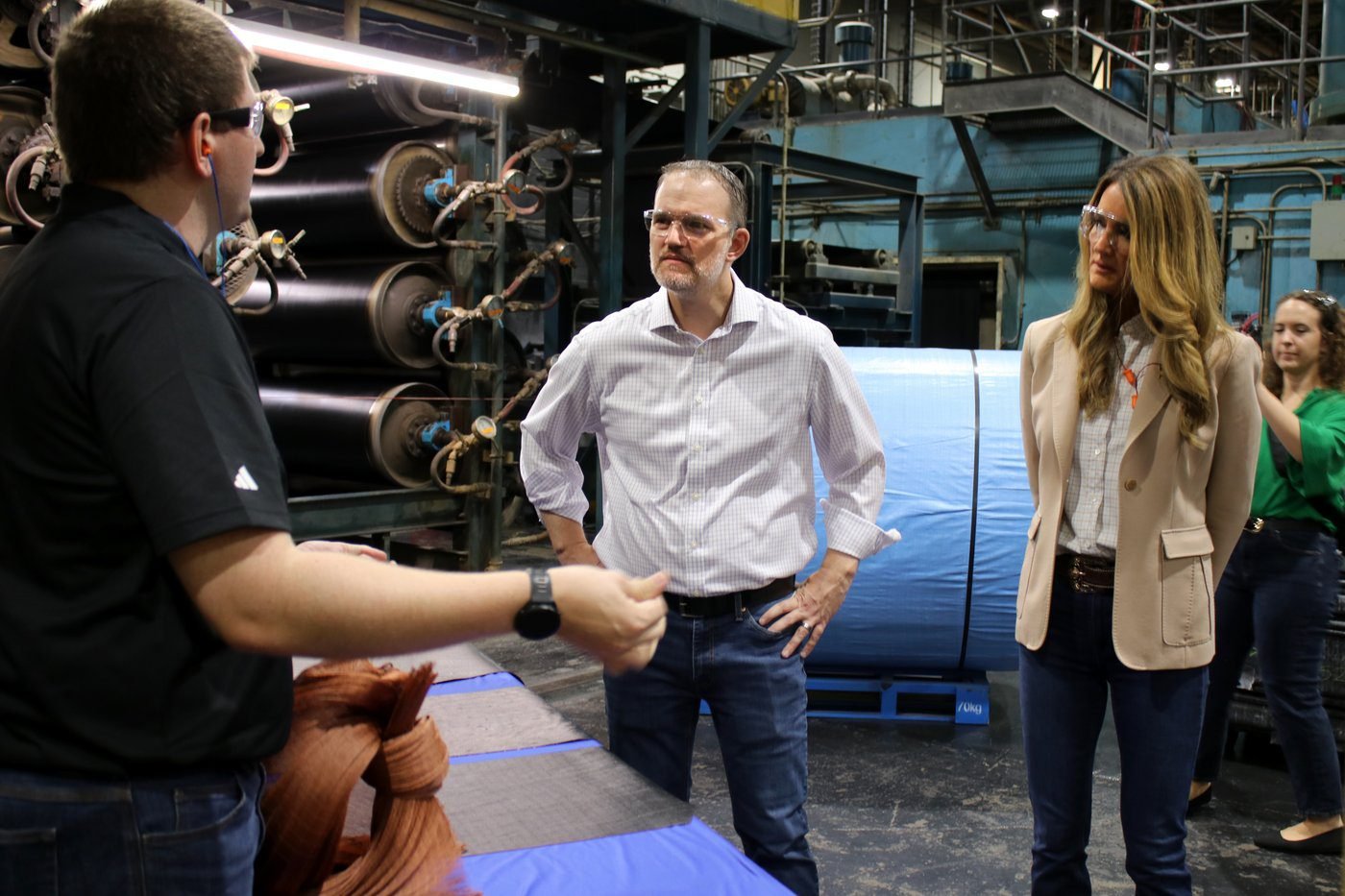
DES MOINES — United States Trade Representative Jamieson Greer warned Friday that the Trump administration will proceed with its plan to impose hefty new tariffs unless Canada drops retaliatory measures — and a source says a deal is not on the table despite intensified talks.
As the clock counts down to Wednesday’s tariff deadline, Canada-U.S. Trade Minister Dominic LeBlanc updated provincial and territorial trade ministers and members of the prime minister’s advisory committee on Canada-U.S. economic relations on the state of the talks.
A source who was briefed but not authorized to speak about the discussions told The Canadian Press there was no deal imminent Friday but talks with American officials were continuing.
Erin O’Toole, former Conservative leader and member of the prime minister’s advisory committee, said he was disappointed but not surprised there was no deal yet.
He anticipated if a deal were reached it would be at the “11th hour” before the Aug. 19 deadline the U.S. has set for its latest tariff threat.
O’Toole said the government is preparing a response in the event the U.S. hits Canada with a 50 per cent tariff on a wide variety of goods,
“We will have to respond and there is discussion about how the government is looking at all options on the table in terms of response,” O’Toole said. “The Americans now know that we’re serious and that it will not be good for their economy, not be good for ours. It sort of shows the fallacy of tariffs being smart policy.”
Candace Laing, president and CEO of the Canadian Chamber of Commerce and a member of the advisory committee, told The Canadian Press she remains hopeful both sides are closing in on an “interim deal.”
“There are billions in goods per year that were not impacted before, but now are at risk of being impacted significantly. These producers face a mountain of paperwork and price hikes, which is the last thing they need right now,” she said in a media statement.
“It’s important to remember what’s at stake. Business have been doing a high-wire act for well over a year, holding off on hiring, investment and growing in Canada.”
If the tariffs hit, Laing said, they will have a “non-absorbable impact” on businesses and put Canada into “uncharted territory.”
Canadian officials have ramped up talks with their American counterparts in recent weeks after U.S. President Donald Trump signed an executive order to impose 50 per cent tariffs on a range of Canadian goods starting next Wednesday.
The Trump administration says the new duties are a response to provincial bans on U.S. liquor, Canada’s supply-managed dairy system and quotas on certain U.S. vehicles.
Several provinces pulled American booze from shelves last year after Trump imposed tariffs on Canadian items.
“These tariffs that are coming in, they are a response to Canadian retaliatory measures, like the kind of things that China would do,” Greer said in Des Moines Friday, where he was touring a tire factory and attending the Iowa State Fair.
“And so those are things that would have to be resolved.”
Greer met with LeBlanc and Janice Charette, Canada’s chief trade negotiator, in Washington earlier this week. LeBlanc and Greer have met four times in recent weeks.
A spokesperson for LeBlanc said that both he and Charette will remain in the U.S. capital over the weekend while negotiations continue. The spokesperson could not confirm at this time whether they will meet with Greer.
O’Toole said the advisory committee was told LeBlanc and Charette will remain in close contact with Greer over the weekend.
LeBlanc said on social media Thursday that negotiations are ongoing to “advance Canada’s interests.”
Greer said Friday there are elements of U.S. trade policy that Canada’s negotiators don’t like but added he’s having “constructive negotiations with the Canadians.”
“At the end of the day, President Trump, the United States, we are going to do what is best for America,” he said.
“If there’s a way to, you know, bring Canada along with that, we’re happy to do that, but we are mostly focused first and foremost on making sure President Trump’s trade policy is executed.”
Greer did not provide details of the trade talks but said the U.S. has had major trade issues with Canada for decades. He said any “potential resolution has to include all of these on a pathway forward.”
Greer argued the new tariffs don’t amount to a trade war. He said the U.S. is trying to protect domestic supply chains and is not singling out Canada. If a country retaliates, the U.S. will respond, he added.
“My sense is the Canadians, they want to have a more conciliatory approach but we’ll see,” Greer said.
Unlike most of Trump’s other tariffs, the new duties would have no exemptions for goods that comply with the Canada-U.S.-Mexico agreement on trade, known as CUSMA.
Quebec Premier Christine Fréchette said Thursday in Montreal that some industries may find themselves in “survival mode” if the 50 per cent tariffs take effect.
Ontario Premier Doug Ford said Thursday in Guelph, Ont., that he’s open to returning U.S. booze to the province’s shelves if there is a “fair deal” that protects Canadian steel, aluminum, auto, forestry, agricultural and manufacturing sectors.
This report by The Canadian Press was first published Aug. 14, 2026.
— With files from David Baxter in Ottawa
Kelly Geraldine Malone, The Canadian Press