dailynewsnblog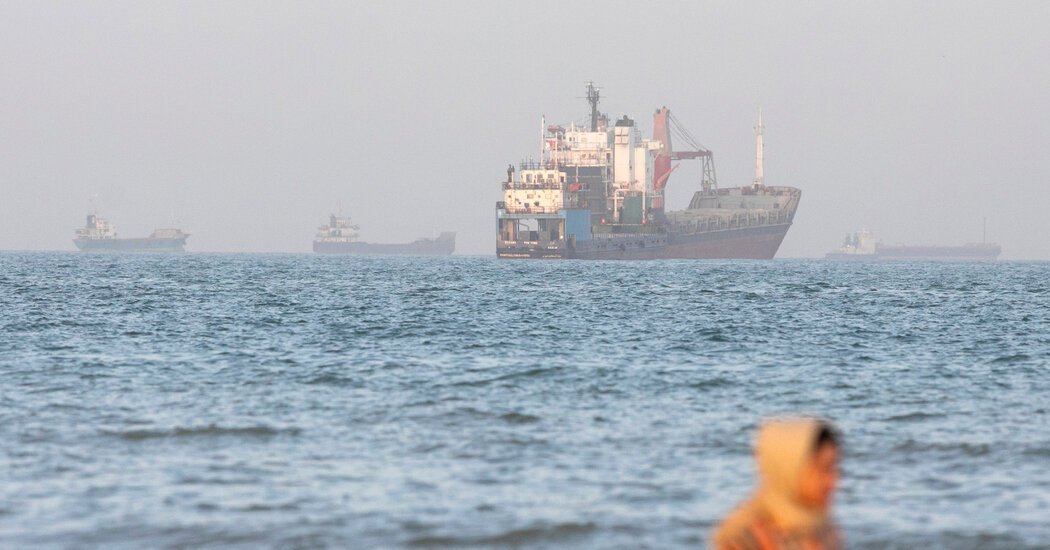
For the second time in three days, American forces conducted what a US. official said on Wednesday were self-defense strikes in southern Iran.
The United States knocked down four one-way attack drones that the official said Iran launched over the Strait of Hormuz. The drones, according to the official, threatened U.S. forces in the region and what little commercial maritime traffic is going through the strait, which Iran has effectively blockaded.
The military then conducted airstrikes against a drone ground-control station in Bandar Abbas before it could fire a fifth drone, said the official, who spoke on the condition of anonymity to discuss operational matters.
On Monday, the United States struck missile launch sites and Iranian boats trying to emplace mines, Capt. Tim Hawkins, a spokesman for U.S. Central Command, said in a statement then. The strikes against targets in southern Iran came after U.S. intelligence analysts detected a series of potentially threatening Iranian military actions in the 24 hours leading up to the strikes, two U.S. officials said on Tuesday.
U.S. warplanes sank two of Iran’s Islamic Revolutionary Guard Corps speedboats that were trying to place mines in the Strait of Hormuz, a vital strategic waterway that carried roughly a fifth of the world’s daily oil supply before the war and that Iran has since effectively blocked.
On Monday, Iran launched one-way attack drones near some of the warplanes and nearly two dozen Navy warships in or around the Gulf of Oman and Arabian Sea that are enforcing a blockade against vessels trying to enter or leave Iranian ports. U.S. military analysts also detected activity at some of Iran’s surface-to-air missile sites near the strait that threatened land-based and carrier-based attack planes operating in the region as part of the naval blockade.
In response, the United States carried out “self-defense strikes” against the targets in southern Iran “to protect our troops from threats posed by Iranian forces,” Capt. Tim Hawkins, a spokesman for U.S. Central Command, said in a statement on Monday.
U.S. officials also said on Tuesday that the Revolutionary Guard Corps might have been testing to determine whether the fragile potential agreement that President Trump has said could end the war and reopen the Strait of Hormuz gave their forces new additional operating room.