dailynewsnblog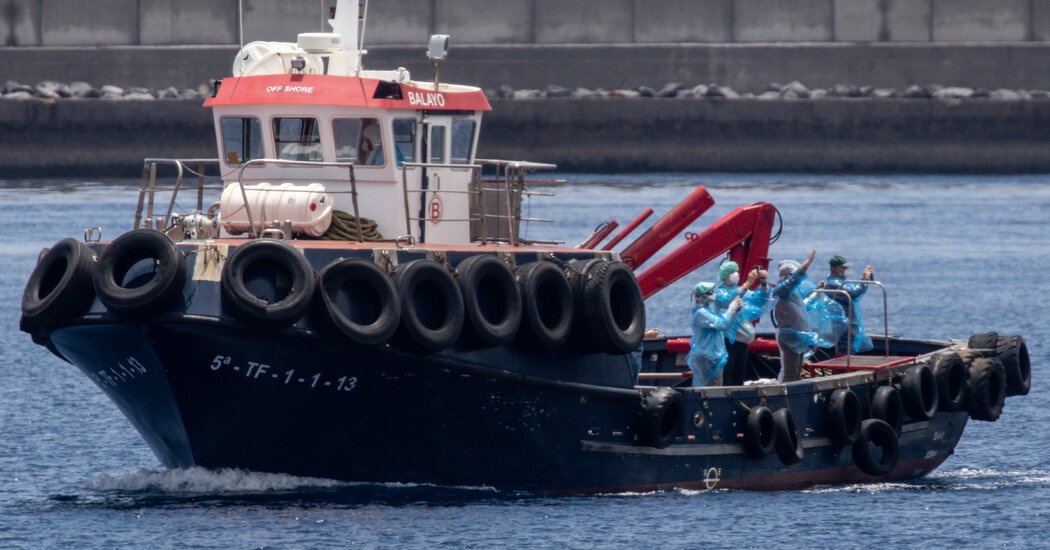
The waiting has begun.
Eighteen American passengers who might have been exposed to hantavirus while aboard a cruise ship returned to the United States on Monday, health officials said.
Sixteen were isolating at a special quarantine center in Omaha, including one person who tested “mildly” positive for the virus and was in a more restrictive biocontainment unit, U.S. officials said. Two others, a couple that included a person with mild symptoms, were sent to a hospital in Atlanta.
It was unclear how long everyone would need to stay. But Admiral Brian Christine, the assistant secretary for health at the Department of Health and Human Services, said at a news conference on Monday that the situation was under control. “The risk of hantavirus to the general public remains very, very low,” said the admiral, who is also a medical doctor.
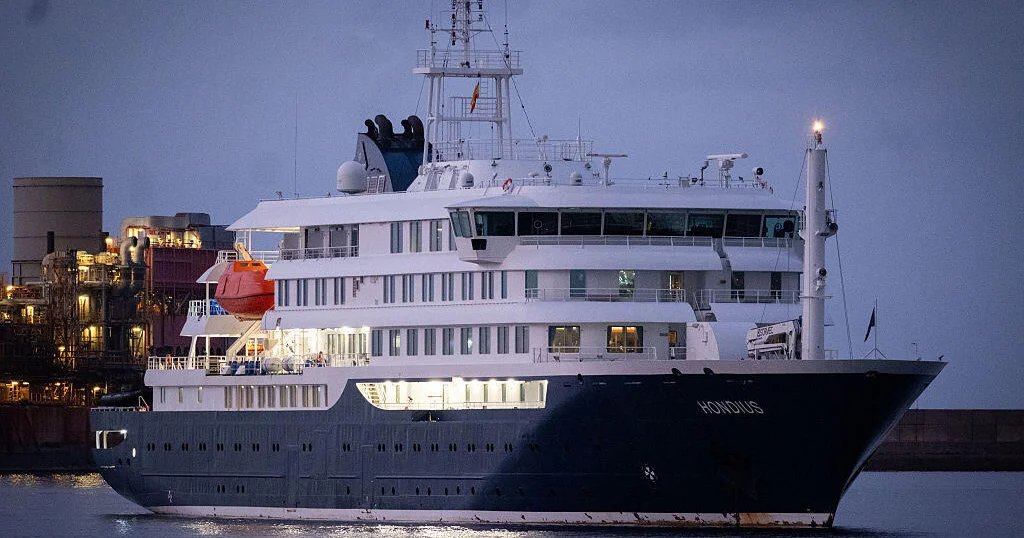
The ship, the Dutch-registered MV Hondius, departed Argentina on April 1 with about 150 passengers en route to the Canary Islands. Three passengers died from the virus, and several others became ill or tested positive, health officials said.
There are no targeted treatments or widely available vaccines for the virus, which has a long incubation period: 42 days.
The American passengers ranged in age from their late 20s to their 80s, health officials said. One is a dual U.S.-British citizen. It was not clear from which states the 18 passengers had come, but New York officials confirmed that three were residents of the state, including one from New York City.
At some point, they may be able leave their medical centers to continue quarantines at home, depending on how they are doing, according to Captain Brendan Jackson, acting director of the Division of High-Consequence Pathogens and Pathology at the U.S. Centers for Disease Control. He said that each would have an “individualized decision plan.”
Officials gave no time frame for when passengers might be able to consider leaving.
Dr. Michael Wadman, medical director of the National Quarantine Unit in Omaha — the nation’s only such federally funded center — said passengers there were “in good shape” and asymptomatic. “They definitely were tired and needed some rest,” he added.
The quarantine unit, part of the University of Nebraska Medical Center, consists of 20 specialized rooms designed to prevent contaminated air from flowing out. University health professionals described the lodging as similar to a hotel, where the passengers would be monitored but could not have visits.
The passenger in biocontainment was in a setting more like a hospital, according to Dr. Angela Hewlett, director of that unit, who said that the person was “doing well.”
“They currently do not have any symptoms and have a good appetite,” Dr. Hewlett said at the news conference on Monday.
Hantavirus is a rare family of viruses carried by rodents. The World Health Organization identified the Andes subtype as the one that affected the passengers. It can be transmitted between people who have had close contact.
Captain Jackson said that health officials had described the passenger in biocontainment as “mildly” positive because only one of the two specimens collected from that person had indicated hantavirus.
He said that the tests did not deliver clear yes-or-no answers, adding, “There’s sort of a range in where they can fall.”
On the early Monday flight to Omaha, which came from Tenerife, Spain, the passenger with the positive test result and the one with mild symptoms traveled in biocontainment units, officials said.
Captain Jackson said that the couple in Atlanta had been taken to Emory University Hospital, in part, to free space at the Omaha facilities, in case more people in quarantine needed to be transferred to the biocontainment unit.
He added that the symptoms experienced by one person in Atlanta did not necessarily indicate a hantavirus infection. “We’re being very, very liberal at how we’re framing symptoms and monitoring for symptoms here,” he said.
The biocontainment unit in Omaha was activated in 2014 to receive U.S. citizens with Ebola virus who had been evacuated from Africa. In 2020, doctors there cared for some of the first Americans diagnosed with Covid-19.
Several other states, including Georgia, California and Arizona, are monitoring U.S. residents who disembarked the cruise ship before the outbreak was identified.
Seven Americans went ashore April 24 and came back to the United States on commercial flights, Dr. Jay Bhattacharya, the C.D.C.’s acting director, said Sunday on CNN’s “State of the Union.” None had symptoms at the time of their travel, he said, so officials had not seen a need to alert other travelers or trace their contacts.
The cruise ship docked off the Canary Islands of Spain on Sunday, and epidemiologists and other medical professionals from the C.D.C. met the Americans and assessed their risk of exposure.
Most of the roughly 150 passengers and crew members had returned to their home countries on Monday or were doing so. Thirty-two crew members will remain on the ship as it sails for the Netherlands, where it will dock, Spain’s health minister, Mónica García, said on Monday.
Carlos Barragán, Apoorva Mandavilli and Joseph Goldstein contributed reporting.