dailynewsnblog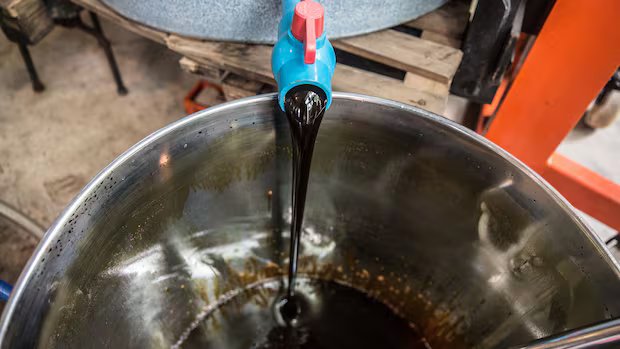
A U.S. ban on Canadian molasses imports has resurfaced allegations of sugar smuggling and an industry battle involving a company with a major refinery in Hamilton, Ont.
Spats over dairy, automobiles and booze have become ingrained in the ongoing trade dispute between Canada and the U.S. during President Donald Trump’s second term in office. But when the U.S. announced earlier this month that it would ban the import of molasses, it left some scratching their heads.
The ban is due to take effect Sept. 29 alongside bans on motorcycles, most alcoholic drinks and some dairy products.
It comes after months of American sugar producers lobbying their government to raise tariffs on foreign sugar products, saying they’re being undercut by cheaper products from other countries.
They’re also taking aim at Canadian refineries, who they claim are importing mixes of raw sugar, molasses and water but disguising them as pure molasses as a way to circumvent sugar tariffs and quotas.
‘Closing the spigot’
Sugaright, a division of Connecticut-based refiner CSC Sugar, said stopping the flow of watered-down molasses from Canada was a main topic of conversation at the International Sweetener Symposium, a major industry event held in Vail, Colo., this summer.
“Canadian ‘molasses’ containing substantial sugar is being viewed as a potential sugar-program circumvention problem, and not only does the U.S. sugar industry want the flow to stop, but now the federal government is fully engaged to ‘finish the job’ of closing the spigot completely,” reads an August blog post on Sugaright’s website.
The issue appears to stem from a case in the 1990s, when Michigan-based Heartland By-Products mixed molasses with sugar and water at an Ontario facility to import the mixture tariff-free. The company would then refine it a second time in the U.S. to remove the molasses, sell the purified sugar, and ship the molasses back to Canada to reuse in its next batch.
The scheme was legal and approved by the U.S. government, but pressure from the sugar industry and a series of court cases and legislative restrictions forced the company to shut down operations in the 2000s.
Sugar companies’ claims of disguised molasses still flowing unchecked from Canada appear to be contradicted by the U.S. Department of Agriculture (USDA) World Agricultural Supply and Demand Estimates report from August, which states that molasses imports for sugar extraction are “on a rapid decline” and are currently projected to be “zero” for next year.
Company says it was targeted
Don Hill, chair of Sucro Can Sourcing, says the latest round of accusations is specifically aimed at his company, which is headquartered in Florida but has its biggest refinery in Hamilton.
“They just don’t like the fact that we’re legitimately shipping that molasses over to the U.S. And they’ve chosen to link what we do to what Heartland did 20 years ago, just to create that negative aura — just to cast aspersions and to make it seem all dodgy,” Hill told CBC News.
He says his fast-growing company was shipping about 50,000 tonnes of refiners’ molasses annually to the U.S., which makes up a fraction of one per cent of the U.S. market — but marks a significant increase from a decade ago, before Sucro entered the picture.

Prime Minister Mark Carney said on Thursday that the government is looking at U.S. President Donald Trump’s recent measures which include bans on Canadian imports including most alcohol products and new 50 per cent tariffs on a series of other products. ‘We fully recognize that for individual companies and in individual sectors these are significant, and there’s a response there,’ Carney said.
U.S. Customs and Border Protection approved Sucro’s molasses imports under the Harmonized Tariff Schedule in 2020.
Hill, who is from Toronto but now lives in the U.K., says the sugar lobby has gone “berserk” trying to shut down his operation since then by pulling “every lever possible.”
Congress gave the USDA funding as part of the 2024 American Relief Act to test the purity of molasses coming from Canada through Buffalo, N.Y., the route used by Sucro.
The resulting study found signs of “additives or blending,” raising concerns about “potential circumvention of U.S. sugar tariff‑rate quotas.” It was not officially published by the USDA, but appears to have been made public in an April 20 article on the website of brokerage platform Ag Bull Trading.
The industry has used this study in its arguments for shutting off molasses from Canada and raising tariffs on the product travelling through Buffalo.
Sucro issued a rebuttal to the study, which Hill says does not have “an ounce or shred of legitimate facts behind it.” He called for its retraction, citing “glaring mathematical errors,” and said he offered data and corrections to the USDA. He said he has not received any meaningful response.
In a statement emailed to CBC News, the USDA said, “This report was not formally published by USDA. There is nothing further to share on the contents.”
Sucro stopped importing molasses to the U.S. after completing its latest $135-million refinery in Hamilton in April, Hill says, and has instead been focusing on the Canadian market.
“It just got to the point where the whole market, including the tariffs, including the sugar lobby, has just made everything so toxic and aggravating that there’s just no point in even doing it,” he said.
Sugar lobby backs ban
The American Sugar Alliance, the main trade association and lobby organization representing major U.S. sugar producers and refiners, emailed CBC News a statement applauding the molasses import ban.
“American sugar producers deeply appreciate President Donald Trump, the U.S. Trade Representative, and the Trump Administration’s efforts to ensure that the products being imported into our country under our trade laws are actually the stated products,” the statement said.
“The Trump Administration is committed to upholding our laws, restoring fair trade, and putting American farmers and workers first.”
CBC News sent follow-up questions regarding Hill’s accusations that the group targeted Sucro, but has not heard back.

U.S. President Donald Trump is banning the import of Canadian alcohol, motorcycles and various other products into the U.S. CBC Naama Weingarten spoke to GTA business owners about how they could be impacted.
David Singerman, an associate professor of history at the University of Virginia and author of Unrefined: How Capitalism Reinvented Sugar, says sugar refining has always been a low-margin, high-volume business.
He says this has inspired a long history of smuggling and tariff manipulation — and also of producers and refiners exerting political power to protect their profits.
Singerman says the lobby’s influence gives sugar a “special status” in the American trade system, with a quota system backed up by a minimum price guarantee and high tariffs on foreign imports.
“Any time that there’s a threat, or these growers perceive that someone is undercutting the system in some way, they get very nervous and they pick up the phone and call their friends in Washington. And this has been true for a long time,” he said.
‘Bit of a head scratcher’
Drew Fagan, a professor at the University of Toronto’s Munk School of Global Affairs and Public Policy, says U.S. protectionism around its sugar industry is well known. He compared it to Canada’s dairy industry, which Trump has frequently lambasted as being unfair to American businesses.
Fagan says there could be several issues at play. Molasses is used in the production of rum and other alcohols, for example, and is also used as feed for dairy cows, which could link it to the booze and dairy bans.
He also says it’s not uncommon for lobby groups to use the political climate — in this case, a trade dispute with Canada — to push through long-sought changes.
“Special interests can have a big say if they know which buttons to push,” Fagan said.
CBC News contacted the Office of the U.S. Trade Representative to ask for the reasoning behind the molasses import ban but has not heard back.