dailynewsnblog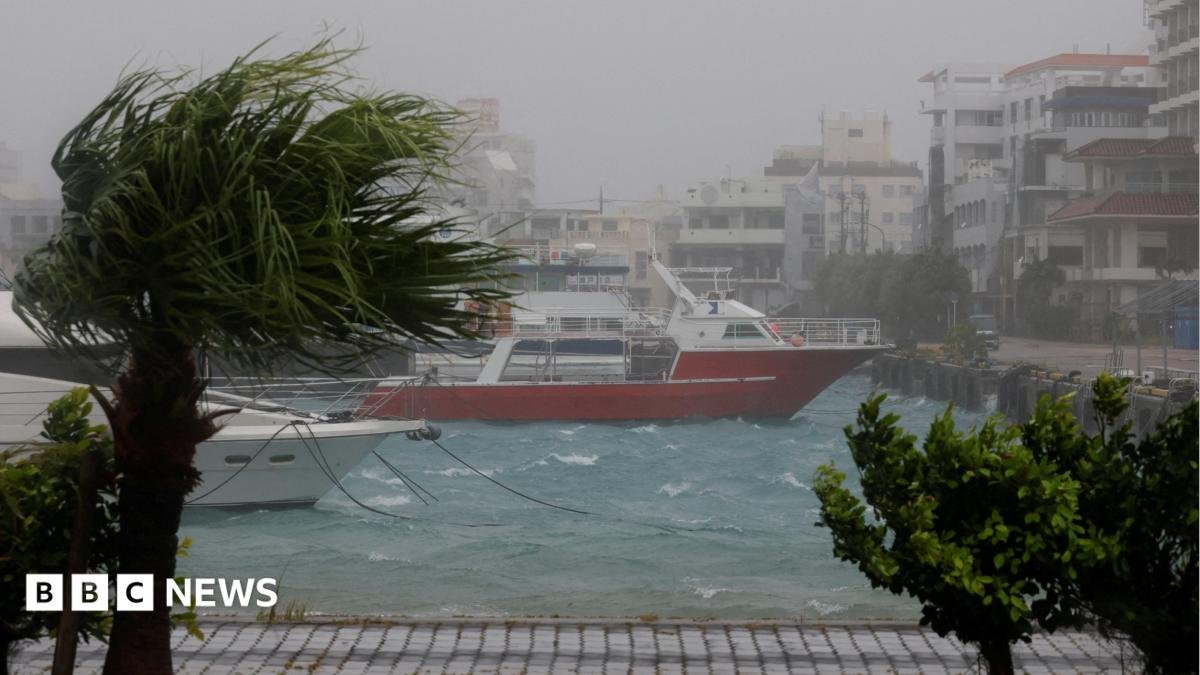
A powerful typhoon has made landfall in China, the second to hit the country in a week, with nearly two million people evacuated from areas in the path of the storm.
Typhoon Bavi, which spans 1,000km (620 miles) at its widest point – roughly the width of France – first came ashore in the coastal city of Taizhou on Saturday evening before making a second landfall in Wenzhou around midnight (17:00 GMT).
After pummelling a chain of remote Japanese islands, it brought heavy rainfall to Taiwan as it brushed past its northern tip.
Earlier landslides triggered by the storm killed at least 17 people in the Philippines.
Though it has weakened to a Category 1 typhoon, it still presents a risk because of the huge volume of moisture within its rain bands.
Bavi is forecast to bring “exceptionally heavy rains” to eastern Zhejiang province and northeastern Fujian province, the authorities said, adding that evacuations were “undertaken entirely to guard against the [worst-case] scenario”.
More than 1.7 million people were evacuated in Zhejiang and thousands more in neighbouring provinces, state media said. Schools, work and outdoor activities have been suspended in Zhejiang, while 400 flights and dozens of train services have been cancelled.
The city of Wenzhou, home to around 10 million people, is close to the path of the storm.
Bavi began as a super typhoon, battering Guam and the Northern Mariana Islands last Monday with wind speeds of 290km/h (180mph).
As it made its way through the Pacific, weakening to 144 km/h winds, it struck the Sakishima islands, part of Japan’s Ryukyu island chain between the country’s main islands and Taiwan. At least five people were injured and thousands were without power.
Taiwan itself did not receive a direct hit but thousands of people were forced to leave their homes and there was a danger of landslides after heavy rain. Neither country has reported any deaths.