dailynewsnblog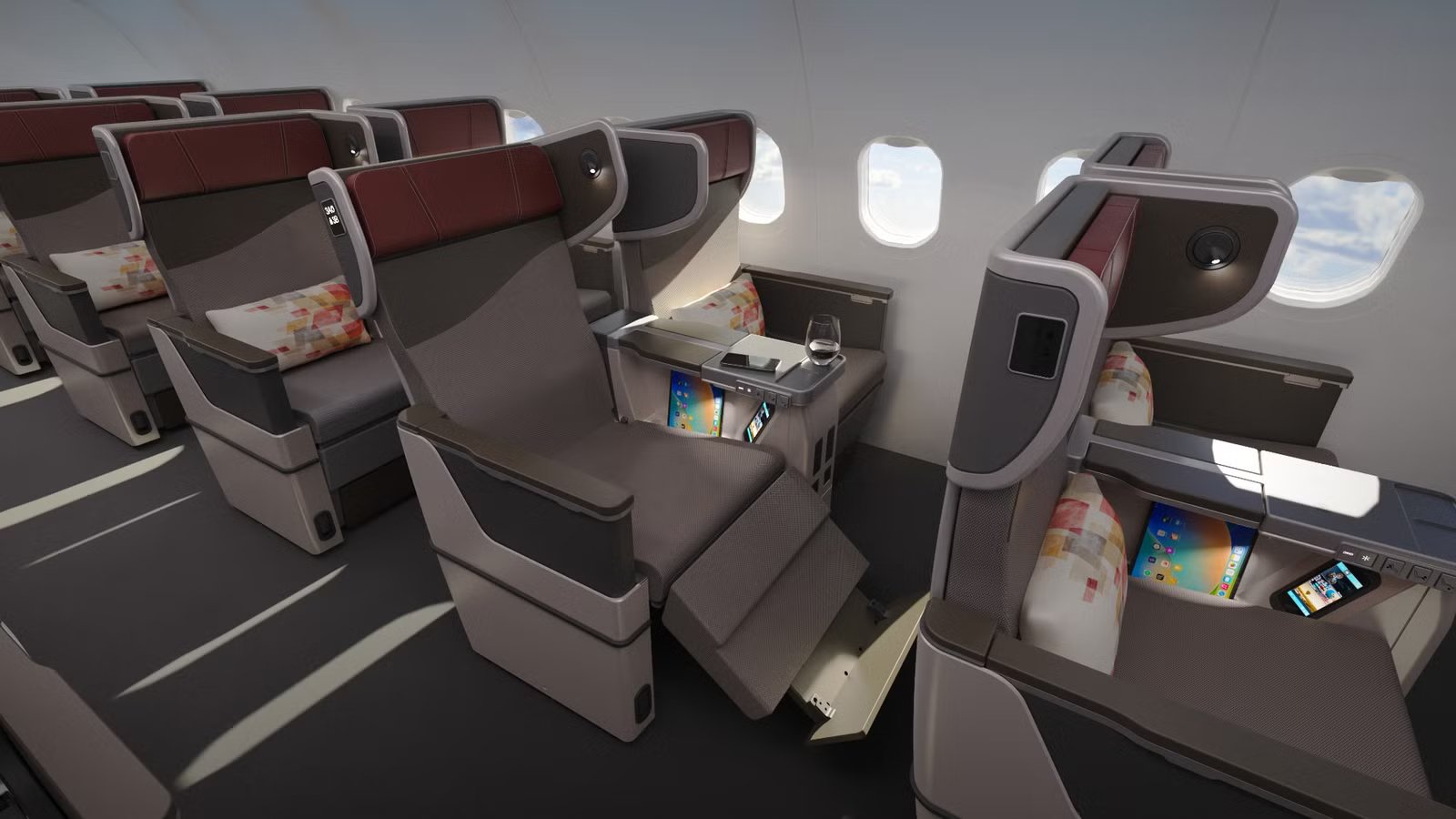
According to Professor Murat Seker,  Turkish Airlines is aiming to grow its widebody fleet to more than 800 aircraft by 2033, and a major part of that expansion plan includes an all-new premium economy airfare. Forbes interviewed the former Chief Financial Officer to discuss his strategy amid the complex timing of his appointment as Chairman of the Board of Directors and the Executive Committee.
Seker said that Turkish remains committed to its long-term plan despite the impact of unstable fuel prices amid the Iran crisis, compounded by changing passenger profiles and airspace volatility in the Middle East. The airline does not plan to change its widebody or cargo fleet goals but may adapt the narrowbody fleet plan as it aims to expand its network to approximately 350 destinations and generate revenue of over $50 billion annually.
Premiumizing Long Haul With Turkish Airlines

The reintroduction of premium economy is the company’s broader trend of ‘premiumizing’ the entire fleet. Leading the way is the launch of Turkish’s fully enclosed Crystal Business Class suite on the A350 in early 2027, followed by retrofits to Boeing 777 aircraft later. At the same time, Seker told Forbes that the airline expects seats per aircraft to increase by over 12%, as Business Class capacity will also go up by 10% or more.
The centralized location of the airline’s hub at  Istanbul Airport(IST) gives Turkish access to roughly 50% of the world’s population, which allows the carrier to adapt its plans even in the face of severe geopolitical roadblocks. The unsuccessful and short run of the original ‘Comfort Class’ option, from 2010 to 2016, is widely blamed on the inconsistent travel experience for connecting flyers or, in the case of aircraft substitutions, due to the limited rollout to the fleet.
With the global trend increasing premium cabin product demand for the post-pandemic era, the business case to bring back premium economy is at an all-time high. Travelers Seker made this comment to Forbes:
“We are also evaluating premium economy for widebody aircraft starting in 2028, with around 8–9% of current economy capacity potentially allocated to the new cabin. Our research shows that around two-thirds of the passengers on long-haul flights are willing to pay a premium for additional legroom and comfort.”
Catch what other flight trackers miss
Emergency squawks, holds, NOTAMs — live signals, no signup.
Open tracker
Catch what other flight trackers miss
Emergency squawks, holds, NOTAMs — live signals, no signup.
Open tracker
The New Premium Economy Experience

Comfort Class offered wide seats with more legroom, as well as increased recline and an adjustable leg rest. The previous iteration of premium economy was also configured in a 2-3-2 row layout. According to Executive Traveller, Seker acknowledged that the last attempt at the cabin product was probably not in the ideal layout and came at the right time. With 63 seats available in the section, compared to 28 Business Class seats, it flipped the typical ratio at other airlines.
It should be expected that the incoming relaunch will follow the opposite proportion and feature a larger Business Class section than the Premium Economy cabin. Executive Traveller also noted that the airline is a key stakeholder in TCI Aircraft Interiors, which makes the Royalux seat intended to fit Business Class on narrowbody aircraft or “premium economy for widebody fleets,” according to the manufacturer. TCI also makes privacy partitions, adjustable headrests, and built-in tech seatback screens and device chargers.
-TC-LJI.jpg?q=49&fit=crop&w=220&h=124&dpr=2)
Why Turkish Airlines Removed Its Premium Economy Cabin
While the product was nice, it did also have its downsides.
Turkish’s Growing Fleet: Bigger And Better

A consistent and universal relaunch with new airframes should eliminate the problems that got the first attempt ‘axed.’ Likely the strongest candidate to debut an upgraded premium economy experience is the new Airbus A350-1000 twin-aisle jets that will start being delivered to Turkish Airlines in the second half of 2027. The extended Xtra Wide Body arrival has been delayed, but the carrier expects as many as 15 to enter service by 2030.
Turkish also has a very large backorder for the world’s most popular widebody, the Boeing 787 Dreamliner. Currently, the carrier has a firm order for 35 examples of the 787-9 long-range variant and 15 of the higher capacity 787-10 with the option for 25 more airframes. These aircraft are expected to be delivered between 2029 and 2034, after the first A350-1000s enter service. Turkish also has a large commitment to future 737 MAX deliveries, meaning its Boeing fleet will effectively double in the coming years.